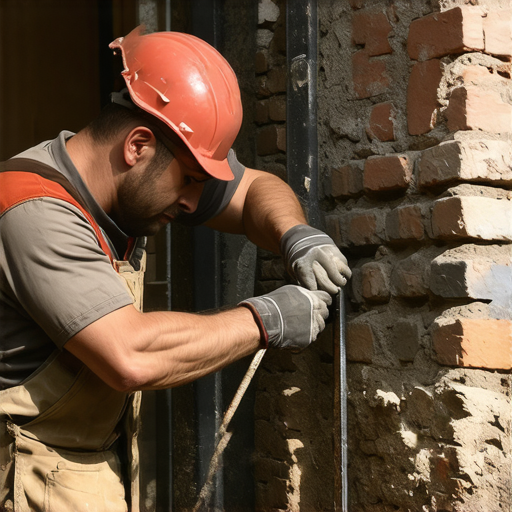
3 Reasons High-Performance Mortar Mixes Save 2026 Projects
The Mortar Mentor’s Warning
I remember my mentor, a man whose hands were so scarred by lime they looked like topographical maps, once stopped me as I was loading a pallet of standard Type S onto a job site. He grabbed a handful of the dry mix, let it sift through his fingers, and spat on the ground. ‘That’s just dust and vanity,’ he growled. ‘You put that in a 1920s wall, and you’re just signing a death warrant for the brickwork.’ He taught me that masonry isn’t a static wall; it’s a slow-motion lung. If the mortar is too hard, the building suffocates. As we look toward the projects of 2026, the industry is finally waking up to what the old-timers knew by feel: the chemistry of your mud determines the lifespan of the structure. High-performance mortar mixes aren’t about being ‘super strong’ in a laboratory sense; they are about compatibility, durability, and the thermal resilience required for modern climate extremes.
1. Vapor Permeability and the Sacrifice of the Joint
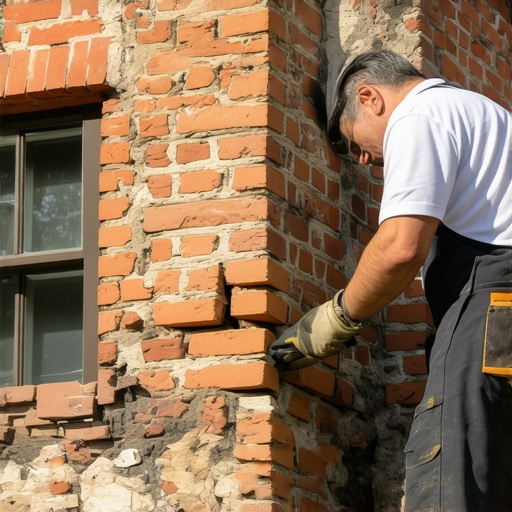
The first reason high-performance mixes are saving 2026 projects is their controlled vapor permeability. In the world of stone facade restoration and commercial tuckpointing, we follow the ‘sacrificial principle.’ The mortar must be softer and more porous than the masonry units it surrounds. Why? Because water is an inevitable intruder. Whether it’s wind-driven rain or rising damp, moisture enters the wall. High-performance lime-based mortars allow that water to escape through the joint as vapor. If you use a cheap, high-portland mix that’s as hard as glass, the moisture gets trapped behind the face of the brick. When the temperature drops, that water undergoes its 9% volume expansion. Since it can’t escape through the dense mortar, it blows the face off the brick—a phenomenon we call spalling.
“Water penetration is the single greatest threat to masonry durability, and the mortar’s ability to manage this moisture is paramount.” – BIA Technical Note 7
By utilizing modern high-performance mixes, we ensure that freeze-thaw damage restoration becomes a preventative measure rather than a recurring nightmare. We are seeing a shift toward hydraulic lime mortars that offer the ‘tooth’ needed for 2026’s erratic weather patterns, ensuring that the foundation stays dry and the stone wall repair actually lasts a generation instead of a season.
2. Elastic Modulus and Thermal Movement
The second reason involves the physics of movement. Every building breathes and shifts. In the heat of a July sun, a soldier course of brick can expand significantly. High-performance mortars have a lower elastic modulus, meaning they can deform slightly without cracking. When I’m inspecting a brick lintel replacement or a foundation wall bowing repair, the first thing I look for is where the movement was resisted rather than accommodated. Cheap mud is brittle. It shatters under the thermal stress of a building’s daily expansion and contraction. This leads to hairline fractures that invite hydrostatic pressure to do its worst. In 2026, we are utilizing mixes with pozzolanic additives that provide the strength of cement with the flexibility of lime. This is critical for foundation underpinning projects where the new load-bearing capacity must mesh with existing materials. Without that flex, you get a ‘cold joint’ that eventually fails, leading to structural instability. High-performance mixes act like a shock absorber for the masonry, preventing the need for frequent chimney damper repair or more invasive structural interventions.
3. Chemical Bond and Hydration Chemistry
Finally, we have to talk about the ‘bite’—the chemical bond at the microscopic level. When you ‘butter’ a brick, the suction of the masonry pulls the water from the mortar into its pores. High-performance mixes use water-retention agents that ensure the hydration process isn’t cut short. If the mud dries too fast, the crystals don’t grow deep into the brick’s surface, resulting in a weak mechanical bond. I’ve seen chimney flue liner installation jobs where the mortar literally fell out in chunks because the contractor didn’t understand the suction rate of the old clay tile. High-performance mixes are engineered to match the absorption rate of specific materials, whether you are doing a stone facade restoration on porous limestone or commercial tuckpointing on dense, hard-fired clinker bricks.
“The selection of mortar should be based on the physical properties of the masonry units to ensure a compatible and durable bond.” – ASTM C270 Standard
We are also seeing a rise in specialized mixes for chimney flue liner installation that can withstand the acidic condensate and thermal cycling without ‘honeycombing’ or crumbling. By selecting a mix that thrives on carbonation—the process where lime turns back into stone by absorbing CO2—we are essentially building structures that get harder over the next hundred years rather than degrading from day one.
The Forensic Reality
I’ve walked too many sites where ‘honeycombing’ in the mortar joints showed me exactly where the contractor cheated on the mix. You can’t hide bad mud from a slicker or a hawk for long; the wall always tells the truth. Whether you’re dealing with foundation wall bowing repair or simply trying to keep a 19th-century chimney standing with a new chimney damper repair, the material science of 2026 demands more than just a bag of premix from a big-box store. It requires an understanding of the hydration of tricalcium silicate and the slow, steady curing of calcium hydroxide. Do it once with the right high-performance mix, or prepare to pay me to come back with a forensic scope in five years to tell you why it’s falling down. The ‘Old World’ ways weren’t just about tradition; they were about the physics of permanence. In 2026, we’re just finally getting the tech to match the craftsmanship.
![3 Sustainable Block Cutting Tactics to Cut Project Waste [2026]](https://masonryrescue.com/wp-content/uploads/2026/02/3-Sustainable-Block-Cutting-Tactics-to-Cut-Project-Waste-2026.jpeg)