Tuckpointing Cost Estimation: 5 Pricing Red Flags for 2026
The Forensic Reality of a ‘Simple’ Hairline Crack
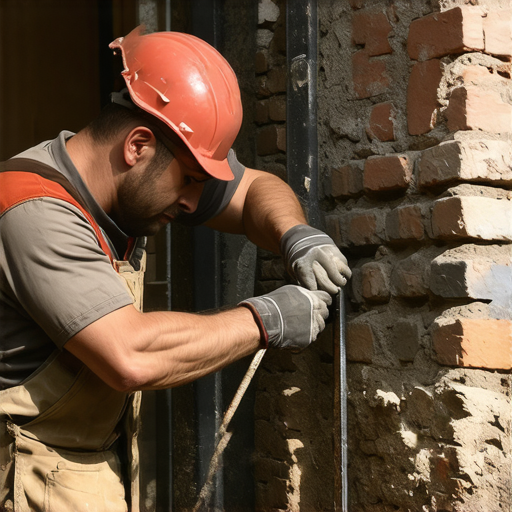
The homeowner stood on the sidewalk, pointing at a spiderweb of fissures snaking through a 1920s soldier course. To them, it was a cosmetic eyesore, a budget line item for a rainy Saturday. But when I slid the digital bore-scope into a 3/8-inch weep hole, the screen didn’t show solid masonry. It showed a graveyard. The structural steel lintels were rusted to a state of exfoliated dust, expanding with enough force to lift ten tons of brickwork. The ‘hairline crack’ was actually a scream for help from a building being ripped apart from the inside. This is the reality of forensic masonry: by the time you see the stain, the rot is already in the bone.
“Water penetration is the single greatest threat to masonry durability.” – BIA Technical Note 7
As we move into 2026, the cost of tuckpointing brick walls is no longer just about the price of a bag of lime and a few hours of labor. We are entering an era where AI masonry assessment and 3D printed masonry repairs are becoming standard, yet the fundamentals of ‘mud’ and ‘tooth’ remain unchanged. If you are looking at a quote for commercial tuckpointing or a simple brick column repair, you have to look past the bottom line and into the chemistry. If a contractor doesn’t talk about the suction of the brick or the Young’s Modulus of the mortar, they aren’t a mason; they’re a painter with a trowel.
Red Flag 1: The Absence of AI Masonry Assessment
In 2026, a clipboard and a ‘gut feeling’ are indicators of a hack. Professional tuckpointing cost estimation now relies on AI masonry assessment tools that utilize thermal imaging and acoustic sensors to map voids behind the brick skin. If a contractor walks your property and gives you a flat per-square-foot price without checking for internal honeycombing or moisture saturation levels, run. High-end estimators use these tools to find where the mortar has turned to powder internally, a condition often hidden by a hard, ‘lick-and-stick’ surface repair done ten years prior. You aren’t just paying for the joints you see; you’re paying for the structural integrity you don’t.
Red Flag 2: The ‘Hard’ Mortar Trap (Ignoring the Sacrificial Principle)
The most common crime in historic restoration is the use of high-strength Portland cement on old, soft-fired bricks. This is a matter of pure physics. Old bricks are porous; they breathe. The mortar must be the ‘sacrificial’ element in the system—softer and more permeable than the brick itself. When you use a Type S or Type M mortar on a pre-1940s wall, you create a rigid cage. During the freeze-thaw cycle, water gets trapped in the brick because it can’t escape through the dense cement mortar. The water expands by 9% as it turns to ice, and because the cement won’t budge, the face of your brick pops off in a process called spalling. A quote that doesn’t specify Type O or lime putty for historic work is a quote for the eventual destruction of your facade.
Red Flag 3: Dismissing Brick Efflorescence Removal as ‘Cleaning’
If your walls are weeping white powder, that’s efflorescence—mineral salts being pushed to the surface by migrating moisture. A red flag in any 2026 pricing model is a contractor who treats efflorescence removal as a simple power-wash job. Salt is a symptom of a deeper failure in foundation waterproofing or a lack of proper drainage. Real masonry water damage repair involves identifying the source of the hydrostatic pressure. If they just scrub the salt and ‘butter’ over the joints without addressing the rising damp, that white ghost will be back within six months, bringing more spalling and mortar decay with it.
Red Flag 4: Low-Balling on Logistics and Self-Leveling Masonry Lifts
Commercial tuckpointing is 60% logistics and 40% craft. If a quote for a multi-story building seems suspiciously low, look at their equipment line item. In 2026, safety and efficiency demand self-leveling masonry lifts rather than shaky, old-school scaffolding. These lifts allow the mason to keep their ‘hawk’ and ‘slicker’ at the perfect ergonomic height, ensuring the ‘mud’ is packed tightly into the back of the joint, not just smeared on the face. A cheap quote usually means they are cutting corners on setup, which leads to ‘cold joints’—where one section of mortar dries before the next is applied, creating a permanent weak point in the wall’s weather barrier.
“Mortar should be designed to be weaker than the masonry units so that any cracks occur in the mortar joints where they can be easily repaired.” – ASTM C270 Standard Specification
Red Flag 5: The ‘DIY Tool’ Mentality for Professional Problems
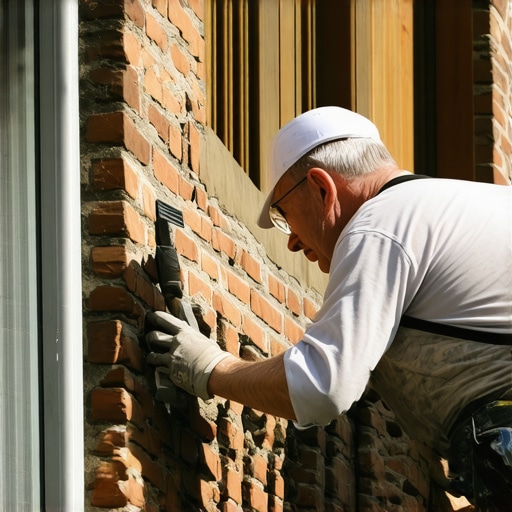
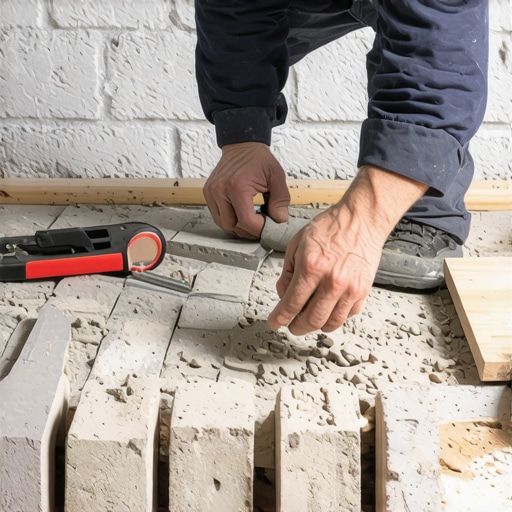
There is a surge in tuckpointing tools for DIY enthusiasts, from mortar guns to specialized grinders. While these are fine for a garden wall, a contractor who relies on ‘grout bags’ or ‘lick-and-stick’ applicators for structural brick column repair is a red flag. True tuckpointing requires the hand-striking of joints to create a ‘compacted’ surface that sheds water. We call it ‘ringing the brick.’ When you strike a joint with a slicker, you are mechanically forcing the binder to the surface, creating a dense, water-resistant skin. If they aren’t using a hawk and trowel to manually ‘butter’ those head joints, the bond will be weak, and the suction will be uneven, leading to premature failure.
The Chemistry of the ‘Mud’ and the 2026 Outlook
As we look toward the future of masonry, including 3D printed masonry repairs for ornate terracotta and stone, the human element remains the final check. You have to understand the carbonation process. When we use lime-based mortars, we aren’t just waiting for them to ‘dry.’ We are waiting for them to absorb CO2 and turn back into stone. This takes time. Any quote that promises a ‘one-day turnaround’ on a major repointing project is lying to you about the physics of hydration. You can’t rush the stone. You can’t cheat the tooth. If you want a wall that lasts another hundred years, you pay for the expertise of the man who knows how to listen to the crack, not just fill it.

![4 Signs You Need Structural Repointing in 2026 [Checklist]](https://masonryrescue.com/wp-content/uploads/2026/03/4-Signs-You-Need-Structural-Repointing-in-2026-Checklist.jpeg)
![Fix Cracking Joints: 5 Historic Brickwork Repointing Tactics [2026]](https://masonryrescue.com/wp-content/uploads/2026/02/Fix-Cracking-Joints-5-Historic-Brickwork-Repointing-Tactics-2026.jpeg)
This post really highlights how crucial modern assessment technology is in our field—I’ve seen firsthand how thermal imaging and acoustic sensors can reveal hidden damage before it becomes a major issue. It makes me wonder, for those of us working on historic restorations, how are you balancing the use of these high-tech tools with traditional craftsmanship? I believe that combining both approaches can really add longevity to masonry repairs. Also, dealing with older structures, I’ve encountered situations where improper mortar mix and rushed work led to problems down the line. Has anyone found effective ways to educate clients on the value of quality materials and proper techniques, especially when they are often tempted by lower, DIY-style quotes? These are complex projects, and I agree that listening to the crack and understanding the chemistry plays a huge role in achieving durable results.