Are Your Walls Leaning? 4 Structural Brick Tie Fixes for 2026
The Forensic Scene: A Ghost in the Cavity
The homeowner thought it was just a hairline crack, a minor cosmetic nuisance near the soldier course of the second story. But when I put my borescope inside the weep hole, the reality was much grimmer: the structural steel ties were rusted to dust. There was nothing holding four tons of brick to the framing but gravity and a prayer. I’ve seen this a thousand times in the field—a wall that looks solid until a heavy gust of wind or a minor tremor brings the whole facade down like a deck of cards. This isn’t just about ‘curb appeal’; it’s about the physics of masonry failure and the structural integrity of your home.
The Physics of the Lean: Why Brick Veneer Deserts the Backup
To understand why a wall begins to belly or lean, you have to understand the ‘cavity wall’ system. In modern construction, your brick isn’t actually holding up your roof; it is a veneer, a protective skin. It relies on metal ties to stay pinned to the structural backup, whether that’s wood studs, CMU, or steel. When these ties fail—usually due to corrosion or poor original installation—the wall begins to move independently.
“Water penetration is the single greatest threat to masonry durability. When moisture enters the cavity and cannot escape, it initiates the oxidation of metal anchors, leading to catastrophic veneer displacement.” – BIA Technical Note 7
In the freeze-thaw climates of the North, this issue is exacerbated. Water enters through degraded joints—where full repointing services were neglected—and freezes. We know that water expands by roughly 9% when it turns to ice. That expansion exerts thousands of pounds of pressure per square inch. If your mortar is too hard (high Portland cement content) and your ties are weak, the wall has nowhere to go but out. This is where we see the dreaded ‘stair-step’ crack or the horizontal bulge that signals a total detachment of the veneer.
Fix 1: Helical Remedial Tie Injection
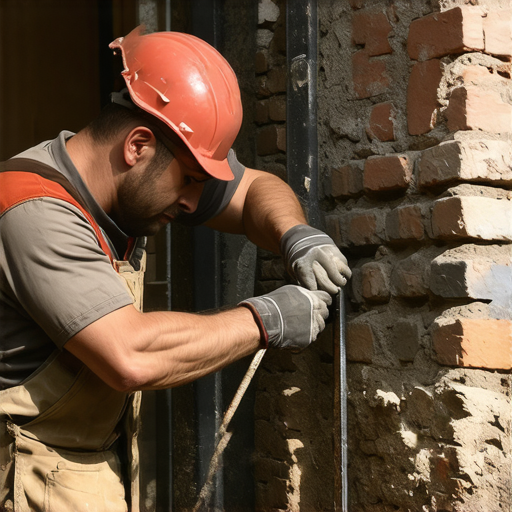
For 2026, the gold standard for stabilizing a leaning wall without tearing it down is the helical stainless steel tie. These aren’t your grandfather’s corrugated ties. We drill a pilot hole through the brick and into the backup material. The helical tie is then driven through both, creating a mechanical connection that doesn’t rely on brickwork sealants application or topical fixes. The ‘tooth’ of the helix bites into the substrate, providing tension and compression resistance. It’s a surgical strike. We then patch the small drill hole with a custom-matched mortar repointing services blend so the repair is invisible to the naked eye.
Fix 2: Commercial Tuckpointing and Structural Grouting
Sometimes the lean is caused by the collapse of the inner wythe or the degradation of the bed joints. Commercial tuckpointing in a structural context involves more than just scraping out the ‘mud’ and slapping on new stuff. We look at the ‘suction’ of the brick—the initial rate of absorption. If you use a high-strength Type S mortar on an old, soft clay brick, the mortar will win the fight, and the brick will lose, leading to spalled concrete steps repair issues elsewhere or face-shell popping. We use lime-heavy mixes that allow for autogenous healing—where the lime actually migrates into small cracks to seal them over time.
Fix 3: Self-Leveling Masonry Lifts and Foundation Stabilization
If the wall is leaning because the footing is diving, no amount of ties will save you. Foundation crack repair must be the first priority. We are seeing a rise in the use of self-leveling masonry lifts and polyurethane injections to stabilize the soil ‘heave’ or settlement. Once the foundation is pinned, we can address the verticality of the wall. If we find honeycombing in the concrete at the base, we have to excavate and pour a reinforced haunch to give the brick a ‘shelf’ to sit on again. This is where the masonry birdsmouth cuts come into play—precisely angling the brick to transition back to a plumb line without creating a water shelf.
Fix 4: Through-Wall Structural Bolting (The Industrial Approach)
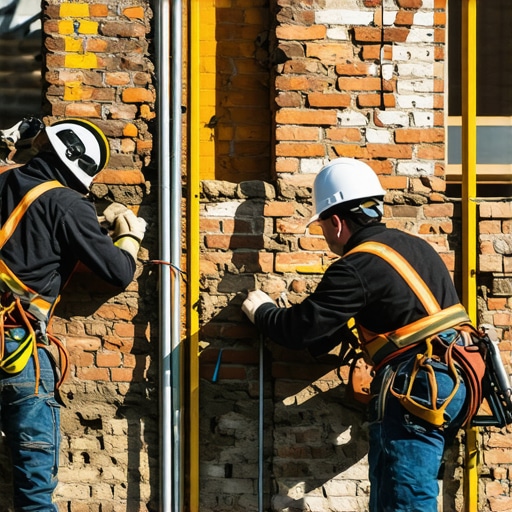
In commercial masonry maintenance, particularly for multi-story brick buildings, we often move beyond simple ties. We use through-wall bolts with decorative ‘star’ washers or plates on the exterior. It’s a gritty, industrial look that tells the world the building is being held together by brute force. This method treats the entire masonry mass as a single unit, tying it back to the floor joists or steel beams. It’s the only way to stop a ‘bow’ that has exceeded two inches of deflection.
“The use of metal anchors in masonry must account for both the lateral loads of wind and the vertical loads of the masonry’s own weight, ensuring that the tie can transfer these forces without yielding.” – ASTM C270 Standards
The Danger of the ‘Lick-and-Stick’ Mentality
I have a burning hatred for the modern ‘handyman’ approach where people try to fix a structural lean with brickwork sealants application alone. Slathering a silicone sealer over a moving crack is like putting a Band-Aid on a broken leg. You’re just trapping the moisture inside, accelerating the ‘flash setting’ of the internal rot. If you see spalled concrete steps repair needs or cracks in your outdoor kitchen masonry build, it’s a sign that the ground is moving or the moisture management system has failed. You need a pro who knows how to ‘butter’ a joint properly and who understands the carbonation of lime over a hundred-year lifecycle.
Final Forensic Checklist: Don’t Do It Twice
Do it once, or do it twice. If you’re hiring out full repointing services, ask the contractor about the mortar’s PSI and the material of the ties they’re using. If they don’t mention stainless steel or the ‘sacrificial principle’ of mortar, show them the door. A wall that leans is a wall that’s waiting to fall. Whether it’s a commercial tuckpointing job on a warehouse or a delicate restoration of a 1920s bungalow, the physics of the ‘hawk’ and the ‘slicker’ don’t change. Keep the water out, keep the ties tight, and respect the stone.
![Emergency Masonry Repair: 3 Signs Your Wall Might Collapse [2026]](https://masonryrescue.com/wp-content/uploads/2026/03/Emergency-Masonry-Repair-3-Signs-Your-Wall-Might-Collapse-2026.jpeg)

![Why Sagging Windows Need New Brick Lintels Fast [2026 Fix]](https://masonryrescue.com/wp-content/uploads/2026/02/Why-Sagging-Windows-Need-New-Brick-Lintels-Fast-2026-Fix.jpeg)