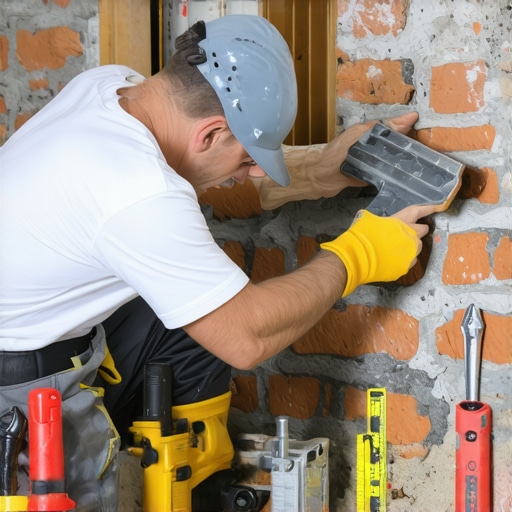
5 Commercial Tuckpointing Tactics to Cut 2026 Repair Costs
The Anatomy of a Failing Facade
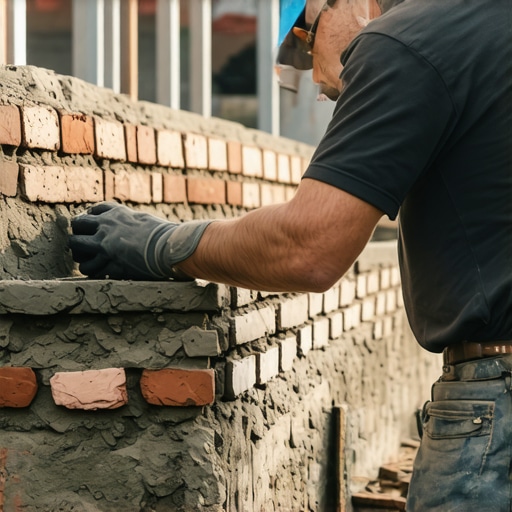
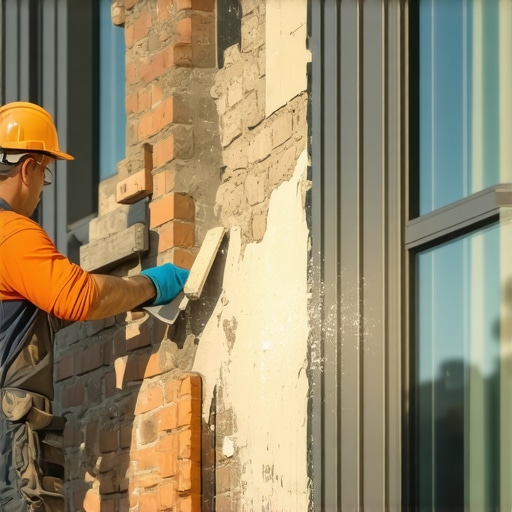
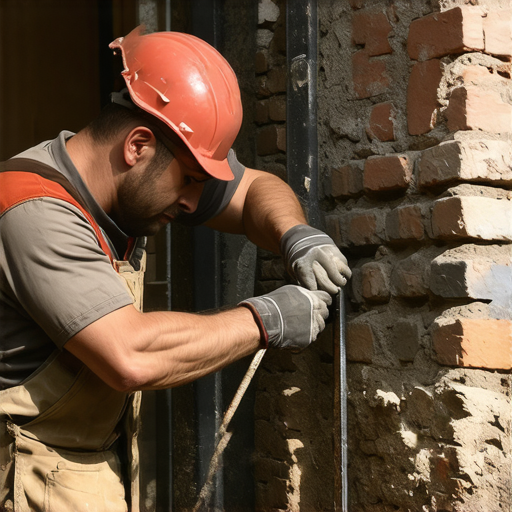
I stood on a rickety swing-stage scaffolding seventy feet above the sidewalk, looking at a commercial warehouse facade that the owner described as having “a few minor cracks.” To the untrained eye, it was just the weathering of time. But when I inserted my digital borescope into a quarter-inch gap in the mortar, the reality was grim. The structural steel lintel behind the soldier course was so bloated with rust—a phenomenon we call ‘rust jacking’—that it was exerting thousands of pounds of upward pressure on the brickwork above. It wasn’t just a crack; it was a slow-motion explosion. This is the reality of forensic masonry. If that owner had invested in proper tuckpointing brick walls five years ago, he’d be looking at a five-figure maintenance bill instead of a six-figure structural emergency. As a third-generation mason, I’ve seen the same story told in red clay and lime for decades. You don’t just ‘fix’ a wall; you manage the inevitable decay of materials through the lens of physics and chemistry.
“Water penetration is the single greatest threat to masonry durability. Proper mortar joint maintenance is the first line of defense against structural failure.” – BIA Technical Note 7
1. Implementing Fiber-Reinforced Mortars for High-Stress Commercial Joints
In the high-traffic world of commercial real estate, standard Type N mortar often lacks the tensile strength to handle the vibrations and thermal shifts of modern urban environments. This is where fiber-reinforced mortars come into play. By integrating microscopic synthetic fibers into the mud, we create a matrix that resists micro-cracking during the hydration process. When the cementitious paste begins to cure, it undergoes chemical shrinkage. Without fibers, this shrinkage creates invisible pathways for moisture. With them, the ‘tooth’ of the mortar is significantly enhanced. In my years on the hawk, I’ve seen that these fibers act like a million tiny rebar pieces, holding the ‘butter’ together even when the building undergoes minor settling. For 2026 budgeting, switching to these advanced mixes during a repointing cycle can extend the lifespan of the joint by nearly 40% compared to traditional field-mixed mud. It’s about the modulus of elasticity—you want a mortar that can ‘give’ without breaking its bond to the brick face.
2. Precision Brick Arch Restoration: The Physics of the Keystone
Commercial buildings from the early 20th century often feature massive brick arches that serve as both aesthetic and structural components. When the mortar in these arches begins to crumble, the entire equilibrium of the wall is threatened. Brick arch restoration is not a job for a handyman with a bag of premix. It requires an understanding of the ‘line of thrust.’ If you grind out a joint in an arch without proper shoring, you risk a catastrophic collapse. We look for ‘slip,’ where the keystone or the voussoirs start to drop even a fraction of an inch. My grandfather used to say that an arch is only as strong as the man who buttered the joints. In 2026, we use laser-levels and pressure-transducers to monitor these loads during repair. We use a ‘slicker’ to pack the joints tight, ensuring there are no voids where water can sit and undergo the devastating 9% expansion that happens when it turns to ice. If you see ‘honeycombing’ in the mortar of an arch, the structural clock is ticking.
3. The Chimney Defense: Flue Liners and Heat Shields
Commercial chimneys and boiler stacks are under constant chemical attack. Most people think a chimney is just a column of brick, but it’s actually a thermal engine. Between the sulfuric acid in the exhaust and the extreme heat of the boiler, the masonry is being dissolved from the inside out. This is why chimney flue liner installation and chimney heat shield installation are non-negotiable for cost-cutting. A heat shield isn’t just a piece of metal; it’s a ceramic barrier that prevents ‘thermal shock’ from shattering the brick structure. When we perform chimney repair services, we often find that the original clay liners have deliquesced—turned into a mushy, acidic paste. By installing a high-grade stainless steel or poured-in-place liner, you isolate the masonry from the heat and acid, effectively freezing the rate of decay. If you ignore the internal liner, you’ll be rebuilding the entire stack within a decade. That’s a lesson most facility managers learn the hard way after a ‘cold joint’ develops and the stack starts to lean.
“Mortar shall be specified by either proportion or property specifications. For restoration, the mortar must always be softer than the surrounding masonry units to prevent sacrificial spalling of the brick.” – ASTM C270 Standards
4. Upgrading Retaining Wall Drainage to Prevent Hydrostatic Failure
Modular retaining walls are the workhorses of commercial landscapes, but they have a fatal flaw: hydrostatic pressure. I’ve seen walls three feet thick pushed over like toy blocks because of water trapped in the soil. A retaining wall drainage upgrade is the most effective way to cut long-term repair costs. We’re talking about more than just a few weep holes. We’re talking about the installation of perforated drainage pipes wrapped in geotextile fabric and backed by at least twelve inches of clean, crushed stone. The physics is simple: water weighs 62.4 pounds per cubic foot. If that water can’t get out, it builds up behind the wall until the pressure exceeds the friction holding the blocks together. We look for ‘efflorescence’—that white, salty staining on the face of the wall. That’s the wall’s way of crying for help, telling you that water is moving through the masonry and leaching out the calcium hydroxide. Fix the drainage, and the wall will stand for a century; ignore it, and you’ll be paying for an excavation crew before the next major freeze.
5. Restoring Outdoor Fountains and Fire-Rated Masonry
Commercial aesthetics often include outdoor masonry fountain restoration, which presents a unique set of challenges. Constant water immersion is a nightmare for mortar. We have to use specialized hydraulic cements and waterproof admixtures that prevent the ‘mud’ from re-emulsifying. Similarly, fire-rated masonry installation in commercial kitchens or around industrial equipment requires refractory mortars that can withstand temperatures upwards of 2,000 degrees Fahrenheit. Standard mortar will literally turn to glass and then shatter under those conditions. When we restore a fountain, we’re looking for ‘calcium carbonate stalactites’ forming in the plumbing voids—a sign that the mortar is being eaten away. Using the right material for the specific environmental stress is the difference between a one-time fix and a recurring nightmare. Every joint we strike with our slickers must be perfectly concave to shed water and minimize the surface area exposed to the elements. It’s not just masonry; it’s a war against the second law of thermodynamics.
The Final Word on Masonry Longevity
Preventative maintenance in the masonry world is about understanding the materials. You can’t put hard Portland cement on soft 19th-century brick; the brick will lose every time. The mortar must be the ‘sacrificial’ element, designed to weather and be replaced so the brick itself remains intact. By focusing on these five tactical areas—from fiber-reinforced mortars to advanced drainage systems—commercial property owners can shift from a reactive ‘firefighting’ mode to a proactive management strategy. Don’t wait until the bricks are falling onto the sidewalk. Listen to the cracks; they’re telling you exactly what’s going to fail in 2026. “
![4 Signs You Need Structural Repointing in 2026 [Checklist]](https://masonryrescue.com/wp-content/uploads/2026/03/4-Signs-You-Need-Structural-Repointing-in-2026-Checklist.jpeg)