7 Freeze-Thaw Damage Restoration Fixes for 2026 Concrete
The Anatomy of Winter’s Assault on Masonry
I remember a job site in the dead of February where the wind was sharp enough to cut through a Carhartt jacket. The client called me because their ‘brand new’ brick stairs were literally shedding their faces like wet paper. I walked up, ran my thumb across a chunk of fallen clay, and felt that tell-tale gritty silt. My old mentor, a man who had more lime in his veins than blood, used to tell me that a brick is a living thing. He’d say, ‘If you choke a brick with the wrong mud, it’ll fight until it dies.’ What those homeowners didn’t realize—and what many contractors still don’t get—is the sheer mechanical violence of the freeze-thaw cycle. When water gets trapped in the pores of a dense, non-breathable unit, it’s not just sitting there. It’s a ticking time bomb. As we look toward the restoration standards of 2026, we have to stop treating masonry like a static plastic and start treating it like the porous, breathing substrate it actually is.
“Water penetration is the single greatest threat to masonry durability.” – BIA Technical Note 7
1. Brick Spalling Prevention: The Science of Critical Saturation
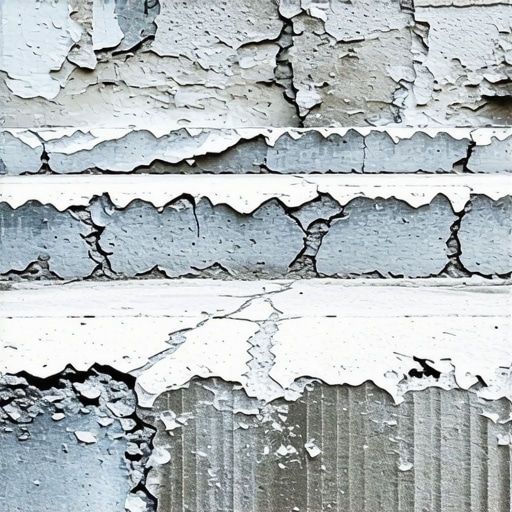
The most common casualty of a brutal winter is spalling. This happens when the moisture content within a brick reaches ‘critical saturation’—usually around 90% of its pore space. When that water freezes, it expands by 9% in volume. If there isn’t enough empty pore space (the ‘ice refuge’) for that water to migrate into, the internal pressure exceeds the tensile strength of the clay. The result? The face of the brick pops off. Brick spalling prevention in 2026 isn’t about slapping a hardware-store sealer on the wall; that actually traps the moisture inside and accelerates the rot. The fix is a deep-penetrating silane-siloxane water repellent that remains vapor-permeable. It keeps the liquid water out but lets the vapor ‘breathe’ out of the tuckpointing brick walls.
2. Precision Mortar Repointing Services
If your mortar is harder than your brick, the brick loses every time. Many modern ‘pros’ use high-strength Portland cement for mortar repointing services on historic homes. This is a death sentence. When the wall expands and contracts with thermal shifts, the hard mortar doesn’t budge, forcing the soft brick to take the stress. By the time I get called in, the bricks are crushed. The 2026 standard for mortar matching services involves a laboratory analysis of the original lime-to-sand ratio. We use ‘sacrificial’ mortar—Type O or Type N—so that the joints, not the units, absorb the movement. When we ‘butter’ these joints, we ensure the bond is tight enough to prevent ‘honeycombing’ but soft enough to fail before the brick does.
3. Chimney Crown Repair: The Umbrella of the Home
The chimney crown is the most neglected piece of real estate on a house. Usually, it’s just a thin smear of leftover mud from the brickwork. A proper chimney crown repair requires a cast-in-place concrete slab with an overhang and a drip edge. Without that drip edge, water runs down the face of the chimney, saturating the soldier course and leading to massive brick spalling prevention failures. In 2026, we are seeing a shift toward flexible, fiber-reinforced elastomeric membranes that can bridge the inevitable shrinkage cracks that occur during the initial cure.
4. Retaining Wall Weep Hole Cleaning and Geogrid Physics
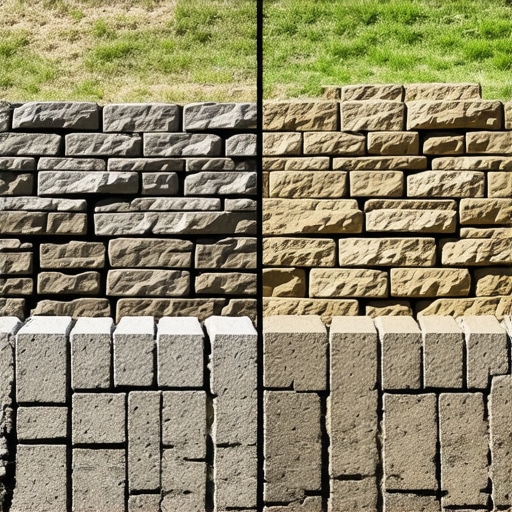
Retaining walls fail because of hydrostatic pressure, not just the weight of the dirt. When the ground freezes, that moisture-heavy soil behind the wall turns into a giant, expanding piston. If your retaining wall weep hole cleaning hasn’t been done in years, that water has nowhere to go. It pushes the wall out of plumb, creating ‘wavy’ lines. For major restoration, we’re looking at retaining wall geogrid installation to reinforce the soil mass itself. This isn’t a ‘handyman special’ fix; it’s geotechnical engineering. You have to stabilize the ‘heel’ of the wall to ensure the face doesn’t buckle under the 2026 winter loads.
5. Stone Veneer Repair: Stopping the ‘Lick-and-Stick’ Failures
The industry is currently plagued by failing ‘lick-and-stick’ stone. Contractors often skip the drainage mat, meaning any water that gets behind the stone stays there. During a freeze, that ice lens pops the stone right off the wire lath. Stone veneer repair now requires a dedicated drainage plane—a 3/16-inch gap that allows water to exit through the bottom of the wall. If you see white crusty salt (efflorescence) on your veneer, that’s the wall screaming for help. We have to strip the failed sections, install a proper weather-resistant barrier (WRB), and re-set the stones with a high-polymer thin-set that can handle the ‘tooth’ of the stone.
6. Commercial Masonry Facade Maintenance and Smokestacks
On a larger scale, commercial masonry facade maintenance is about managing the ‘stack effect.’ In tall buildings and commercial smokestack repair, thermal differentials between the inside and outside are extreme. We use industrial-grade ‘slickers’ to strike joints that can withstand high-velocity wind-driven rain. If a smokestack has a cold joint from a previous bad repair, the freeze-thaw cycle will find it and rip it open. Restoration in 2026 utilizes drone thermography to find these ‘hot spots’ of moisture before the masonry starts falling onto the sidewalk below.
“Mortar should be weaker than the masonry units so that any cracks occur in the mortar joints where they can be easily repaired.” – ASTM C270 Standard
7. The Truth About ‘Flash Setting’ in Early Spring Repairs
The biggest mistake in concrete restoration is working too fast when the sun comes out. If the substrate is bone-dry, it will suck the moisture out of your new repair mix instantly. This causes ‘flash setting,’ where the material looks hard but has zero structural bond. You’ll end up with a ‘hollow’ sound when you tap it with a hawk. We now use pre-soaking techniques (Saturated Surface Dry or SSD) to ensure the chemical hydration process of the concrete is completed. Do it once, or do it twice—that’s the mason’s mantra. If you don’t respect the physics of the 9% expansion, the North winter will remind you of your mistakes by April.