5 Signs Your 2026 Brick Veneer Needs New Structural Ties
The Borescope Never Lies: A Forensic Glimpse Behind the Wythe
The homeowner in this 2026 structural masonry inspection pointed to a hairline fracture in the mortar bed and asked for a simple patch job. I didn’t reach for a patch kit; I reached for the fiber-optic borescope. I threaded the lens through a weep hole, and what we saw on the screen wasn’t just dust. The structural steel ties—the very anchors holding that four-inch brick curtain to the wood frame—were gone. Not just rusted, but reduced to a red, flaky ghost of their former selves. The brick was standing by habit and gravity alone, a 20-ton disaster waiting for a stiff wind to pull the trigger. When the steel fails, the veneer becomes an independent agent, no longer tied to the skeleton of the house. Understanding the mechanics of these failures requires moving past the surface aesthetics and looking into the chemistry of the wall assembly. Brick veneer isn’t a structural load-bearing element; it is a rainscreen. And like any screen, it depends entirely on the integrity of its fasteners.
“Water penetration is the single greatest threat to masonry durability, specifically regarding the corrosion of metallic ties and the subsequent loss of lateral stability.” – BIA Technical Note 7
1. The ‘Smile’ and the Outward Deflection
The first sign of tie failure is often a subtle outward bowing of the wall, usually visible if you sight down the corner of the building. In the trade, we call this the ‘smile’ when it occurs over a window lintel or a soldier course. When the ties fail—either through corrosion or because some ‘lick-and-stick’ contractor used the wrong gauge of corrugated metal—the wall begins to lean under its own weight. This is a matter of lateral physics. Without the ties to transfer the wind load to the structural studs, the brick wall acts like a sail. In freeze-thaw climates, water enters the cavity and expands by 9% upon freezing. This expansion creates hydrostatic pressure that pushes the brick away from the frame. If you see a gap widening between your window frames and the brick, or if the wall feels ‘spongy’ when pressed, your structural masonry inspection is no longer optional; it is an emergency. We often have to install helical ties, which are threaded stainless steel rods that we ‘drive’ through the brick and into the studs to re-establish that lost connection without tearing down the entire facade.
2. Rust Jacking and the Volumetric Explosion
Rust isn’t just a color; it’s a force of nature. When a steel tie oxidizes, it undergoes a massive volumetric expansion. Iron oxide (rust) can occupy up to six times the volume of the original steel. This phenomenon, known as ‘rust jacking,’ creates internal pressure within the mortar joint. You’ll see this as perfectly horizontal cracks that follow the spacing of your ties—usually every 16 inches vertically and 24 inches horizontally. As the tie expands, it lifts the courses of brick above it. This isn’t something you can fix with simple tuck pointing services. If you just butter some new mud into those cracks, the rust jacking will just pop it back out within two seasons. You have to address the ferrous oxide at the source. We often see this in older homes where historic masonry preservation wasn’t prioritized, and the original ties were non-galvanized. The moisture trapped in the air gap turns that gap into a humid oven, accelerating the decay until the tie snaps like a dry twig.
3. The Chimney Gap and Flashing Failure
Chimneys are the most exposed masonry elements on any structure, taking the brunt of the wind and rain from all four sides. When ties fail in a chimney, you’ll notice a widening gap where the masonry meets the roofline or the siding. This is frequently exacerbated by a lack of proper chimney flashing repair. If the flashing is torn or improperly stepped, water funnels directly behind the brickwork, saturating the ties and the wooden sheathing. This moisture ingress leads to the rot of the very wood the ties are nailed to. Furthermore, a cracked or missing chimney cap allows water to penetrate the interior flues and the masonry core. Professional chimney cap replacement is the first line of defense here. Without a solid cap, the chimney becomes a vertical straw, sucking water into the heart of the masonry where it can sit for weeks, slowly eating away at the galvanized coating of your structural ties. Once that coating is gone, the clock starts ticking on a total chimney collapse.
“The selection of mortar for restoration must ensure that the mortar is weaker than the masonry units, allowing the joints to act as the sacrificial element in the wall system.” – ASTM C270 Standards
4. Spalling and the Failure of Tuckpointing Weatherproofing
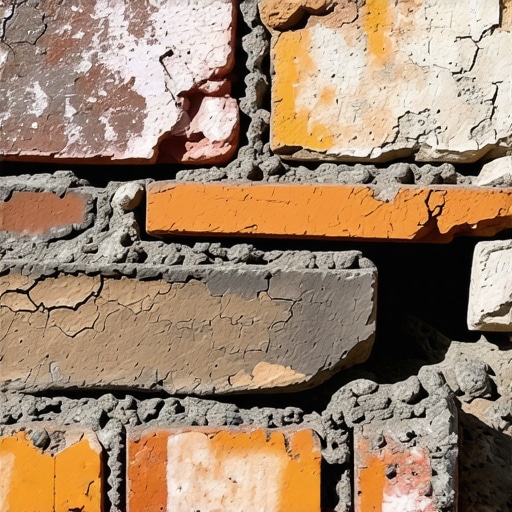
When you see the faces of your bricks popping off—a process we call spalling—it’s a sign that the wall is no longer breathing. In many cases, this happens because a previous ‘handyman’ used a high-strength Portland cement on a wall that required soft lime-based mud. The hard mortar traps moisture inside the brick. When the freeze-thaw cycle hits, the water trapped behind the hard mortar face expands and shatters the brick. This moisture also sits on the wall ties, causing them to fail. Proper tuckpointing brick walls involves grinding out the old, decayed joints to a depth of at least twice the width of the joint and replacing it with a mortar that matches the original’s vapor permeability. We now use fiber-reinforced mortars in specific structural applications to provide higher tensile strength without sacrificing the breathability required for historic masonry preservation. If your tuckpointing weatherproofing is failed, the ties are the next to go, as they are now exposed to a constant state of dampness.
5. Coping Stone Displacement and Vertical Shearing
The top of a parapet or a garden wall is its most vulnerable point. Stone coping installation is designed to shed water away from the wall’s interior, but if the joints between the stones fail, or if the stones themselves shift, water gains a direct path to the structural ties. You might see vertical cracks or ‘stair-stepping’ near the top of the wall. This indicates that the top few courses of brick are no longer tied to anything and are shifting independently. Flush pointing services can temporarily seal these joints, but if the stone has shifted, it usually means the anchors beneath are gone. We often find that the original masons didn’t use a hawk and trowel to properly bed the coping; they just ‘slopped’ it on, leading to honeycombing in the mortar. This honeycombing creates pockets where water can pool, directly over the topmost wall ties. When we perform stone coping installation today, we ensure a continuous dpc (damp proof course) is installed beneath the stone to prevent this vertical migration of moisture.
The Solution: Beyond the Slicker and the Mud
Fixing a veneer with failed ties isn’t about cosmetic tuck pointing services. It’s about structural stabilization. We start by using a metal detector or GPR (Ground Penetrating Radar) to locate existing ties. If they are missing or spaced too far apart—which we often see in ‘hurry-up’ modern construction—we must install supplemental anchors. These are typically stainless steel to prevent future corrosion. We then address the moisture issues: chimney flashing repair, ensuring the weep holes are clear and not clogged with mortar droppings (a common ‘cold joint’ issue), and applying a breathable silane-siloxane sealer. Don’t let a ‘tailgate contractor’ tell you that a little bit of mortar ‘butter’ will fix a bowing wall. It takes a forensic eye to see the ghost in the wall before the wall becomes a memory. Do it once, do it right, and keep the mud where it belongs—in the joints, not on the ground in a pile of rubble.
![Stop Retaining Wall Leans with 3 Pro Reinforcement Fixes [2026]](https://masonryrescue.com/wp-content/uploads/2026/03/Stop-Retaining-Wall-Leans-with-3-Pro-Reinforcement-Fixes-2026.jpeg)
![4 Geogrid Mistakes Ruining Retaining Walls [2026 Checklist]](https://masonryrescue.com/wp-content/uploads/2026/02/4-Geogrid-Mistakes-Ruining-Retaining-Walls-2026-Checklist.jpeg)