Bowing Foundation Wall Repair: 3 Permanent 2026 Fixes
The Anatomy of a Failing Foundation: A Forensic View
I was standing in a damp, low-ceilinged basement in a 1920s bungalow last November when I saw it—a horizontal fracture running the entire length of the North wall, right at the frost line. The homeowner, a nervous guy who had spent too much time reading ‘handyman’ forums, thought it was just a hairline crack that needed a bit of caulk. But when I inserted my fiber-optic scope into a weep hole and peered into the core of the concrete masonry units (CMU), the truth was ugly: the internal steel reinforcement was rusted to orange dust, and the hydrostatic pressure from the rain-soaked clay outside had pushed the center of the wall three inches inward. This wasn’t a cosmetic issue; it was a slow-motion structural collapse. In my forty years of buttering blocks and swinging a hammer, I’ve seen this story a thousand times. If you don’t respect the physics of the earth, the earth will eventually reclaim your house. We are looking at the 2026 standard for permanent remediation, moving beyond the ‘slap-some-paint-on-it’ era into true forensic engineering.
“Water penetration is the single greatest threat to masonry durability, leading to cycles of expansion and contraction that can destabilize even the thickest load-bearing walls.” – BIA Technical Note 7
The Physics of the Bow: Why Your Walls Are ‘Pregnant’
To understand the fix, you have to understand the enemy. In the North, we deal with the brutal reality of the freeze-thaw cycle. When the ground saturates, the soil doesn’t just get heavy; it becomes a hydraulic ram. Water expands by roughly 9% when it turns to ice. If you have expansive clay soil—the kind that gets slick and sticky like wet chocolate—it exerts thousands of pounds of pressure against your foundation. This is hydrostatic pressure. It hits the center of the wall hardest because the top is anchored by the floor joists and the bottom is pinned by the footing. The result? A ‘pregnant’ wall that bows inward. I’ve seen modular masonry construction fail under these conditions simply because the builder didn’t understand the lateral load requirements. When the wall bows, the vertical load-bearing capacity of the masonry is compromised. You aren’t just looking at a crack; you are looking at a structural hinge that is ready to fold. We utilize BIM masonry projects now to model these stresses before we even touch a trowel, allowing us to see exactly where the failure points are localized.
Fix 1: Carbon Fiber Reinforcement and Advanced Masonry Adhesives
The first permanent fix for a wall bowing less than two inches is the application of carbon fiber straps. This isn’t your grandfather’s steel I-beam solution that takes up two feet of basement space. We are talking about aerospace-grade carbon fiber bonded directly to the masonry with advanced masonry adhesives. The micro-zoom on this technology is fascinating. The adhesive doesn’t just sit on the surface; it penetrates the ‘tooth’ of the concrete, creating a chemical bond that is stronger than the block itself. When we ‘slick’ the surface and apply these straps, we are essentially creating an external skeleton. The carbon fiber has a tensile strength ten times that of steel. For 2026, the trend is toward pre-impregnated straps that utilize historic mortar analysis data to ensure the resin doesn’t trap moisture behind the strap, which would cause the block to spall. If you have a stone foundation, we might combine this with re-pointing services to ensure the base material is sound before the straps are set.
“The selection of mortar for restoration must prioritize the breathability of the assembly, ensuring that the mortar is sacrificial to the masonry unit itself.” – ASTM C270 Standards
Fix 2: Helical Tie-Backs and The Soil-Structure Interface
If the wall has migrated more than two inches, straps won’t cut it. You need to pull the wall back, or at least stop the movement dead. This is where helical tie-backs come in. Imagine a giant corkscrew being driven through your foundation wall, through the ‘dead-man’ zone of the soil, and into the stable earth thirty feet away. We use hydraulic torque motors to drive these anchors in. The forensic beauty of this is that we can measure the ‘torque-to-capacity’ ratio in real-time. Once anchored, we tension the rod from the inside. This counteracts the hydrostatic pressure perfectly. During this process, we often find that the chimney rebuild services or patio stone realignment projects the homeowner did years ago actually contributed to the problem by directing water toward the foundation. Proper drainage is the silent partner of every masonry repair. If you don’t fix the gutters, you’re just throwing money into a hole.
Fix 3: Full Excavation and Self-Healing Concrete Foundations
The nuclear option—and the only one I truly trust for a wall that has structurally failed—is full excavation and replacement using self-healing concrete foundations. This is the cutting edge of 2026 masonry. We dig out the exterior, relieve the pressure, and pour new walls infused with calcite-producing bacteria. When a microscopic crack forms, water triggers the bacteria to wake up and produce limestone, sealing the crack from the inside out. It’s the closest thing to a ‘living’ foundation we’ve ever seen. During this process, we also address concrete flatwork services around the perimeter to ensure a 5-degree slope away from the house. We might use historic pointing styles on any visible above-grade stone to maintain the aesthetic, but below grade, it’s all about high-tech waterproofing. The ‘mud’ we use today isn’t just sand and lime; it’s a complex chemical cocktail designed to last 150 years.
The Forensic Conclusion: When to Panic
Don’t be fooled by a contractor who tells you that a bit of re-pointing services will fix a bowing wall. If that wall is out of plumb, you have a gravity problem, not a cosmetic one. Look for the ‘stair-step’ cracks in the corners or the long horizontal ‘smile’ in the middle of the wall. That is the house crying for help. In my experience, waiting only makes the bill higher. By the time the ‘cold joint’ starts leaking silt, you’re months away from a total failure. Do it right, do it once, and for heaven’s sake, keep your ‘hawk’ and ‘slicker’ away from it if you don’t know the chemistry of the mix. Real masonry isn’t about looking good on day one; it’s about standing tall on day ten thousand.
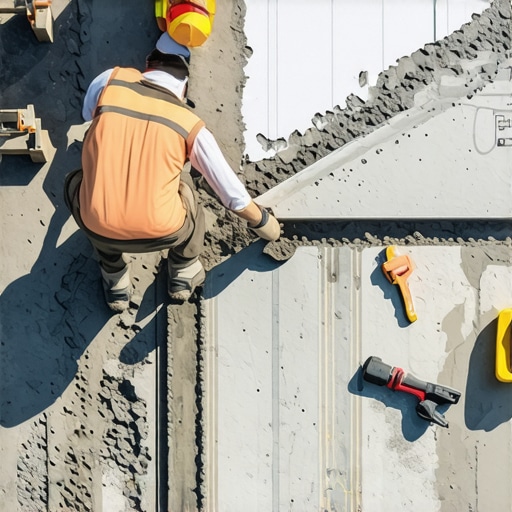
![Fix Shifting Blocks: 4 Signs Your 2026 Foundation Needs Help [2026]](https://masonryrescue.com/wp-content/uploads/2026/02/Fix-Shifting-Blocks-4-Signs-Your-2026-Foundation-Needs-Help-2026.jpeg)
Reading this post made me reflect on the importance of proactive foundation maintenance. I live in an area with expansive clay soil, and I’ve seen firsthand how water mismanagement can accelerate these issues. I particularly found the discussion on self-healing concrete fascinating—it’s like giving your foundation a form of biological insurance. From my own experience, ensuring proper drainage and sealing cracks early can make a huge difference in longevity. Has anyone tried integrating bacteria-infused concrete in existing structures, or is it more common during new builds? I’d love to hear about real-world applications beyond new construction. Also, I wonder how cost-effective these advanced repairs are in the long run, especially compared to traditional methods. It seems like a small investment for such durable, long-term results. Overall, this post underscores that understanding the physics behind foundation failure is key to choosing the right fix before a tiny crack turns into a catastrophic failure.