Is Stone Veneer Over Brick a Mistake? 2026 Installation Tips
The Forensic Scene: When Modern Aesthetics Meet Structural Rot
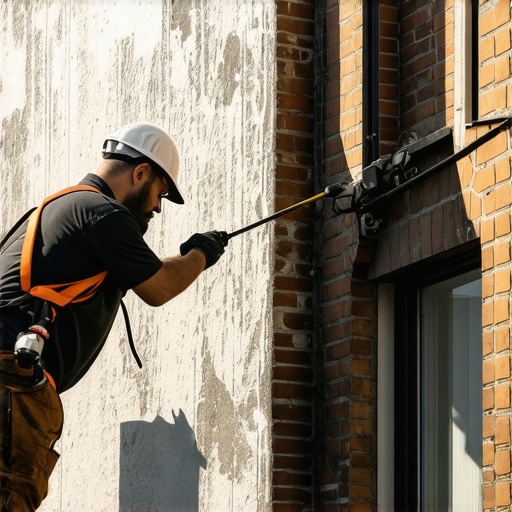
I remember pulling my truck up to a 1920s Tudor that looked, from the curb, like a million-dollar renovation. The homeowner had just finished a full exterior ‘upgrade’—slapping a heavy, dark fieldstone veneer over the original Chicago commons. But as I walked closer, the smell hit me. Not the smell of fresh mortar, but the unmistakable, cloying scent of wet, anaerobic decay. I reached into my pocket, pulled out my inspection mirror, and slid it into a weep hole that looked far too small. What I saw on the screen was a horror show: the structural steel lintels were rusted to red dust, and the original brick substrate behind the stone had turned into something resembling wet graham crackers. This wasn’t just a cosmetic failure; it was a slow-motion collapse disguised as a home improvement project. Most contractors treat stone veneer as a ‘lick-and-stick’ wallpaper, but masonry doesn’t work that way. It’s a living, breathing assembly governed by the uncompromising laws of thermodynamics and vapor pressure.
The Chemistry of Disaster: Why ‘Hard’ Isn’t Always Better
When you take a soft, porous, historical brick and smother it with a modern, dense stone veneer and high-strength Portland-based high-performance mortar mixes, you are creating a ticking time bomb. Older bricks were fired at lower temperatures than modern units; they have a high ‘suction’ rate and rely on their ability to absorb moisture and then release it back to the atmosphere. This is the ‘breathability’ you hear old-timers like me ranting about. If you apply a stone veneer using a high-impermeability mortar, you move the ‘dew point’—the specific temperature at which water vapor turns to liquid—right into the middle of your original brick wall. In a freeze-thaw climate, that trapped water expands by 9%, and because the modern stone veneer is harder than the brick, the brick is the one that gives way. It shatters internally. This process, known as spalling, can occur for years before you ever see a crack on the surface. By the time you notice the stone bowing, the underlying concrete block foundation repair needs are usually catastrophic. To understand the gravity of this, we look to the industry standards:
“Water penetration is the single greatest threat to masonry durability. The use of mortars with lower water vapor permeability than the masonry units themselves can lead to sub-florescence and structural degradation.” – BIA Technical Note 7
The Mechanics of the Bond: Mud, Butter, and Suction
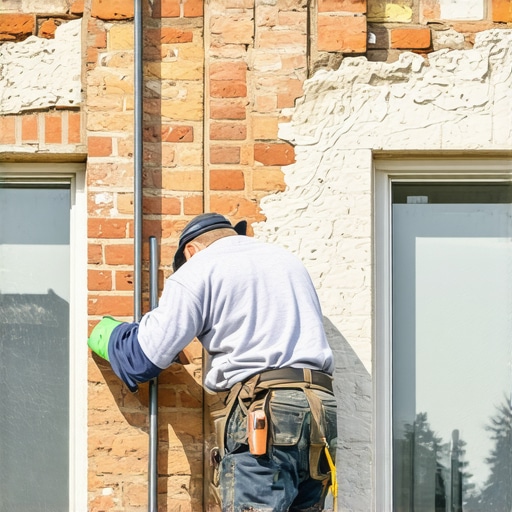
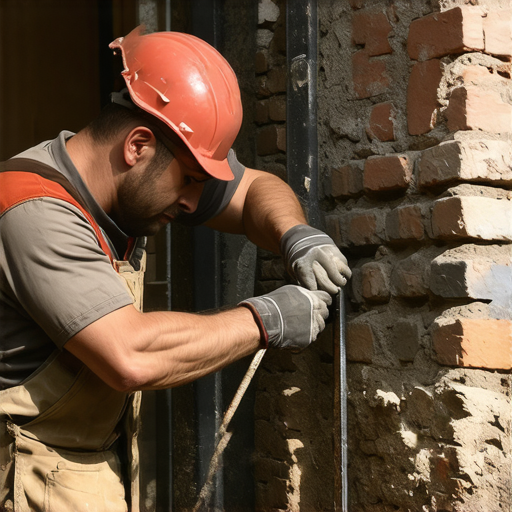
If you’re determined to proceed with stone veneer over an existing brick facade in 2026, you have to respect the ‘tooth’ of the surface. You can’t just slap ‘mud’ on a painted or glazed brick. The suction of a dry brick will pull the water out of your mortar too fast—a phenomenon we call ‘burning’ the joint. This results in a flash set where the mortar never actually forms a crystalline bond with the substrate. It just sits there, held by gravity until the first heavy vibration or thermal shift. Professional stone veneer repair often starts with masonry cleaning using pressurized water or mild acidic solutions to open up those pores. You then need a scratch coat. This isn’t just a thin layer of cement; it’s a mechanical key. You ‘butter’ the back of each stone, ensuring 100% coverage to avoid hollow spots where water can collect. If the job is large enough, we often use concrete pump masonry mixes to ensure the consistency of the ‘mud’ remains uniform from the first stone to the last soldier course. A consistent mix is the only way to prevent the dreaded ‘cold joint,’ where one day’s work fails to bond to the next, creating a natural fracture line for water to exploit.
The Physics of Settlement and the Geogrid Solution
Many homeowners overlook that stone veneer adds significant dead load to the wall. If that brick was already showing signs of foundation crack repair needs, adding thousands of pounds of stone is like putting a heavy backpack on a man with a broken leg. You must inspect the footing. If the stone is being used on a landscape feature or a retaining wall attached to the house, we look for retaining wall geogrid installation. This high-tensile mesh stabilizes the soil behind the wall, preventing the hydrostatic pressure that causes walls to ‘belly’ out. Without it, even the best stone work will eventually lean and separate from the primary structure. When we talk about tuckpointing cost estimation, we aren’t just looking at the mortar; we’re looking at the structural integrity of every joint. A proper re-pointing service for the substrate brick should be done *before* the veneer is even considered. If those joints are crumbling, your veneer is being built on a foundation of sand.
“Mortar should always be weaker than the masonry units it binds, acting as a sacrificial element that accommodates movement and moisture.” – ASTM C270 Standards
The 2026 Aesthetic: Metallic Accents and Thermal Expansion
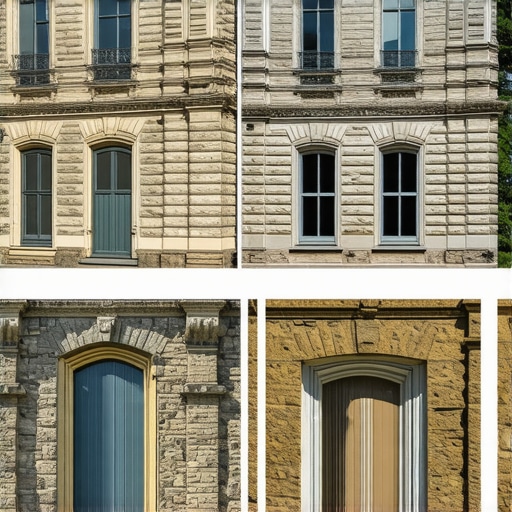
Design trends are shifting toward metallic brick colors application, where iridescent or metallic-glazed bricks are used as accents within a stone field. While this looks stunning, the thermal expansion coefficient of a glazed metallic brick is vastly different from a natural limestone veneer. In the heat of a July afternoon, the stone and the metallic brick will expand at different rates. If you haven’t installed proper control joints—vertical gaps filled with backer rod and high-grade sealant—the wall will literally fight itself. You’ll hear it ‘pop’ and ‘ping’ as the internal stresses reach a breaking point. Use a ‘slicker’ to deeply compress your joints, ensuring that no air pockets remain to harbor moisture. This compression is what makes the difference between a wall that lasts a decade and one that lasts a century. Whether you are dealing with a concrete block foundation repair or a decorative facade, the rule remains: if you don’t manage the water and the movement, the masonry will manage it for you, usually by falling down.