5 Pro Methods for Historic Brick Arch Restoration in 2026
The Ruined Facade: A Forensic Warning
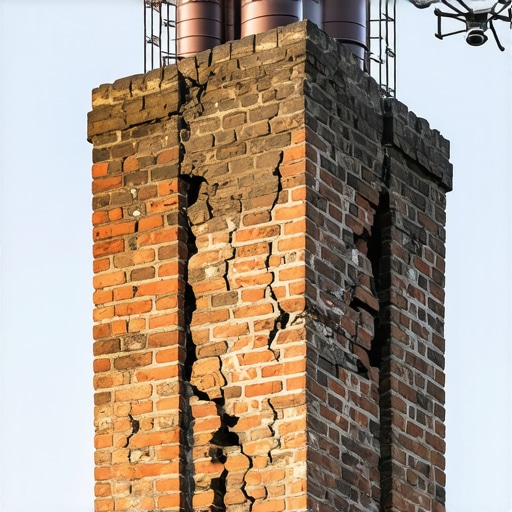
I have seen more ‘restored’ arches collapse in the last decade than I saw in my first twenty years carrying a hawk. Usually, it starts with a homeowner calling me because their beautiful 1920s entryway is dropping ‘dust.’ When I arrive, I see the tell-tale sign of a hack job: grey, rock-hard Portland cement smeared into joints meant for soft lime. The brick faces are popping off like scabs. This is not just an eyesore; it is a structural failure in slow motion. My old mentor, a man who could tell the moisture content of a pile of sand just by the way it slumped, used to say that a brick arch is a living thing. It breathes, it moves, and it remembers every mistake you make. He would strike a brick with his hammer; if it didn’t give off a high-pitched ‘sing,’ it was dead wood. Most of what passes for masonry today is ‘dead wood’ from the start. We are losing the craft to ‘lick-and-stick’ veneer mentalities that ignore the physics of compression and the chemistry of carbonation.
“Water penetration is the single greatest threat to masonry durability, especially in load-bearing arched structures where moisture leads to freeze-thaw spalling.” – BIA Technical Note 7
1. The Sacrificial Bond: Reclaiming Lime Mortar Chemistry
The biggest mistake in historic restoration is using modern Type S or Type M mortar. In 2026, we are returning to the fundamentals of material science. Historic bricks, fired in old kilns, are softer and more porous than their modern counterparts. When you shove a high-strength, rigid Portland cement into those joints, you create a structural mismatch. Modern cement is non-porous. When moisture gets trapped behind it, the only way out is through the brick face. In the North, the 9% expansion of freezing water will literally blow the front of your heritage brick into the garden. We use lime putty or Type O mortar for a reason: the mortar must be the ‘sacrificial lamb.’ It must be softer and more vapor-permeable than the brick so that moisture evaporates through the joints, and any structural movement is absorbed by the mud, not the masonry units. The carbonation of lime—where $Ca(OH)_2$ reacts with $CO_2$ to become $CaCO_3$—is a process that takes decades, effectively allowing the arch to ‘self-heal’ small hairline cracks over time.
2. Precision Birdsmouth Cuts and Geometry
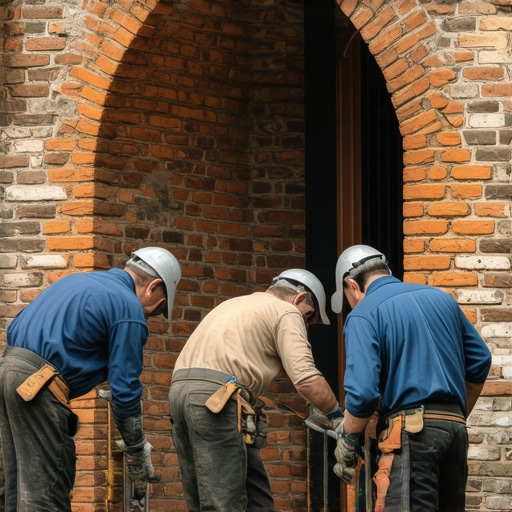
When you are dealing with a sagging arch, you aren’t just doing tuckpointing brick walls; you are performing surgery. The ‘birdsmouth cut’ is where the master is separated from the apprentice. To restore the structural integrity of a jack arch or a segmental arch, we often have to replace the ‘springer’ bricks. A birdsmouth cut allows the brick to sit perfectly on the skewback, transferring the lateral thrust of the arch into the abutments. If your geometry is off by even an eighth of an inch, you create a point-load that will crush the brick. We use sustainable block cutting techniques today, utilizing diamond-wire saws with water-recycling systems to ensure these cuts are surgical. This ensures the ‘tooth’ of the brick remains intact, providing the necessary friction to keep the assembly from sliding under load.
3. The Physics of the Chimney Heat Shield and Arch Integration
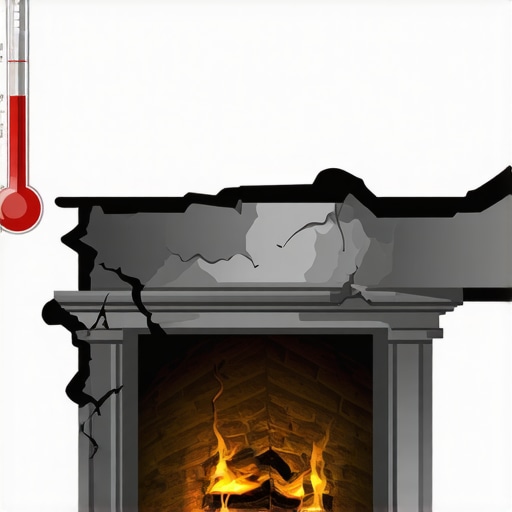
Many historic arches are part of chimney breasts. This is where chimney structural repair gets complicated. The heat from a modern fireplace insert can reach temperatures that cause massive thermal expansion in old masonry. If the arch is tied too tightly to the flue without a proper chimney heat shield installation, the arch will crack vertically at the keystone. We now use high-temperature mineral wool buffers behind the face brick. This allows the inner masonry to expand while the outer decorative arch remains cool and stable. Without this thermal break, the ‘buttering’ of your joints will fail within three heating seasons, leading to chimney structural repair bills that could have been avoided with a bit of forensic foresight.
4. Managing Hydrostatic Pressure in Fountain and Kitchen Builds
Whether it is an outdoor masonry fountain restoration or an outdoor kitchen masonry build, water is the enemy. I have seen outdoor kitchen masonry build projects where the contractor forgot the weep holes, and the whole structure became a sponge. For fountains, we use a specialized masonry joint sand repair involving pozzolanic additives. These additives react with the lime to create a denser, water-resistant matrix without losing the flexibility required for outdoor temperature swings. We look for ‘honeycombing’ in the old pour—those voids in the concrete or mortar that suggest the mix was too dry or ‘burned’ during the flash setting of a hot afternoon. Proper restoration means grinding out those voids and ‘re-buttering’ the joints with a ‘slicker’ to ensure a tight, concave finish that sheds water like a duck’s back.
“The stability of the arch is founded on the strength of its abutments and the precision of its centring.” – Vitruvius, De Architectura
5. The Future of Self-Healing Concrete Foundations
Looking toward 2026, we are integrating self-healing concrete foundations even in restoration contexts. When we have to underpin a sagging historic arch, we use concrete infused with calcite-precipitating bacteria. When a crack forms and water enters, the bacteria ‘wake up’ and produce limestone to seal the gap. This prevents the rusted-out rebar scenarios I see in every forensic inspection. Pair this with modular masonry construction for the internal supports, and you have a system that respects the past while utilizing the chemistry of the future. We no longer just ‘patch’ things; we engineer them to survive the next century of freeze-thaw cycles. If you’re just slapping some mud in a crack, you’re not a mason—you’re a painter with a heavier brush. Real masonry is about the ‘ring’ of the brick and the science of the mud.