Trusted Concrete Patch & Tuckpointing Strategies for Durable Masonry Repairs
The Forensic Reality of the Hairline Crack
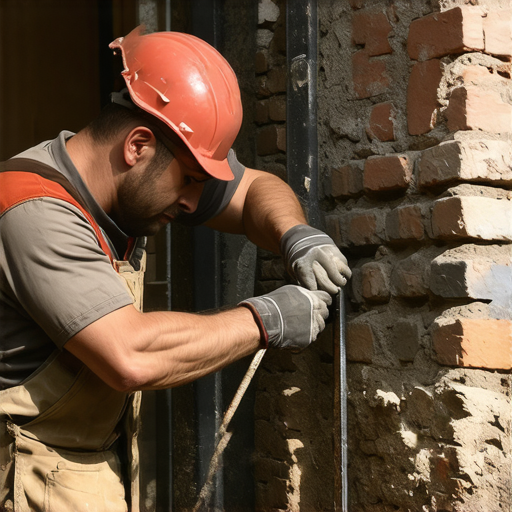
The homeowner stood on the porch, pointing at a single, zig-zagging line tracing the mortar joints of a load-bearing brick pier. To the untrained eye, it was a hairline fracture, a mere cosmetic blemish. But when I slid my fiber-optic scope into a weep hole and peered into the cavity, the reality was a structural autopsy. The steel lintels were blooming with rust, expanding with enough force to shatter the surrounding masonry from the inside out. This wasn’t just a crack; it was a symptom of a systemic failure in moisture management. In the world of professional masonry restoration, if you aren’t looking at the chemistry of the wall, you are just putting lipstick on a corpse.
“Water penetration is the single greatest threat to masonry durability, leading to efflorescence, freeze-thaw damage, and corrosion of embedded metals.” – BIA Technical Note 7
The Physics of the Freeze-Thaw Cycle
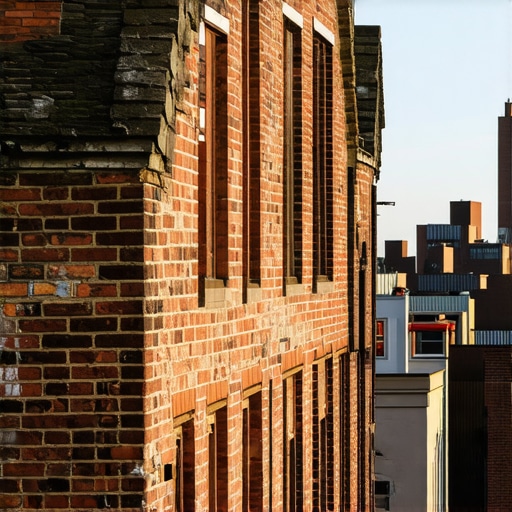
In our northern climate, masonry isn’t a static object; it is a breathing, moving lung. When water enters a porous brick or a compromised mortar joint, it waits. As the mercury drops, that water undergoes a phase change, expanding by roughly 9% in volume. If you have used a modern, high-strength Portland cement for structural repointing on a pre-war building, you have created a localized pressure cooker. The hard mortar refuses to give, so the pressure finds the path of least resistance: the face of your brick. This is how spalling begins, turning a historic facade into a pile of red dust. Tuckpointing services must respect the ‘sacrificial principle’—the mortar must always be slightly softer and more permeable than the masonry units it surrounds.
The Chemistry of Sustainable Tuckpointing Mortars
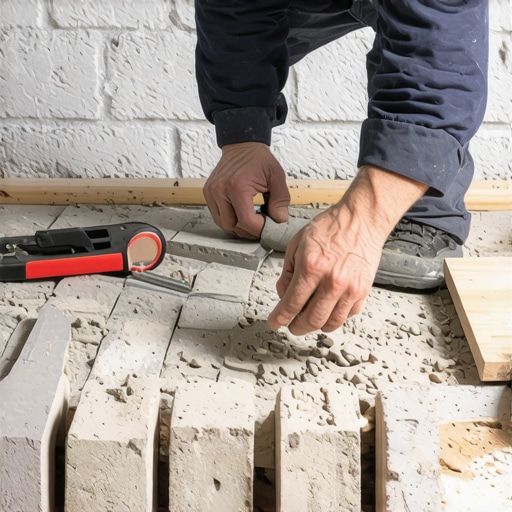
We are seeing a massive shift toward sustainable tuckpointing mortars, specifically Natural Hydraulic Lime (NHL). Unlike modern cements that cure through a rapid chemical hydration, lime mortars carbonate over decades, slowly turning back into stone while maintaining a flexible, breathable structure. For commercial tuckpointing, this breathability is non-negotiable. If you seal a wall with non-permeable ‘lick-and-stick’ patches, you trap hydrostatic pressure. Eventually, that moisture will migrate inward, rotting your sill plates and molding your drywall. When we mix our ‘mud’ on the hawk, we are looking for that perfect ‘tooth’—the mechanical bond that ensures the new material becomes an integral part of the old structure, not just a surface-level skin.
Precision Execution: Tuckpointing Machine Services vs. The Slicker
There is a time for 18th-century hand-tooling and a time for 21st-century tuckpointing machine services. On massive industrial warehouses where miles of joints need striking, a mortar gun can provide incredible consistency and compaction. However, the ‘art’ remains in the slicker. A master mason knows that ‘tooling the joint’ isn’t just about the look; it’s about densifying the surface of the mortar to shed water. Whether it’s a soldier course above a window or a standard running bond, the way you strike that joint determines the lifespan of the repair. We are even utilizing digital twin masonry projects now, creating 3D models of failing structures to map every cold joint and honeycombing area before we even set up the scaffolding.
“Mortar should be designed to be compatible with the masonry units… with a lower compressive strength than the units themselves.” – ASTM C270 Standard Specification
The Anatomy of Brick Column Repair and Chimneys
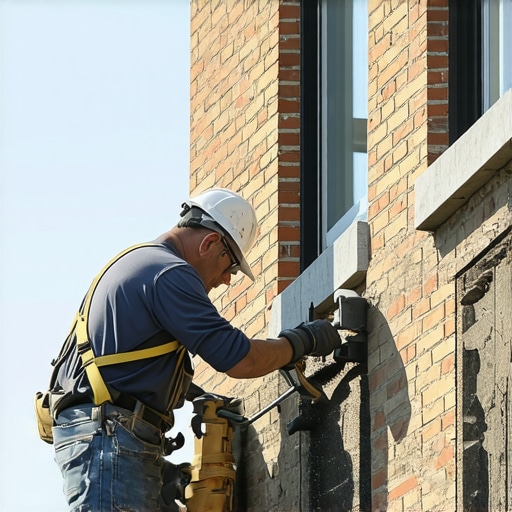
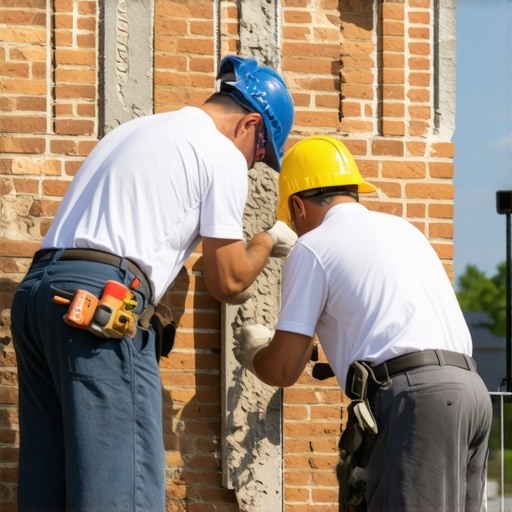
A brick column repair is a different beast entirely. You are dealing with concentrated vertical loads where every header and shiner must be perfectly aligned to distribute weight. When a column begins to bow, it’s often due to internal core failure or ‘flash setting’ of a cheap patch job that didn’t allow for thermal expansion. Similarly, chimney sweep and repair often reveals the most brutal damage. The thermal shock of a fireplace combined with external ice leads to rapid degradation of the chimney flue liner. Without a proper chimney flue liner installation, acidic gases eat the mortar from the inside. This is why we advocate for stainless steel or cast-in-place liners that isolate the masonry from the chemical byproducts of combustion.
Do It Once, or Do It Twice
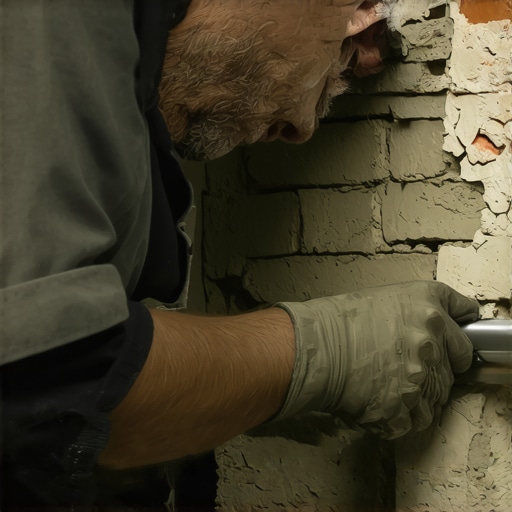
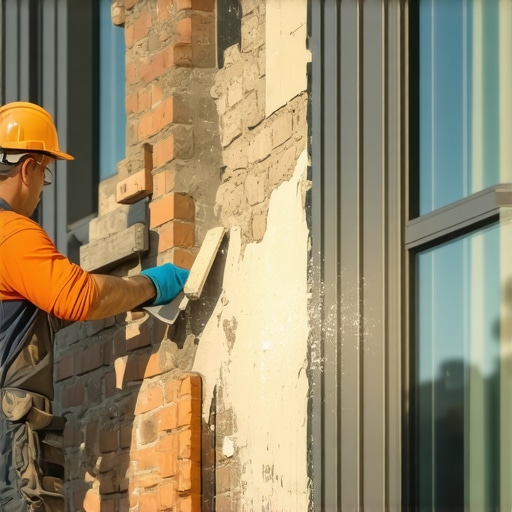
I’ve spent half my career grinding out the ‘handyman specials’—those gray, smeared patches of store-bought concrete that look like they were applied with a butter knife. Those patches fail because they don’t account for the ‘suction’ of the brick. If the brick is too dry, it sucks the water out of the patch before it can hydrate, leaving you with a brittle, sandy mess. Real professional masonry restoration requires pre-wetting the substrate and ‘buttering’ the units with precision. It’s the difference between a repair that lasts five years and one that lasts fifty. Don’t be fooled by a low bid; in the masonry trade, you pay for the science as much as the labor.
This article really highlights the importance of understanding the deeper issues behind visible cracks in masonry. It’s fascinating how something as simple as a hairline fracture can reveal systemic problems like moisture infiltration and rust expansion inside the structure. I especially appreciate the emphasis on moisture management and the use of breathable mortars like Lime NHL that allow for natural expansion and contraction. In my experience working on historic buildings, I’ve found that neglecting the chemistry of mortar and stone often leads to recurring issues, no matter how well the visible repairs look initially. Has anyone here encountered challenges when trying to balance modern repair techniques with preserving the authenticity of older masonry? Also, I’m curious: what are the best practices for ensuring water doesn’t penetrate even the tiniest of cracks, especially in climates with harsh freeze-thaw cycles? The detailed steps for proper tuckpointing are a helpful reminder that science and precision are fundamental to lasting repairs.