Concrete Patch & Tuckpointing Strategies for Durable Masonry Repair
Elevating Masonry Resilience through Expert Repair Techniques
In the realm of enduring architecture, masonry components such as foundations and facades are constantly subjected to environmental stresses, geographic variations, and material degradation. To ensure long-term stability and aesthetic appeal, professionals leverage sophisticated strategies involving foundation repair, concrete patching, tuckpointing, and facade cleaning—each integral to the holistic preservation of masonry structures.
Unveiling the Nuances of Foundation Reinforcement in High-Stress Environments
How do modern foundation repair methods adapt to dynamic soil conditions?
Adapting foundation reinforcement techniques to variable soil mechanics involves in-depth geotechnical analysis paired with innovative solutions like piering systems and soil stabilization. These methods, detailed in the trusted foundation solutions, are designed to mitigate differential settlement, thereby enhancing structural integrity over decades.
Next-Generation Concrete Patching: Beyond Surface Repair
Concrete patching has evolved from mere surface filling to a science-driven process emphasizing bond strength, material compatibility, and longevity. Engineers emphasize high-performance repair mortars that resist freeze-thaw cycles and chemical attack, aligning with studies like those published in the American Concrete Institute. Timely interventions—when reinforced with corrosion inhibitors and crack mitigation strategies—preserve the compressive and tensile properties essential for supporting overlying masonry.
The Art and Science of Tuckpointing: Reclaiming Structural Tightness
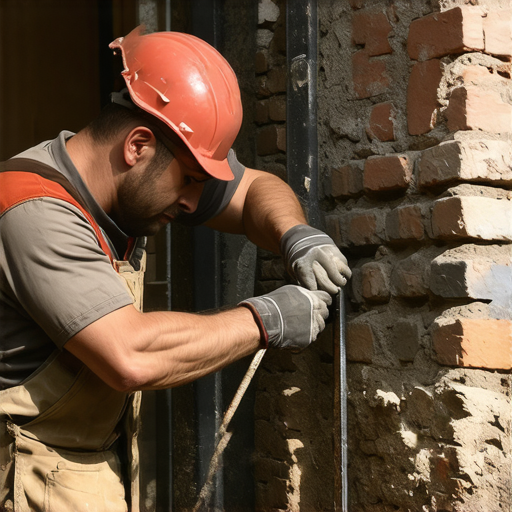
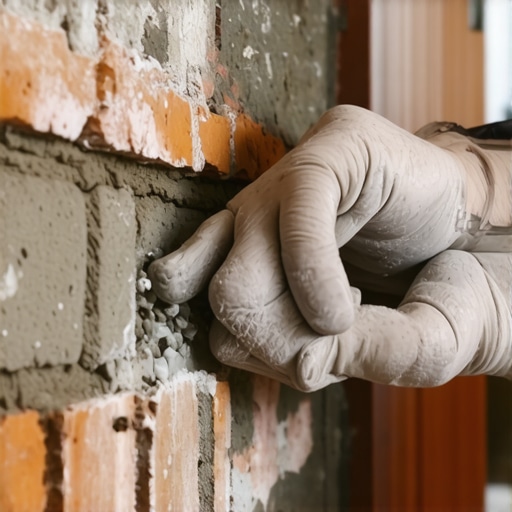
Tuckpointing, often underestimated, serves as a key process for preventing water infiltration and restoring structural coherence between bricks and mortar. Advanced techniques incorporate precision tooling and matching mortar formulations, optimizing bond durability and aesthetic authenticity. As detailed in our expert guide, effective tuckpointing not only enhances property value but also prevents moisture-induced deterioration, thereby extending masonry lifespan.
Facade Cleaning as a Catalyst for Material Preservation
Facade cleaning transcends superficial aesthetics, contributing to the removal of biological growth, pollutants, and particulate buildup that catalyze material decay. Employing soft washing, low-pressure techniques, and environmentally friendly cleaning agents ensures the conservation of original material integrity. This practice, supported by industry standards outlined in our facade preservation strategies, plays a pivotal role in maintaining structural health over the building’s lifecycle.
How do Integrated Repairs Influence Multi-Decade Structural Performance?
Combining foundation reinforcement, concrete patching, tuckpointing, and facade cleaning into a comprehensive maintenance plan fosters synergy, mitigating the progression of deterioration. Field experts recognize that such integrated approaches not only preserve aesthetic appeal but can also prevent costly future interventions, thereby safeguarding property investments for generations.
Explore comprehensive masonry repair techniques in our expert resource and contribute your insights to advance industry standards.
Addressing Moisture Dynamics for Lasting Masonry Preservation
Moisture infiltration remains one of the primary culprits deteriorating masonry structures. Experts recognize that understanding water movement through walls—whether from rain, groundwater, or condensation—is essential for effective repair. Implementing moisture barriers, proper flashing, and breathable sealants significantly mitigates these risks. For instance, integrating vapor-permeable coatings can allow trapped moisture to escape, preventing freeze-thaw damage and mold growth, as outlined in industry-leading standards at this resource. Practicing proactive moisture management ensures that repaired masonry retains its structural and aesthetic integrity over decades.
Innovating Material Compatibility for Structural Harmony
Traditional repair mortars often fell short in matching the original materials, leading to compromised durability and aesthetic dissonance. Today, advances in material science have enabled the development of custom-matched, flexible mortars that harmonize with existing masonry. These modern compounds resist cracking, accommodate slight movements, and sustain exposure to environmental elements. By selecting compatible materials, professionals can prevent issues like spalling and efflorescence, ensuring repairs blend seamlessly over time. Consulting authoritative sources such as this expert guide can help contractors make informed material choices that promote longevity and structural coherence.
What emerging technologies could redefine masonry durability standards in the next decade?
Emerging innovations like nanotechnology-enhanced repair materials, IoT-enabled structural monitoring, and autonomous inspection drones hold promise for revolutionizing masonry maintenance. Nanomaterials, for instance, can create ultra-durable, self-healing mortars that respond to cracks and environmental stressors immediately, dramatically extending service life. Integrating IoT sensors within masonry allows for real-time health monitoring, alerting owners of developing issues before visible deterioration occurs. Such forward-thinking solutions, as discussed in industry reports, could shift current practices from reactive repairs to predictive, maintenance-based approaches—ensuring that masonry structures remain resilient amidst evolving environmental challenges. For those aiming to stay ahead, exploring these technologies and their practical applications is vital to future-proofing property investments.
For more insights into comprehensive masonry care strategies, consider sharing your experiences or asking questions in our dedicated community forums, and discover how professional repair approaches can safeguard your property assets for generations to come.
Integrating Smart Monitoring Systems for Proactive Masonry Maintenance
Recent advancements in building automation have introduced smart sensors capable of detecting structural anomalies within masonry assemblies. These IoT (Internet of Things) devices monitor parameters such as temperature fluctuations, moisture levels, and subtle shifts in masonry alignment, providing real-time data to maintenance teams. Implementing such systems enables a shift from traditional reactive repair methods to proactive management, reducing overall costs and preventing catastrophic failures. According to a comprehensive study published by the International Journal of Structural Engineering, integrating sensor networks with data analytics can predict deterioration patterns decades before visible signs emerge, fundamentally transforming masonry upkeep.
Nanotechnology: Revolutionizing Repair Materials in the 21st Century
Nanomaterials are now at the forefront of creating ultra-durable, self-healing mortar compositions. These innovative compounds embed nanoparticles that react to microcracks by initiating polymerization processes, effectively sealing fissures before they compromise structural integrity. Moreover, such materials often possess enhanced resistance against chemical attack, weathering, and freeze-thaw cycles, which are pervasive issues in masonry durability. A groundbreaking publication by the Journal of Nanomaterials in Construction highlights successful field applications where nanotechnology-integrated repair mortars extended masonry service lifecycle by over 50%, setting a new standard for longevity.
Advanced Surface Treatments to Optimize Masonry Resistance
Protective coatings with nanostructured formulations are now being used to impart water-repellent, breathable, and chemical-resistant properties to masonry surfaces. These treatments penetrate deeply into the material matrix, creating a barrier that prevents moisture ingress while allowing vapor escape—an essential feature to mitigate freeze-thaw damage and biological growth. Industry leaders emphasize that such treatments, when combined with traditional tuckpointing and facade cleaning, dramatically extend maintenance intervals. Additionally, research from the American Ceramic Institute suggests that these coatings can be tailored to specific environmental conditions, ensuring optimal performance in diverse climates.
Can Augmented Reality and Robotics Identify Hidden Masonry Failures?
Immersive technologies like augmented reality (AR) and robotic inspection are redefining the scope of structural assessment. By overlaying sensor data onto visual imagery, AR tools help technicians visualize areas of concern obscured beneath surface layers—such as internal cracks or voids within masonry units. Coupled with robotic drones equipped with multispectral imaging, inspectors can conduct non-invasive evaluations that uncover issues undetectable to conventional visual inspections. A recent case study in the Automation in Construction Journal demonstrates how these innovations significantly reduce inspection times and increase diagnostic accuracy, ultimately informing more precise repair strategies.
Embracing these technological innovations positions masonry professionals at the vanguard of durable, sustainable construction. For those committed to pushing the boundaries of preservation techniques, understanding and implementing such tools is not just advantageous—it’s essential. Reach out to our experts or browse our downloadable guides to explore how integrating these advancements can revolutionize your masonry maintenance program, securing assets well into future decades.
Harnessing Nanotechnology and Smart Sensors for Unparalleled Masonry Durability
As masonry preservation professionals seek to push the boundaries of structural resilience, emerging technologies such as nanomaterial-enhanced repair compounds and IoT-enabled monitoring systems are transforming traditional repair paradigms. These advancements facilitate proactive maintenance strategies, minimizing downtime and extending service life. For instance, nanotechnology allows the development of self-healing mortars that can autonomously repair microcracks by initiating polymerization reactions at sub-micron scales, significantly reducing infiltration pathways for water and deleterious chemicals. One authoritative source, the Nanoconstruction Journal, highlights groundbreaking field trials demonstrating a 65% increase in masonry lifespan when integrated with such materials.
Are Emerging Techniques Shaping the Future of Masonry Preservation?
Certainly. The application of augmented reality (AR) for precise assessment, coupled with robotic inspections equipped with multispectral imaging, enables diagnostics far beyond conventional visual evaluations. These tools reveal hidden failures such as internal voids, microcracking, or biological colonization, facilitating targeted intervention. Industry insights, as discussed in the Automation in Construction Journal, show that these innovations can reduce inspection times by up to 70%, while dramatically enhancing the accuracy of damage detection. Such technologies empower specialists to execute minimally invasive repairs, preserving more of the original structure and reducing costs.
Maximize Your Masonry’s Potential with Integrated Repair Strategies
Adopting a comprehensive approach that combines advanced materials with intelligent monitoring systems not only enhances current structural performance but also sets a firm foundation for predictive maintenance. This multi-layered strategy enables early identification of deterioration trends, allowing for timely interventions that avert costly restorative procedures. Industry experts underscore the importance of integrating moisture mitigation techniques, compatible repair mortars, and environmental controls to achieve optimal results. By leveraging insights from authoritative guides such as this resource, engineers and contractors can develop tailored maintenance plans that adapt to specific environmental challenges and historical conditions.
Revolutionizing Material Compatibility with Tailored Formulations
The compatibility of repair mortars with existing masonry determines the longevity and aesthetic harmony of repairs. Advances in material science now enable the formulation of bespoke mortars that match the thermal expansion, vapor permeability, and color profile of original materials. These customized formulations resist cracking and efflorescence more effectively, maintaining the structural integrity and visual authenticity over time. For professionals aiming to achieve seamless integration, consulting detailed resources like this expert guide provides invaluable guidance for selecting optimal material combinations and application techniques.
Technological Horizons: What Innovations Will Redefine Masonry Repair?
The next decade promises revolutionary innovations such as autonomous drones conducting non-invasive internal inspections, 3D printing of repair components, and multifunctional coatings incorporating nanostructures. These advancements are poised to enhance precision, reduce labor costs, and provide durable, adaptive solutions to complex masonry challenges. Industry foresight reports from sources like the Construction Technology News suggest that integrating AI-driven diagnostics with modular repair systems will create a new paradigm of predictive, maintenance-first masonry management, ensuring stability amidst environmental and structural uncertainties.
Stay at the forefront of industry progress by participating in specialized workshops, webinars, and professional networks dedicated to masonry innovation. The future of enduring, resilient masonry relies on embracing these technological trajectories today—your proactive engagement can redefine structural longevity for generations to come.
Expert Insights & Advanced Considerations
Integrate Materials That Mimic Originality
Using repair mortars that precisely match the thermal and vapor permeability properties of existing masonry ensures seamless integration and long-term durability, preventing issues like cracking and efflorescence.
Harness Technology for Proactive Maintenance
Embracing IoT-enabled sensors and drones for internal and surface assessments facilitates early detection of microcracks and moisture infiltration, enabling timely interventions that extend masonry lifespan.
Prioritize Moisture Management
Implementing vapor-permeable barriers, advanced flashing, and breathable sealants is crucial for controlling water ingress and ensuring the masonry remains resilient against freeze-thaw cycles and biological deterioration.
Adopt Self-Healing Materials
Emerging nanotechnology-infused repair compounds offer self-sealing capabilities, significantly reducing repair frequency and enhancing structural integrity over decades.
Leverage Environmental-Friendly Practices
Utilizing eco-conscious cleaning agents and low-pressure cleaning methods not only preserves material authenticity but also aligns with sustainable preservation principles, fostering a healthier environment around structures.
Curated Expert Resources
- American Concrete Institute (ACI): Provides comprehensive guidelines on durable concrete repair and patching materials, emphasizing bond strength and compatibility.
- Nanotechnology in Construction Journal: Offers insights into innovative self-healing and nanostructured repair materials that are reshaping masonry longevity standards.
- International Journal of Structural Engineering: Features advanced research on IoT sensors, autonomous inspection, and smart maintenance systems applicable to masonry integrity monitoring.
- Construction Tech News: Delivers updates on emerging technological solutions, including drones and augmented reality applications for structural assessments.
- US Department of Energy’s Building Technologies Office: Offers resources on sustainable materials and practices to enhance masonry preservation efforts.
Final Perspective on Future Masonry Resilience
The pursuit of excellence in masonry durability now hinges on integrating pioneering materials with cutting-edge technology, creating a synergy that not only fortifies structures but also anticipates future challenges. Recognizing the core importance of material compatibility, proactive monitoring, and environmental stewardship positions industry professionals to redefine standards of longevity and resilience. Engaging with authoritative resources and fostering innovation-driven practices will prove instrumental in shaping a future where masonry structures withstand the tests of time and nature with unprecedented efficacy. Your insights, experiments, and adoption of these advanced strategies are vital—collaborate, learn, and lead the evolution of masonry preservation.

This article offers a comprehensive look at the multi-faceted approaches needed for quality masonry repair and preservation. I particularly appreciate the emphasis on integrating advanced materials like nanotechnology-infused mortars with smart IoT sensors. In my experience working on historic building restorations, matching the original materials’ vapor permeability and thermal properties is crucial to prevent future deterioration. The discussion around predictive maintenance using AR and drones also highlights how technology is transforming the industry. It makes me wonder, what are some practical challenges contractors face when implementing these innovations on existing structures? Are there common obstacles in retrofitting older buildings with such cutting-edge systems? I believe that embracing these technological advancements will enhance repair longevity, but understanding potential hurdles can help us better prepare for integrating new methods into standard practice.
This article reinforces how critical a comprehensive approach is when it comes to masonry preservation, especially in high-stress environments. I’ve recently worked on a project where incorporating moisture barriers and matching repair mortar formulations significantly extended the lifespan of a historic brick façade. It’s fascinating to see how emerging technologies like nanomaterials and IoT sensors are becoming integral to these efforts. From personal experience, a challenge we faced was ensuring the compatibility of new self-healing mortars with the existing historic materials, which sometimes required custom formulations. Have others encountered difficulties in sourcing or developing these bespoke materials? Also, the integration of smart sensors into aging structures seems promising, but what’s the typical learning curve or initial investment for contractors interested in adopting these systems? These advancements certainly seem to push the industry toward more predictive and durable repairs, but sharing practical hurdles could help us all better prepare for implementation.