Facade Cleaning & Restoration: Expert Tips for Lasting Curb Appeal
Optimizing Masonry Restoration for Long-Term Durability and Aesthetic Excellence
In the realm of exterior building maintenance, sophisticated techniques in tuckpointing, concrete patching, facade cleaning, and foundation repair are paramount to safeguarding structural integrity and elevating curb appeal. Experienced restorers recognize that each intervention must be rooted in a nuanced understanding of material behavior, environmental factors, and innovative methodologies that surpass conventional practices.
Revealing the Complexities of Tuckpointing and Its Role in Masonry Longevity
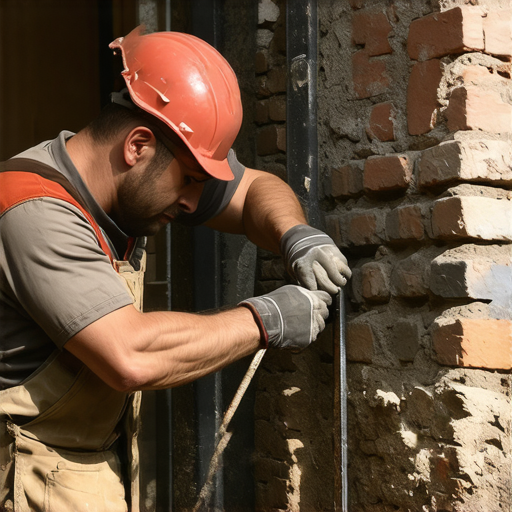
High-quality tuckpointing not only enhances the visual harmony of brickwork but also functions as a crucial barrier against moisture intrusion. Advanced applications involve precise matching of mortar composition and color to original materials, reducing the risk of deterioration. Modern approaches integrate polymer-modified mortars that improve adhesion and flexibility, accommodating substrate movements and preventing cracking.
What strategies do experts deploy to ensure tuckpointing withstands seismic and weather-induced stresses?
Addressing such challenges entails meticulous assessment of existing mortar conditions, incorporating high-performance mortars, and implementing controlled surface preparation. Regular inspection protocols are essential to detect early signs of failure, enabling targeted interventions that extend the lifespan of masonry elements.
Mastering Concrete Patching Techniques for Seamless Structural Restoration
Concrete patching, when executed with refined techniques, ensures not only aesthetic uniformity but also enhances load-bearing capacity. Employing epoxies and cementitious compounds with tailored additives facilitates bonding with aged substrates and compensates for differential settlement. Field-tested methods emphasize surface preparation, moisture control, and curing practices aligned with environmental conditions.
Facade Cleaning: Elevating Property Value Through Expert Intervention
Effective facade cleaning transcends superficial dirt removal; it demands a strategic combination of low-pressure washing, chemical treatments, and abrasive methods suited to specific materials. Incorporating eco-friendly solutions minimizes environmental impact while achieving long-lasting results. The process not only revitalizes appearance but also reduces microbial growth that accelerates decay.
Foundation Repair Techniques That Strengthen and Stabilize
Robust foundation repair integrates underpinning, slab stabilization, and crack injection processes designed to restore load distribution and prevent progressive failure. Utilizing underpinning with helical piers or pressed pilings allows targeted intervention beneath compromised structures, ensuring stability under varying loads and soil conditions. Analytical assessment of ground movement informs tailored solutions, preventing future settlement issues.
How Do Field Experts Balance Aesthetic Restoration and Structural Resilience in Masonry Projects?
Achieving this equilibrium involves comprehensive planning, material selection, and adherence to industry standards. Cross-disciplinary collaboration among structural engineers, conservation specialists, and craftsmen yields results that are both visually appealing and structurally sound. Continuous skill development and embracing emerging technologies, such as fiber-reinforced mortars and nanotech coatings, propel the industry toward more durable and sustainable outcomes.
For deeper knowledge, consult authoritative sources like the Journal of Building Engineering, which explores innovative masonry repair techniques with scientific rigor.
If you’re committed to elevating your expertise, explore comprehensive guides on professional masonry repair strategies and contribute your insights to community forums dedicated to masonry excellence.
Innovating Techniques for Masonry Resilience in Modern Construction
As the demands of urban development intensify, so does the necessity for resilient masonry systems capable of withstanding environmental stressors and frequent seismic activity. Recent advances integrate nanotechnology-based sealants that penetrate deeply into porous surfaces, providing enhanced waterproofing and mold resistance. These innovations complement traditional repair methods, creating a hybrid approach that significantly extends the lifespan of masonry structures. For example, industry leaders recommend combining high-performance tuckpointing with advanced facade coatings to achieve both durability and aesthetic harmony.
Integrating Material Science to Amplify Restoration Outcomes
Incorporating material science principles into masonry repair transforms the process from reactive to proactive. Utilizing polymer-modified mortars with embedded fibers can accommodate thermal expansion and contraction, reducing crack formation. Moreover, smart materials that respond to environmental stimuli—such as temperature fluctuations—are emerging as game-changers, offering real-time stress mitigation. These advancements require a nuanced understanding of substrate properties and long-term behavior, urging professionals to stay informed through authoritative sources like the Journal of Building Engineering for scientifically validated techniques.
How can masonry experts leverage emerging technologies to preempt deterioration and enhance lifespan?
Proactive maintenance strategies involve deploying sensors embedded within repairs to monitor structural health continuously. Digital twins—virtual replicas of physical structures—allow detailed simulation of stress responses under various environmental scenarios, enabling anticipatory interventions. Coupling these tools with expert knowledge on materials compatibility ensures restorations do not just patch problems but fundamentally improve resilience. For a comprehensive understanding of innovative repair approaches, seek guidance from industry-specific resources and expert consultations.
To deepen your mastery, explore supplemental reading on advanced facade cleaning and concrete patching techniques that emphasize durability and environmental adaptability. Implementing such knowledge can differentiate your projects, ensuring longevity and excellence in masonry restoration efforts.
If you’re eager to elevate your craftsmanship, consider sharing your experiences in professional forums or requesting tailored strategies from industry specialists to address unique project challenges.
Harnessing Nanotechnology to Reinforce Masonry Structures
The integration of nanotechnology into masonry restoration signifies a paradigm shift toward proactive preservation. Nano-scale sealants and consolidants penetrate deeply into porous substrates, offering superior waterproofing, mold resistance, and structural reinforcement. These advanced materials form molecular bonds with existing masonry, effectively enhancing durability without compromising breathability—a critical factor for preventing moisture entrapment, which often leads to deterioration.
Can nanomaterials revolutionize traditional masonry repair protocols?
Absolutely. Studies in the Journal of Building Engineering highlight that nanomaterials provide improved adhesion, reduced permeability, and increased resistance to environmental stressors. Their small size allows deep penetration, filling micro-cracks and pores, thus preventing the ingress of moisture and harmful salts. This results in a restoration approach that not only repairs but also proactively fortifies structures against future degradation, essential in seismic zones and regions exposed to severe weather.
Smart Materials and Responsive Masonry Elements
The future of resilient masonry lies in smart materials—substances capable of adapting to environmental stimuli to mitigate stress-related damage. Shape-memory alloys (SMAs), for example, are integrated into brickwork or mortar joints, enabling the structure to undergo reversible deformation under stress, thus reducing crack propagation. Similarly, thermochromic coatings can respond to temperature fluctuations by altering color or properties, providing visual indicators of stress or damage that facilitate early detection and remediation.
Implementing these smart solutions demands a sophisticated understanding of material interplay and the long-term behavior of composites within the building envelope. Extensive pilot projects demonstrate that structures equipped with such responsive systems show markedly increased lifespan, especially when paired with real-time monitoring tools.
The Role of Structural Health Monitoring in Preemptive Maintenance
Embedding sensors within masonry components transforms maintenance from reactionary repairs to data-driven, predictive interventions. Strain gauges, ultrasonic sensors, and fiber optic cables provide continuous feedback on load distributions, crack development, and environmental conditions. When combined with analytical models and digital twins—virtual replicas of physical structures—these innovations enable engineers to simulate stress responses under varying scenarios, predicting potential failure points before they manifest visibly.
This approach aligns with the principles of intelligent infrastructure, where maintenance schedules are optimized based on real-time insights, reducing downtime and extending service life. Leading authorities suggest that integrating structural health monitoring systems into masonry projects is no longer optional but essential in high-risk zones, especially in heritage sites where preservation requires minimal invasive procedures.
How is the industry shaping the adoption of these emerging technologies?
Industry leaders advocate for standardizing testing protocols and developing regulatory frameworks that facilitate the adoption of nanomaterials, smart composites, and monitoring systems. Collaboration among material scientists, structural engineers, and conservation specialists accelerates the development of tailored solutions suited to specific environmental challenges. Moreover, ongoing professional education ensures practitioners remain at the forefront of these innovations, translating scientific advancements into practical applications seamlessly.
For those interested in pioneering these techniques, engaging with advanced workshops and industry conferences dedicated to masonry innovation is invaluable. Continuous education fosters the integration of cutting-edge technologies into everyday practice, ensuring structures are both resilient and sustainable in the face of emerging environmental threats.
Harnessing the Power of Material Innovation to Extend Masonry Lifespans
Recent breakthroughs in material science have transformed traditional masonry repair into a sophisticated discipline, integrating nano-engineered compounds and fiber-reinforced composites to achieve unprecedented durability. These cutting-edge materials provide enhanced adhesion, improved resistance to environmental stressors, and greater flexibility, thus accommodating substrate movements and reducing crack formation over time.
Unearthing the Secrets of Existing Material Compatibility for Seamless Integration
One of the most formidable challenges in restoration is ensuring new materials harmonize with aged substrates. This necessitates comprehensive chemical and physical analyses to match properties precisely, preventing undesirable interactions such as delamination or efflorescence. Employing laser diffraction and spectroscopic techniques allows professionals to tailor mixtures that not only blend aesthetically but also perform reliably over decades.
How can experts leverage detailed substrate analysis to optimize repair longevity?
By utilizing non-destructive testing methods such as Ground Penetrating Radar (GPR) and infrared thermography, specialists can detect internal obstructions and moisture pathways, informing intelligent material selection and application techniques. This proactive approach minimizes future deterioration risks, ensuring repairs endure climatic cycles and seismic activity with resilience.
For organizations committed to excellence, consulting authoritative research articles—like those published in the Journal of Building Engineering—provides a scientific basis for selecting optimal repair strategies backed by empirical evidence.
Innovative Protective Coatings that Elevate Masonry Defense
Advancements in nanotechnology have led to the development of ultra-thin coatings that impart water repellency, UV resistance, and microbial inhibition without altering the masonry’s breathability. These coatings are crucial in environments exposed to salt corrosion, acid rain, or intense sunlight, offering a proactive barrier that preserves structural integrity and aesthetic integrity alike.
Integrating Responsive Technologies for Smarter Preservation
Embedding sensors and integrating IoT systems within masonry elements facilitate continuous monitoring of structural health, detecting early signs of distress. These innovations empower maintenance teams to schedule interventions precisely when needed, reducing costs and downtime while extending longevity.
Smart materials like shape-memory alloys (SMAs) and thermochromic compounds further contribute by actively responding to environmental stimuli—contracting micro-cracks or shifting properties—thus mitigating damage before it escalates. This dynamic approach aligns with the evolving paradigm of resilient, intelligent architecture.
Driving the Future with Digital Twins and Predictive Analytics
By constructing virtual replicas of masonry structures—digital twins—experts can simulate stress responses and environmental impacts with exceptional accuracy. Combined with machine learning algorithms, this technology enables predictive maintenance, optimizing restoration schedules based on real-time data and historical trends. Such anticipatory strategies significantly reduce unforeseen failures and substantially prolong structural service life.
What role will emerging AI-driven tools play in shaping next-generation masonry repairs?
AI-powered diagnostics and decision-support systems will become indispensable, analyzing vast datasets to prescribe bespoke intervention plans swiftly. These tools will synthesize material properties, environmental conditions, and structural health metrics to guide restorers in selecting the most effective, sustainable solutions—transforming masonry preservation into a precision science.
To stay at the cutting edge of these developments, professionals are encouraged to access specialized training modules and participate in industry symposiums dedicated to the integration of advanced technologies within traditional masonry practice. Your commitment to continuous learning ensures your expertise remains both relevant and pioneering in this rapidly evolving field.
Elevate Your Restoration Strategy with Cutting-Edge Insights
Leverage Material Compatibility to Prevent Future Deterioration
Expert restorers emphasize the criticality of precise substrate analysis, utilizing non-destructive testing methods such as infrared thermography and GPR to inform material selection, ensuring seamless integration and longevity.
Embrace Technology-Driven Monitoring to Anticipate Structural Challenges
Embedding sensors and deploying digital twin models enable ongoing structural health assessment, allowing proactive interventions that significantly extend masonry lifespan and mitigate unexpected failures.
Integrate Smart Materials for Adaptive Resilience
Incorporating shape-memory alloys and nanotech coatings offers structures the ability to respond dynamically to environmental stressors, reducing crack propagation and enhancing overall durability.
Prioritize Sustainable and Eco-Friendly Solutions
Utilizing biodegradable cleaning agents and environmentally safe repair materials not only preserves the planet but also ensures compliance with increasingly strict building regulations, making restoration both responsible and resilient.
Collaborate Across Disciplines for Holistic Restoration
Engaging structural engineers, material scientists, and conservation specialists fosters innovative approaches that balance aesthetic fidelity with structural integrity, producing results that stand the test of time.
I found this post incredibly insightful, especially the emphasis on integrating nanotechnology and smart materials for future-proofing masonry structures. In my experience working on historic building restorations, balancing preservation with modern resilience techniques can be quite challenging but rewarding. I’ve seen firsthand how nanotech-based sealants can significantly enhance waterproofing without affecting breathability, which is so crucial in humid climates. One aspect I’m curious about is the long-term performance of these responsive materials, particularly in seismic zones where repeated stress occurs. Has anyone implemented smart material systems with embedded sensors in heritage buildings, and what maintenance protocols do they recommend? It seems that combining traditional craftsmanship with emerging tech holds huge potential, but understanding the practical upkeep is essential for sustainable restoration. I’d love to hear about innovative solutions or lessons learned from the field regarding this balance.
This post offers a comprehensive overview of the advanced techniques shaping masonry restoration today. I especially appreciate the focus on integrating material science innovations like nanotechnology and smart materials, which truly push the boundaries of durability and resilience. From my experience working on urban retrofit projects, utilizing sensor-embedded elements coupled with digital twins has proven invaluable in predictive maintenance. It’s fascinating how these technologies can give proactive insights into potential deterioration before visible signs manifest, saving both time and costs. However, I wonder, how do smaller firms or independent contractors navigate the costs and expertise required for such high-tech solutions? Also, in terms of long-term performance, especially in seismic zones, are there specific smart materials or maintenance practices that have demonstrated consistent reliability over decades? It seems that pairing traditional craftsmanship with cutting-edge tech can lead to outstanding results, but practical implementation remains a challenge. Would love to hear about success stories or lessons learned from the field in balancing innovation with feasibility.
This article highlights some of the most exciting advancements in masonry restoration, especially the integration of nanotechnology and smart materials. From my experience managing urban restorations, I see tremendous potential in deploying embedded sensor systems and digital twins for proactive maintenance. These tools not only help in detecting early signs of deterioration but also assist in planning targeted interventions that can extend the life of masonry structures significantly.
However, I wonder about the practical aspects of implementing such technology in heritage buildings with restricted access or sensitive environments. What are some cost-effective strategies for small firms or preservation projects with limited budgets? Additionally, the long-term behavior of these smart materials under repeated seismic stresses interests me—are there comprehensive case studies showing their durability over decades?
In your opinion, what balances best between traditional craftsmanship and innovative tech to ensure both authenticity and resilience? Would love to hear insights or success stories from professionals actively working with these cutting-edge solutions.