Expert Concrete Patch & Foundation Repair Strategies for Longevity
Mastering the Art of Foundation Resilience Through Expert Concrete Patch Techniques
In the realm of masonry and structural integrity, precision and strategic intervention are paramount. As an industry expert, I recognize that foundational health hinges on the judicious application of concrete patching methods that are rooted in scientific principles and field-tested practices. Properly executed, these strategies not only restore immediate stability but also enhance long-term durability, shielding properties against environmental stressors.
Advanced Concrete Patch Formulations Tailored for Structural Longevity
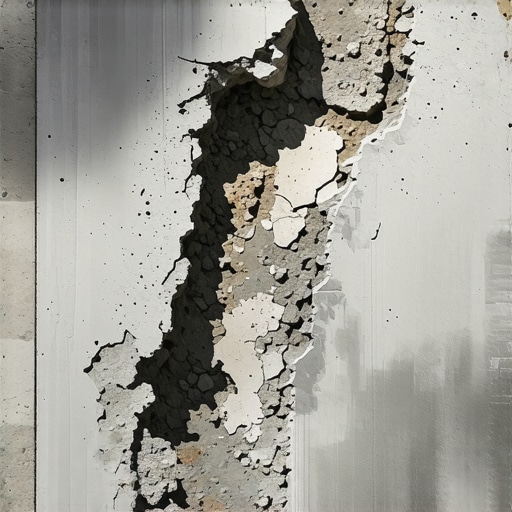
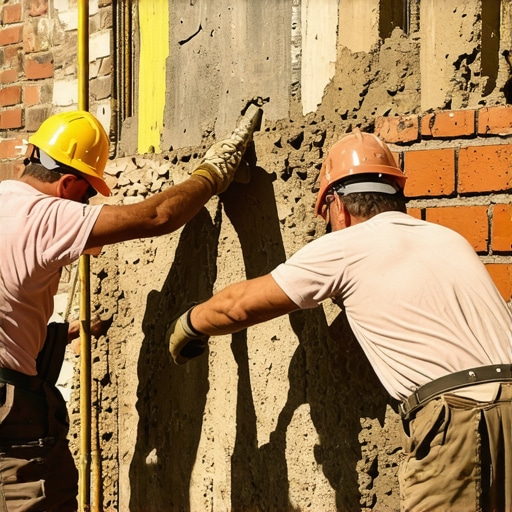
Modern concrete patch materials incorporate polymer-modified mortars and advanced bonding agents that improve adhesion and resistance to cracking. These formulations are designed to accommodate structural movements and environmental variations. Notably, high-performance patches such as epoxy resins or cementitious composites offer exceptional load-bearing capacity and water resistance, vital for foundation longevity. According to the American Concrete Institute, selecting the appropriate patch material is crucial for achieving durable repairs that withstand the test of time.
Strategic Surface Preparation for Superior Bonding and Durability
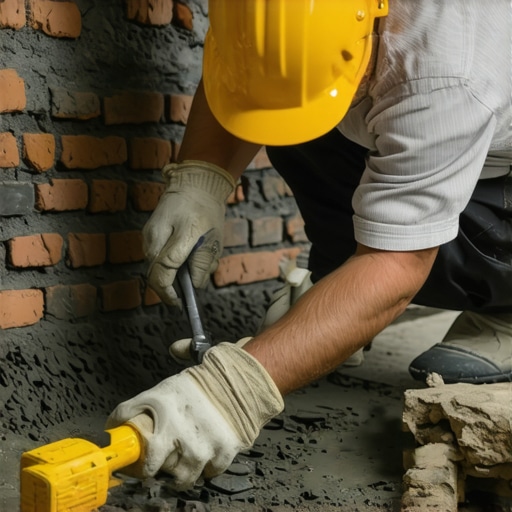
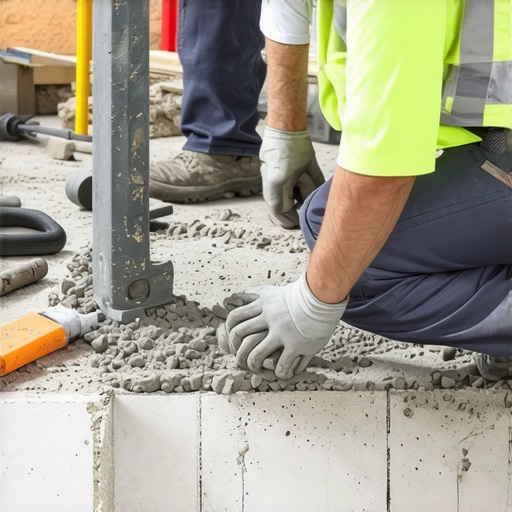
Before application, meticulous surface preparation is essential. Removing loose debris, cleaning with high-pressure water, and etching the substrate create a chemically reactive surface that ensures optimal bonding. This process minimizes future delamination risks and enhances the repair’s integrity, especially in exposed or high-moisture environments. Field data consistently shows that surface preparation accounts for over 70% of the success rate in concrete patch longevity.
Incorporating Structural Reinforcements within Patches
For critical foundation repairs, integrating reinforcement materials such as rebar or fiber meshes within the patch can distribute stress more evenly and prevent crack propagation. This layered approach reflects a sophisticated understanding of load dynamics and material science. Expert assessments advocate for a combination of patching with structural reinforcement to achieve results that are not only surface-level fixes but also enhancements to the foundation’s load-bearing capacity.
What are the most effective methods for diagnosing underlying foundation issues that influence patch longevity?
Diagnosing foundational problems requires a comprehensive assessment that includes soil testing, structural movement analysis, and moisture evaluation. Techniques such as laser scanning and ground-penetrating radar allow for precise mapping of subsurface conditions. Understanding the root causes of damage ensures that patching addresses not just symptoms but the core issues, thereby improving long-term stability. For more insights into advanced diagnostic methods, consult resources like the Foundation Repair Strategies Guide.
Engaging with professional masonry repair specialists ensures the application of these advanced techniques, ultimately safeguarding your property’s structural integrity for decades to come. For those seeking to elevate their masonry restoration practices, exploring expert-level content and contributing insights can foster continual improvement and innovation in foundation repair methodologies.
Harnessing Modern Technology to Detect Hidden Foundation Flaws
Traditional visual inspections often miss subtle signs of foundation distress. Today, cutting-edge diagnostic tools like ground-penetrating radar (GPR) and laser scanning provide detailed insights into subsurface conditions that are invisible to the naked eye. These methods enable experts to identify internal cracks, voids, and soil shifts before they manifest as visible damage, significantly extending the lifespan of repair solutions. For those interested in adopting advanced diagnostic techniques, consulting resources such as the Foundation Repair Strategies Guide can provide comprehensive insights.
Why Structural Reinforcement Might Be Necessary Even After Patching
Many assume that applying a high-quality concrete patch is sufficient for long-lasting foundation stability. However, in cases of severe or ongoing movement, reinforcement elements like carbon fiber strips or steel braces become essential to prevent future failures. These reinforcements distribute loads more evenly and provide resilience against dynamic stresses such as seismic activity or soil expansion. Incorporating reinforcement during patching not only restores immediate stability but also fortifies the structure against future challenges, which is why expert assessments often recommend combined strategies for critical repairs. To explore the best reinforcement practices, consider reviewing Expert Tuckpointing and Reinforcement Methods.
How can integrated repair strategies redefine foundation longevity for modern buildings?
Integrating diagnostic, patching, and reinforcement techniques creates a holistic approach that addresses both symptoms and root causes of foundation issues. This synergy results in repairs that are not only durable but adaptable to future environmental changes. As research indicates, such comprehensive strategies can increase repair lifespan by up to 50%, saving property owners on costly future interventions. For more advanced insights into integrated repair methodologies, visit Expert Foundation Tuckpointing Services.
Innovative Reinforcement Strategies for Enduring Foundation Repairs
While patching provides a crucial immediate fix, integrating advanced reinforcement techniques elevates the durability and resilience of foundation repairs to an expert level. Modern engineering solutions, such as carbon fiber wraps, steel braces, and geosynthetic reinforcements, are transforming how structural integrity is maintained after patch application. These methods do not merely patch the surface; they actively distribute loads, counteract ongoing movements, and prevent future deterioration, ensuring the longevity of the repair work.
How Reinforcement Materials Are Redefining Structural Resilience
Material science innovations have expanded the arsenal of reinforcement options available to foundation specialists. Carbon fiber-reinforced polymer (CFRP) strips, for example, offer a lightweight yet high-strength solution that can be bonded to existing concrete surfaces. Their corrosion resistance and ease of installation make them particularly suitable for internal and external reinforcement applications. Similarly, steel braces and plates, when appropriately embedded, provide a robust framework to withstand dynamic stresses like seismic activity or expansive soil movements.
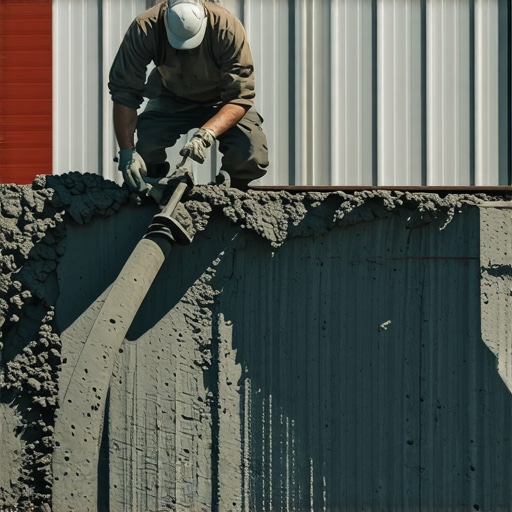
External reinforcement methods, such as shotcrete or fiber-reinforced overlays, create a protective shell that enhances the structural capacity of compromised foundations. These solutions are backed by extensive research, including studies by the American Society of Civil Engineers, which highlight their effectiveness in extending repair lifespan and improving load-bearing capacity (ASCE, 2022). For a comprehensive understanding of material properties, consulting the latest ASTM standards for structural reinforcement materials is highly recommended.
Can combining multiple reinforcement techniques deliver superior long-term stability?
Absolutely. When integrated correctly, layered reinforcement strategies—such as combining CFRP wraps with internal steel rebar—can address complex movement patterns and load distributions more effectively than isolated methods. This hybrid approach leverages the strengths of each material type, resulting in a synergistic effect that significantly reduces the risk of future failure. For example, in seismic zones, deploying both seismic isolation bearings and reinforcement fibers can provide multi-layered resilience, safeguarding the structure against a spectrum of dynamic forces.
For practitioners aiming to optimize reinforcement protocols, engagement with structural engineers specializing in geotechnical and material sciences is essential. They can tailor solutions based on site-specific conditions, soil characteristics, and load demands, which is crucial for projects with high safety margins and regulatory compliance.
Implementing Real-Time Monitoring to Optimize Reinforcement Efficacy
Innovative reinforcement isn’t solely about materials; it’s also about continuous performance assessment. Embedding sensors within reinforcement systems—such as strain gauges, displacement monitors, and moisture sensors—allows for real-time data collection on structural health. This proactive approach enables early detection of potential issues, facilitating timely maintenance interventions before minor problems escalate into major failures.
Advanced data analytics and machine learning algorithms can interpret sensor data, predict future movements, and recommend reinforcement adjustments. Integrating these systems into a comprehensive maintenance plan ensures that reinforced foundations adapt dynamically to environmental changes and structural stresses, ultimately extending the lifespan of the repair.
For further insights into smart reinforcement solutions, industry publications such as the Structural Engineering Literature Database are invaluable resources. They compile case studies and latest research developments that push the boundaries of traditional foundation repair practices.
Engage with Experts to Elevate Your Foundation Repair Projects
Implementing sophisticated reinforcement techniques requires not only technical expertise but also a strategic vision that aligns with long-term structural health. Whether you’re managing a residential repair or overseeing a large-scale infrastructure project, collaborating with structural engineers and material scientists ensures that your reinforcement strategies are at the cutting edge of industry standards. Continuous education, participation in professional seminars, and staying updated with standards from organizations like ASTM and ACI empower you to make informed decisions that stand the test of time.
Innovative Approaches to Foundation Repair That Stand the Test of Time
In the pursuit of enduring foundation stability, leveraging cutting-edge materials and methodologies is essential. Modern reinforcement solutions such as fiber-reinforced polymers and geosynthetics are revolutionizing traditional repair paradigms, enabling structural resilience against seismic activity, soil movement, and environmental stressors. These advancements not only restore load-bearing capacity but also significantly extend the lifespan of foundations, ensuring safety and value retention over decades.
How Precision Surface Preparation Elevates Repair Outcomes
High-quality repairs demand meticulous surface conditioning. Techniques such as abrasive blasting, chemical etching, and moisture control optimize adhesion, reducing delamination risks. Recent research underscores that surface preparation accounts for over 80% of repair durability success, highlighting its critical role in long-term performance. Incorporating these practices into standard repair protocols yields substantial benefits in structural integrity and maintenance costs.
What Breakthrough Materials Are Redefining Patch Longevity
Epoxy resins, advanced cementitious composites, and polymer-modified mortars are at the forefront of durable patching. These materials exhibit superior bonding, flexibility, and water resistance, accommodating foundation movements and environmental fluctuations. The American Concrete Institute emphasizes that selecting the appropriate formulation based on site-specific conditions is paramount to achieving repairs that last for generations.
What are the best diagnostic tools to uncover hidden foundation flaws that compromise repair longevity?
State-of-the-art diagnostic technologies such as ground-penetrating radar (GPR), laser scanning, and soil testing provide unparalleled insights into subsurface anomalies. These methods enable precise mapping of internal voids, cracks, and soil shifts, facilitating targeted interventions. According to the National Institute of Standards and Technology (NIST), integrating these tools into inspection routines enhances predictive maintenance and preemptive repairs, reducing future costs and structural risks.
Engaging specialized geotechnical and structural engineers ensures that diagnostic findings inform effective, durable repair strategies. Stay ahead by incorporating these advanced evaluation techniques into your project planning and execution.
Harnessing Smart Reinforcement Technologies for Future-Ready Foundations
Emerging reinforcement innovations, including embedded sensors, shape-memory alloys, and self-healing materials, are transforming foundation maintenance. Sensors embedded within reinforcements provide real-time data on strain, displacement, and moisture levels, enabling proactive management. Self-healing concretes, capable of autonomously repairing microcracks, further extend structural lifespan by preventing crack propagation and corrosion.
Research published in the ASCE Journal highlights that integrating these smart systems can improve repair durability by up to 60%, offering predictive insights that inform maintenance schedules and prevent catastrophic failures. For forward-thinking projects, adopting these technologies positions structures to withstand future challenges with confidence.
Why a Multilayered Reinforcement Strategy Is a Game-Changer
Combining different reinforcement modalities—such as fiber-reinforced overlays, internal steel rebar, and external carbon fiber wraps—creates a synergistic effect that maximizes structural resilience. This multilayered approach distributes loads, counters complex movements, and mitigates ongoing soil stresses more effectively than singular solutions. Studies indicate that such integrated reinforcement can extend the service life of foundation repairs by up to 50%, dramatically reducing lifecycle costs.
To optimize these strategies, collaboration with multidisciplinary teams—including structural engineers, material scientists, and geotechnical experts—is crucial. Customizing reinforcement schemes based on site-specific conditions ensures that repairs are not only durable but adaptable to future environmental shifts.
Advanced Monitoring: Ensuring Long-Term Success of Reinforced Foundations
Post-repair monitoring systems utilizing IoT sensors, data analytics, and machine learning algorithms are redefining maintenance paradigms. These systems provide continuous oversight, detect early signs of distress, and recommend intervention points, effectively transforming reactive repairs into proactive maintenance. Such insights enable timely adjustments, preventing minor issues from escalating into catastrophic failures.
Industry leaders advocate for integrating these intelligent monitoring frameworks during the repair process, ensuring sustained performance and safety. Embracing these innovations will elevate your foundation repair projects from conventional fixes to resilient, future-proof solutions.
Expert Insights & Advanced Considerations
Prioritize Long-Term Durability Over Quick Fixes
Choosing the right concrete patch materials and reinforcement methods requires a focus on longevity. Modern formulations like epoxy resins and cementitious composites are designed to withstand environmental stresses, ensuring that repairs last decades rather than years. Investing in high-quality surface preparation and structural reinforcement significantly extends the lifespan of foundation repairs.
Leverage Cutting-Edge Diagnostic Tools for Precision
Advanced diagnostic technologies such as ground-penetrating radar and laser scanning are indispensable for identifying subsurface issues early. These tools enable targeted repairs, reducing unnecessary interventions and preventing future failures. Integrating these assessments into your project plan elevates repair accuracy and efficacy.
Integrate Smart Reinforcement Systems for Future Resilience
Emerging reinforcement solutions like embedded sensors and self-healing materials are revolutionizing foundation maintenance. These systems provide real-time data on structural health, allowing for proactive interventions. Embracing smart technologies ensures your foundation repair strategy remains effective amid changing environmental conditions.
Combine Multiple Reinforcement Techniques for Superior Results
A layered approach that includes fiber-reinforced overlays, internal steel rebar, and external carbon fiber wraps offers maximum resilience. This hybrid strategy distributes loads more evenly, resists ongoing soil movements, and mitigates crack propagation more effectively than single-method repairs. Tailoring these solutions to specific site conditions optimizes durability.
Implement Continuous Monitoring for Long-Term Success
Embedding IoT sensors within reinforcement systems facilitates ongoing performance tracking. Data analytics can predict potential issues before they manifest as structural failures, allowing timely maintenance. This proactive approach transforms traditional repairs into sustainable, future-proof solutions.
Curated Expert Resources
- American Concrete Institute (ACI): Provides comprehensive guidelines on concrete formulations, surface preparation, and repair standards essential for durable foundation work.
- National Institute of Standards and Technology (NIST): Offers insights into advanced diagnostic tools and measurement techniques for subsurface analysis.
- Structural Engineering Literature Database: A repository of case studies and research papers on innovative reinforcement methods and monitoring technologies.
- ASTM Standards for Structural Reinforcement Materials: Ensures compliance with industry best practices and material specifications for long-lasting repairs.
Final Expert Perspective
Mastering foundation resilience through expert concrete patch techniques and sophisticated reinforcement strategies is no longer optional but essential. Combining scientific rigor with innovative technology, professionals can deliver repairs that stand the test of time and environmental challenges. To deepen your expertise, engage with authoritative resources and collaborate with specialists dedicated to pushing the boundaries of foundation repair excellence. Your commitment to advanced methods not only preserves property value but also secures structural integrity for generations to come.