The Hidden Rot: A Forensic Inspection of the Green Roof Dream
The homeowner looked at me with a mix of pride and confusion, pointing toward the lush sedum blankets and vibrant wildflower beds that crowned her three-story brick walk-up. From the sidewalk, it looked like an urban oasis. But inside the third-floor master suite, a dark, rhythmic weeping had begun behind the plaster. When I bored a half-inch hole through the mortar joint and slid my digital scope into the cavity, the screen didn’t show the clean, red heart of a historic wall. It showed a graveyard. The structural brick ties replacement she’d been quoted years ago had never happened, and the original steel ties—installed during the Truman administration—were now nothing more than streaks of rust, thin as a ghost’s breath, weeping orange tears down the interior wythe. This is the reality of masonry forensics: the beauty of a green roof is often the very thing that accelerates the structural death of the masonry supporting it.
The Molecular War: Hydration, Carbonation, and Hydrostatic Stress
To understand why brick wall restoration is different on a green roof, you have to micro-zoom into the physics of the wall. A standard masonry wall is designed to get wet and then breathe. It’s a rhythmic cycle. But a green roof introduces constant hydrostatic pressure. When you have twelve inches of saturated soil sitting against a parapet wall, you’ve essentially turned that wall into a dam. The water doesn’t just sit there; it migrates through capillary action. Every pore in a clay brick acts like a tiny straw, pulling moisture deep into the core. This is where the chemistry turns ugly. If the original mason used a high-Portland cement ‘mud’ (mortar) on a soft, pre-1940s brick, the moisture gets trapped. The hard cement is less permeable than the brick, so the water is forced to evaporate through the brick face. Over time, the salts—calcium sulfate and potassium carbonate—crystallize just beneath the surface in a process called subflorescence. This isn’t just a white stain on the wall; it’s a slow-motion explosion that pops the face of the brick off, a phenomenon we call spalling.
“Water penetration is the single greatest threat to masonry durability, particularly in assemblies where drainage is hindered by horizontal obstructions.” – BIA Technical Note 7
The Art of the ‘Mud’: Why Tuckpointing Isn’t Just Filling Gaps
I see it every week: a ‘handyman’ with a bag of Type S mortar from a big-box store and a slicker trying to ‘fix’ a historic parapet. They butter the joints, smoothing it over like they’re icing a cake. But they’re actually signing the wall’s death warrant. For tuckpointing to work on a green roof assembly, the mortar must be the ‘sacrificial lamb.’ It must be softer and more permeable than the brick itself. We use lime-rich mixes that allow for autogenous healing. When a hairline crack develops in a lime-based joint, moisture dissolves the free lime, which then migrates into the crack and re-precipitates as calcium carbonate—literally healing the wall. This is critical for emergency masonry repair because the weight of a green roof causes the building to breathe and shift differently than a standard structure. If your mortar is too stiff, it won’t flex. It will crack, and then that green roof moisture has a direct highway to your structural steel.
The Drainage Infrastructure: Weep Holes and Metallic Finishes
One of the most overlooked aspects of retaining wall weep hole cleaning is how it applies to the ‘internal’ retaining walls of a rooftop garden. Those planters are essentially miniature retaining walls. If the weep holes are clogged with soil fines or root systems, the hydrostatic pressure builds until you see foundation wall bowing repair becoming a necessity even four stories up. The lateral pressure of saturated soil can easily exceed 60 pounds per square foot. Multiply that by a ten-foot run, and you have a massive force pushing against a brick quoin that was never engineered for it. This is why brick quoin repair on green roofs often requires the integration of metallic masonry finishes. These aren’t just for aesthetics; high-performance metallic coatings and silane-siloxane sealers provide a hydrophobic barrier that prevents the ‘wicking’ effect while still allowing the masonry to breathe. It’s the difference between wearing a plastic bag (which makes you sweat and rot) and a high-tech Gore-Tex jacket.
“If the mortar is harder than the stones, the stones will inevitably break, for the mortar must be the servant of the masonry, not its master.” – Vitruvius, De Architectura
Advanced Interventions: From Smokestacks to Parapets
We often pull techniques from commercial smokestack repair when dealing with high-rise green roofs. Smokestacks deal with extreme thermal gradients and wind loads, much like the exposed parapets of a rooftop garden. We use sustainable block cutting techniques to create custom-fit drainage channels that hide behind the facade. When we perform structural brick ties replacement, we don’t just use galvanized steel; we use 316-grade stainless steel helical ties that screw into the backup wythe and the veneer, providing a mechanical connection that can withstand the perpetual dampness of a green roof environment. These ties allow the two ‘skins’ of the wall to move independently, preventing the ‘stair-step’ cracking that usually signals a structural failure. If you ignore these ties, the wall will eventually ‘belly’ out, leading to a catastrophic collapse that no amount of cosmetic tuckpointing can fix.
The Final Strike: Doing It Once
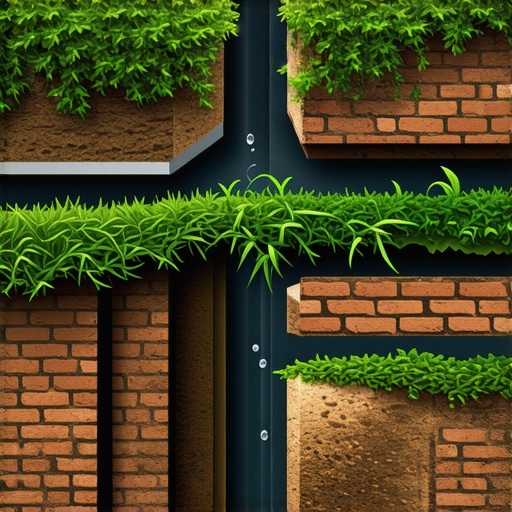
Don’t fall for the ‘lick-and-stick’ veneer solutions or the contractors who think a bucket of tar is the answer to waterproofing. Masonry is a living, breathing system of stone, sand, and lime. When you add a green roof, you’re changing the ecosystem of that wall. You need to ensure the foundation wall bowing repair is handled from the top down, managing the load and the moisture before they ever reach the soil. Whether it’s emergency masonry repair for a bulging parapet or a meticulously planned brick wall restoration, the goal is the same: durability. As my grandfather used to say while he worked the hawk and trowel, ‘The mud tells the truth, eventually.’ Don’t let your green roof be the thing that exposes the lies of a cheap repair. Keep your weep holes clear, your mortar soft, and your ties stainless. Only then will your rooftop oasis be a legacy rather than a liability.”,”image”:{“imagePrompt”:”A detailed forensic photo showing a cutaway of a masonry wall supporting a green roof. The image shows a digital borescope being used to inspect rusted steel wall ties within the cavity, with moisture droplets visible on the interior brick surface and a lush green garden visible on the top of the wall.”,”imageTitle”:”Forensic Masonry Inspection of Green Roof Structure”,”imageAlt”:”Forensic inspection of rusted wall ties behind a green roof masonry parapet.”},”categoryId”:0,”postTime”:””}