
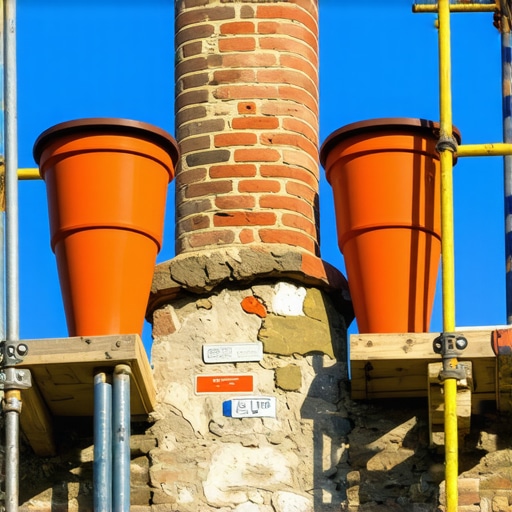
The Tragedy of the Ruined Facade: When History Crumbles
I have spent forty years staring at the vertical skylines of old cities, and nothing breaks my heart faster than a Victorian chimney that has been ‘repaired’ by a handyman with a bag of Type S Portland cement and a hardware store trowel. You see it from the street: those dark, smeary patches of grey mud that look like a scar on a beautiful face. But the real tragedy isn’t aesthetic; it’s structural. When you apply modern, rigid materials to 19th-century clay, you aren’t fixing it. You are signing its death warrant. A chimney is a living, breathing lung of a house. It expands, it contracts, and it battles the most brutal atmospheric chemistry known to architecture. To save one, you have to stop thinking like a contractor and start thinking like a forensic chemist.
The Lesson of the Ringing Brick
My mentor, a Scotsman who could read the ‘suction’ of a brick just by glancing at its pores, taught me the most important lesson in masonry restoration. He would take a suspect unit from a crumbling stack, clear the debris, and strike it with the edge of his slicker. If it emitted a dull, thudding sound, it was ‘blown’—the internal lattice was shot. But if it ‘rang’ like a ceramic bell, it still had life. He’d throw the dull ones into the rubble pile without a word. He knew that the Victorian era produced bricks fired in beehive kilns where temperatures fluctuated. This created a ‘soft-orange’ core and a ‘hard-red’ skin. If that skin is breached by aggressive grinding or improper mortar, the brick will dissolve into dust within five seasons. This is the fundamental reality of brick wall restoration: you are preserving a delicate balance of vapor permeability and structural integrity.
“Water penetration is the single greatest threat to masonry durability, particularly in chimneys where exposure is maximized on all four sides.” – BIA Technical Note 7
The Physics of the Sacrificial Joint
Why do Victorian chimneys fail? It usually starts with the ‘mud.’ In the late 1800s, mortar was primarily lime and sand. It was soft, flexible, and ‘breathable.’ When the house settled or the chimney heated up, the lime moved with it. When water got into the wall, the lime allowed it to evaporate. Most importantly, the mortar was softer than the brick. In the hierarchy of masonry, the mortar is sacrificial. It is designed to wear away so the brick doesn’t have to. Modern Portland cement is the opposite. It is harder than the Victorian brick. When the chimney expands under the heat of a fireplace, the hard cement doesn’t budge. Instead, it crushes the edges of the soft bricks, a process we call spalling. This is why brick spalling prevention requires the use of Type O or even Type K lime mortars. If your mason shows up with a bag of ‘High Strength’ premix, kick him off the scaffolding before he ruins your equity.
Micro-Zoom: The Chemistry of Efflorescence and Sulfation
When I’m performing a forensic inspection, I often see a white, powdery crust on the stack. Homeowners think it’s mold. It’s not. It’s efflorescence—mineral salts being pushed out of the brick by moisture. But in a chimney, there’s a deadlier cousin: sulfation. When you burn coal or wood, you release sulfur dioxide. This gas mixes with moisture in the flue to form a weak sulfuric acid. This acid leaches into the mortar joints from the inside out. This is why brick efflorescence removal isn’t just about scrubbing the surface; it’s about stopping the moisture migration that carries the salts. If you don’t address the flue liner, you’re just painting over a cancer. I’ve seen brick veneer detachment repair projects fail because the contractor didn’t realize the moisture was coming from the interior combustion gases, not the rain.
The Anatomy of the Restoration: From Cap to Base
A proper restoration starts at the top. The chimney cap or ‘crown’ is the first line of defense. Most are cracked, allowing water to pour down the center of the masonry. We don’t just patch these; we cast new ones with an ‘overhang’ and a ‘drip edge’ to shed water away from the face. As we move down, we look at the joints. Cracked brick wall repair in a Victorian context involves ‘repointing’—the surgical removal of the top 3/4 inch of mortar. We don’t use high-speed grinders that nick the bricks; we use pneumatic chisels or hand tools. We then ‘butter’ the joints with a lime-rich mud, striking it with a slicker to match the original profile. This ensures the porous stone sealers we apply later can actually do their job without trapping liquid water behind the surface.
“Mortar should always be weaker than the masonry units it binds, ensuring that stresses are relieved through the joints rather than the units themselves.” – ASTM C270 Standards
Beyond the Brick: Foundation and Gravity
Sometimes the chimney problem isn’t the chimney at all. It’s the ground. A Victorian chimney can weigh twenty tons, concentrated on a small footprint. If the soil heaves or the foundation crack repair wasn’t handled decades ago, the chimney will begin to lean. This creates ‘batter’ issues. While retaining wall batter correction is a different beast, the physics of a leaning chimney are terrifying. I have walked into basements where the concrete masonry unit restoration was ignored for so long that the chimney was held up by little more than habit and a few rusted wall ties. In these cases, we use advanced masonry adhesives and stainless steel helical ties to stitch the chimney back to the house frame before we even think about the aesthetics.
The Restoration Reality: Do It Once, or Do It Twice
I recently inspected a job where a ‘handyman’ had used a silicone-based sealer on a damp Victorian stack. He trapped the water inside. That winter, the water froze, expanded by 9%, and literally exploded the faces off three hundred bricks. It looked like a war zone. What could have been a $5,000 repointing job became a $25,000 teardown and rebuild. This is why you never use ‘waterproof’ coatings on old brick. You use ‘breathable’ siloxanes that allow vapor to escape while keeping liquid out. Masonry is a game of moisture management, not moisture blockage. Whether you are dealing with concrete masonry unit restoration or a 120-year-old chimney, the rules of physics do not care about your budget. You either respect the material’s need to move and breathe, or you watch it turn to rubble.