
The Ghost in the Wall: A Forensic Case Study
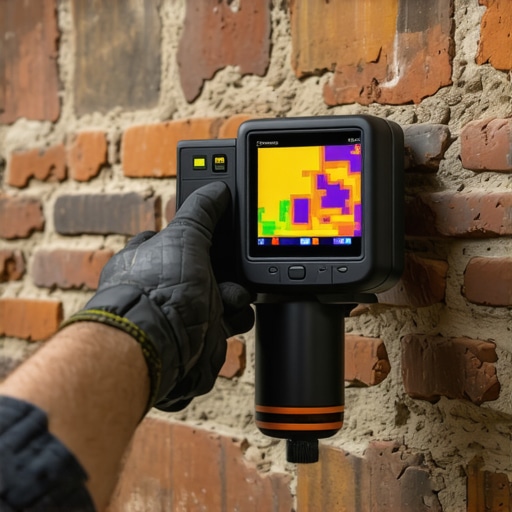
The homeowner stood on their manicured lawn, pointing to a pristine-looking Georgian facade. They were complaining about a faint, musty odor in the parlor and a slight ‘ghosting’ on the interior plaster. To the naked eye, the brickwork was a masterpiece of tight joints and crisp soldier courses. But I’ve spent forty years smelling rot before I see it. I pulled my thermal imager from the kit, waited for the sun to dip just below the treeline—the ‘golden hour’ for thermal lag—and aimed it at the chimney breast. What looked like solid masonry on the surface appeared as a bleeding, dark purple bruise on my screen. I put my scope through a weep hole, and the truth was ugly: the structural brick ties had rusted to flakes of orange dust, and the inner wythe was saturated. The homeowner thought it was a hairline crack; I saw a wall ready to peel off like wet wallpaper.
“Water penetration is the single greatest threat to masonry durability. Its presence within the wall system leads to the corrosion of metal ties, the degradation of mortar, and the eventual failure of the structural bond.” – BIA Technical Note 7
The Physics of the Thermal Signature
In the world of forensic masonry, we deal with emissivity and thermal mass. Brick is a heavy hitter; it soaks up BTUs all day and radiates them slowly at night. But when you introduce moisture—the mason’s eternal enemy—the physics change. Water has a much higher heat capacity than fired clay. When I perform a masonry damage assessment, I’m looking for the ‘evaporative cooling’ effect. As moisture escapes through crumbling mortar joints, it cools the surface of the brick. On a high-resolution thermal screen, these damp spots pop out like neon signs against the warm glow of dry masonry. This isn’t just about finding leaks; it’s about identifying the ‘dew point’ inside the wall. If that moisture hits the dew point inside the cavity, it stays there, fueling the freeze-thaw cycle that eventually leads to spalling.
The North’s Silent Killer: The Freeze-Thaw Cycle
Up here, where the frost line digs deep, the 9% expansion of freezing water is a wrecking ball. When water is trapped behind a hard, non-breathable Portland cement used in a botched crumbling mortar joint repair, it has nowhere to go. It forces its way out through the face of the brick, popping the ‘skin’ off. This is why thermal imaging is a game-changer. I can see the sub-surface delamination before the brick face actually falls off. We see this often in chimney crown repair. A cracked crown allows water to bypass the flashing and travel down the flue liner. The thermal camera detects that heat loss and moisture migration long before you see the white crust of efflorescence on the exterior. By the time the salt appears, the internal structure is already compromised.
The Anatomy of Proper Restoration: More Than Just Mud
When the camera reveals the failure, the fix isn’t just slapping on some ‘lick-and-stick’ veneer. You have to understand the chemistry of the bond. For historic restoration, we look at historic pointing styles like the weathered joint or the ‘struck’ joint, which shed water away from the brick’s edge. Using fiber-reinforced mortars can provide extra tensile strength in high-stress areas, but you must respect the sacrificial principle. The mortar must always be softer than the brick. If you use a high-strength Type M mortar on soft, hand-molded bricks, the brick will lose every time. We analyze the suction of the masonry—the Initial Rate of Absorption (IRA)—to ensure the new mud doesn’t have its water sucked out too fast, leading to a ‘flash set’ that crumbles under a thumb’s pressure.
“Mortar should be designed as a sacrificial element; it must be more permeable and have a lower compressive strength than the masonry units it binds together to prevent irreversible damage to the units themselves.” – ASTM C270 Standard
Advanced Diagnostics: Birdsmouth Cuts and Tie Replacement
One of the most frequent ‘invisible’ failures I find with infrared is the improper use of masonry birdsmouth cuts in decorative arches. If the weight isn’t distributed correctly onto the haunches, the thermal stress causes micro-fractures. My camera sees the heat escaping through these fissures. In these cases, we often have to perform a structural brick ties replacement. In the old days, they used galvanized wire that eventually rots. Today, we use helical stainless steel ties that we ‘drive and dry-fix’ into the backup material. It’s surgical work. We use a slicker to finish the joints, ensuring the mud is packed tight to the back of the joint to eliminate voids where water can congregate.
Sustainable Masonry and Modern Cleaning
We are moving toward sustainable masonry materials, like lime-based washes and recycled brick, which handle moisture much better than modern synthetic coatings. But even the best materials fail if they are dirty. Masonry cleaning isn’t just about ‘looking sharp.’ Carbon crusts and biological growth trap moisture. We use low-pressure, high-heat systems to melt away the grime without ‘burning’ the brick or opening the pores too wide. Once cleaned, the thermal signature of the building changes, often showing a significant improvement in thermal performance. Do it once, do it right, or you’ll be calling me back in five years to watch your house crumble through a digital lens. It’s about the tooth of the stone and the integrity of the trade.