
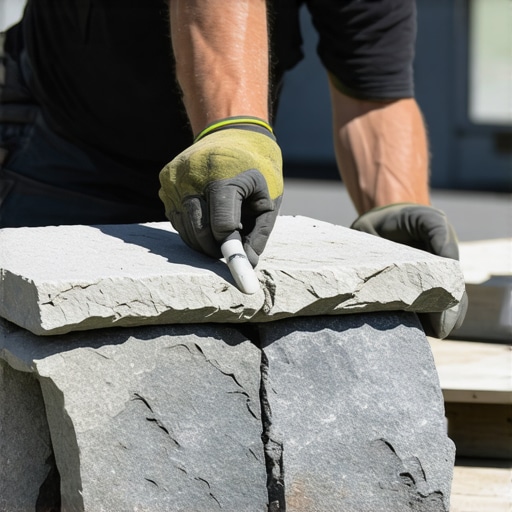
The Forensic Scene: The Hidden Decay of the Capstone
The homeowner pointed to a limestone cap atop a garden wall, claiming it was just a bit ‘rattly.’ From ten feet away, it looked like a minor nuisance. But when I stepped onto the ladder for a forensic inspection, the reality was grimmer. I slid my hawk under the edge, and the stone didn’t just wiggle; it lifted off like a lid on a jar. Below it, the structural core wasn’t just damp—it was a slurry of pulverized masonry and rusted-to-dust reinforcement. The culprit wasn’t just time; it was the rigid, brittle nature of the old mortar bed that had surrendered to the relentless cycle of thermal expansion. What they thought was a simple patio stone realignment job was actually a full-scale failure of the moisture barrier.
“Water penetration is the single greatest threat to masonry durability, leading to efflorescence, spalling, and the eventual disintegration of the structural bond.” – BIA Technical Note 7
The Physics of Failure: Why Traditional Mud Quits
In the world of historic masonry preservation, we respect the old ways, but we don’t ignore the laws of thermodynamics. A capstone is the most abused element of any structure. It sits in the sun, soaking up BTUs, expanding at a different rate than the brick or stone beneath it. When you use a standard Type N mortar—what we call ‘mud’—to bed a heavy capstone, you are creating a rigid ‘cold joint.’ As the stone heats and cools, that mortar bond shears. Once that microscopic hairline crack forms, capillary action pulls water into the joint. In northern climates, that water expands 9% upon freezing, popping the bond and turning your expensive stone balustrade restoration into a pile of loose rubble.
The Chemistry of the Modern Bond
This is where the ‘handyman specials’ fail and the forensic masters succeed. Modern polyurethane and MS-polymer adhesives aren’t just ‘glue’; they are engineered elastomers. Unlike the rigid crystalline structure of cementitious mortar, these adhesives maintain a high ‘tensile bond strength’ while remaining flexible. When the sun beats down on an outdoor fireplace rebuild, the stone expands, and the adhesive stretches with it, maintaining a gastight and watertight seal that mortar simply cannot provide. We are talking about the difference between a brittle ceramic and a high-performance industrial gasket.
The Micro-Zoom: Porosity and Suction
To understand why adhesives win, we have to look at the ‘tooth’ of the stone. Every piece of masonry, whether it’s historic brick salvage or a freshly cut piece of granite, has a specific pore structure. When we ‘butter’ a stone with traditional mortar, we rely on the suction of the stone to pull the cement paste into its pores. However, if the stone is too dry, it steals the water from the mortar too fast—a process we call ‘flash setting’—and the bond never truly forms. If it’s too wet, the ‘mud’ just floats. High-performance adhesives are formulated with a lower surface tension, allowing them to penetrate deep into the stone’s microscopic topography regardless of the ambient moisture content, creating a mechanical lock that is nearly impossible to break without destroying the stone itself.
“Sealants used in masonry must accommodate the expected movement of the substrate while maintaining adhesion to the joint faces.” – ASTM C920 Standard Specification for Elastomeric Sealants
The Blueprint: Executing the Permanent Fix
When I’m called in for chimney repair services or chimney leak detection, the loose cap is usually the ‘smoking gun.’ Replacing it with more mortar is just planning for a future failure. Here is how a master mason executes an adhesive-based capstone reset:
- Preparation: We don’t just brush off the dust. We use a diamond-blade grinder to remove every trace of the old, failing mortar. We need to see the ‘bright’ stone to ensure we have the proper surface energy for bonding.
- Moisture Management: We check for ‘honeycombing’ in the core. If the internal masonry is saturated, we let it breathe. You can’t seal in a wet core, or you’ll trigger a hydrostatic blowout.
- The Application: We use a heavy-duty caulking gun to apply ‘snakes’ of high-modulus adhesive. We don’t full-spread it like buttering bread; we leave channels for any internal condensation to escape, preventing the dreaded ‘trapped moisture’ syndrome.
- The Finish: For flush pointing services, we leave a 1/2 inch recess at the visible edge. This is later filled with a color-matched, breathable lime mortar to maintain the aesthetic of the masonry birdsmouth cuts while the hidden adhesive does the heavy lifting behind the scenes.
Fireplaces and High-Heat Zones
In a fire-rated masonry installation, such as a custom hearth or an outdoor fireplace rebuild, the thermal stresses are even more extreme. A standard mortar bed will crack during the very first high-intensity fire. Using a specialized, heat-resistant adhesive allows the hearth stones to ‘float’ slightly, absorbing the thermal shock without transferring that stress into the firebox walls. This is the ‘Cure’ that keeps you from having to call me back in three years to fix the same crack.
The Cynic’s Guide to Quality
I’ve seen too many ‘tailgate contractors’ throw a glob of liquid nails on a stone and call it a day. That’s not what we’re talking about here. True forensic-grade repair requires an understanding of ‘open time’ and ‘cure rates.’ If you apply adhesive in the direct 100-degree sun of a Texas summer, the outer skin will ‘cure’ too fast, trapping solvents inside and weakening the bond. You need to know the ‘slicker’ and the ‘hawk’ just as well as the chemistry. Whether you are dealing with a patio stone realignment or a complex stone balustrade restoration, the goal is the same: one repair, one time. Don’t be the guy who does it twice because he was too stubborn to move past the 19th-century mud-mixing mentality. Respect the stone, understand the physics, and use the bond that actually holds.