Trusted Masonry Repair: Concrete Patch & Foundation Restoration Guide
Elevating Structural Integrity Through Advanced Masonry Repair Techniques
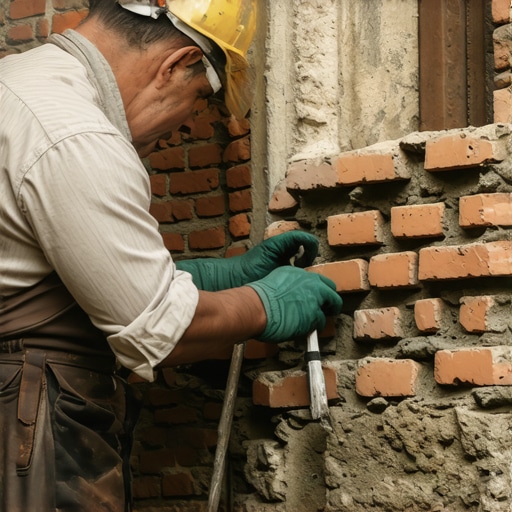
In the realm of masonry restoration, precision and expert knowledge are paramount. As seasoned specialists, we recognize that addressing foundational issues and surface deterioration requires a comprehensive understanding of materials, environmental factors, and innovative repair methodologies. This guide delves into the sophisticated strategies for concrete patching and foundation restoration, ensuring durability and longevity for your masonry structures.
The Critical Role of Material Selection in Masonry Restoration
Choosing the appropriate repair materials is foundational to achieving resilient masonry repairs. Epoxy resins, Portland cement-based mixes, and polymer-modified mortars each serve specific purposes, from structural reinforcement to surface sealing. An informed selection hinges on factors such as substrate compatibility, load-bearing requirements, and environmental exposure. For instance, advanced epoxy formulations provide superior adhesion and chemical resistance, making them ideal for patching structural cracks in load-bearing walls.
Innovative Techniques for Concrete Patch Durability
Modern concrete patching extends beyond traditional methods. Techniques like cold spraying and self-healing concrete incorporate microcapsules that release repair agents upon crack formation, significantly extending lifespan. For high-traffic or load-intensive applications, fiber-reinforced overlays distribute stresses more evenly, preventing future failure. Regularly inspecting and maintaining patches using non-destructive testing methods ensures ongoing structural integrity.
Understanding the Dynamics of Foundation Restoration
Foundation issues often stem from soil settlement, hydrostatic pressure, or material degradation. Expert foundation restoration involves site analysis via geotechnical surveys and load assessments. Techniques such as underpinning with push piers or helical piles provide stable, long-term solutions. Additionally, hydraulic jacking can realign shifted foundations, restoring both safety and structural harmony. The integration of modern stabilization methods requires meticulous planning and execution to prevent recurrence of issues.
What are the latest advancements in crack injection techniques for foundation repair?
Recent innovations include low-pressure epoxy injections combined with real-time monitoring sensors that assess cure progress and bond strength. These methods allow for precise, minimally invasive repairs, reducing disruption and ensuring maximum adhesion even in complex crack patterns. For a detailed comparison of these techniques, consult the latest publications in the American Society of Civil Engineers.
For professionals seeking to refine their skills and knowledge, exploring comprehensive resources such as this expert guide can provide valuable insights. Sharing experiences and strategies within the masonry community further enhances the collective expertise necessary for tackling complex restoration projects.
Engage with advanced content and contribute your insights to push the boundaries of masonry repair excellence.
Embracing Cutting-Edge Repair Technologies to Strengthen Masonry
As masonry restoration continues to evolve, the integration of innovative materials and processes plays a pivotal role in achieving durable results. For example, the development of high-performance polymer composites and nanomaterials offers unprecedented bonding strength and resistance to environmental stressors. These advancements complement traditional methods, providing a multi-layered approach to masonry repairs that extend longevity and enhance structural integrity. To explore these innovations further, professionals can consult reputable sources such as this comprehensive guide.
Why Precision Matters in Foundation Stabilization
Every foundation repair project benefits from meticulous planning and execution. Experts emphasize the importance of thorough site assessments, including soil testing and load analysis, to determine the most appropriate stabilization technique. Modern solutions like jet grouting and soil mixing improve upon traditional underpinning, allowing for targeted reinforcement that minimizes invasive procedures and maximizes stability. When selecting a repair approach, consider the long-term effects and compatibility with existing structures, as detailed in this authoritative resource.
Are there emerging repair methods that could revolutionize masonry longevity?
Emerging techniques such as self-healing concrete, which incorporates microcapsules of healing agents, are promising solutions for reducing maintenance costs and preventing crack propagation. These innovations are backed by ongoing research from institutions like the American Society of Civil Engineers, highlighting their potential to transform masonry repair paradigms. For professionals eager to stay ahead, staying informed about these breakthroughs is essential for delivering resilient, future-proof solutions.
If you’re interested in expanding your expertise, consider exploring additional resources on facade restoration and concrete patching, such as this expert guide. Sharing insights and strategies with peers fosters innovation and elevates industry standards.
Engage with our community by commenting below or sharing this article with colleagues who are passionate about masonry excellence. For more in-depth knowledge, check our recommended reading list for advanced repair techniques and materials.
Unlocking the Potential of Nanotechnology in Masonry Restoration
Recent advancements in nanotechnology are revolutionizing the field of masonry repair, offering solutions that were once considered science fiction. Nano-engineered repair materials incorporate nanoparticles such as nano-silica, nano-titania, and carbon nanotubes, which dramatically enhance the mechanical properties of traditional mortars and concretes. These ultra-fine particles improve adhesion, reduce permeability, and increase resistance to environmental stressors, resulting in repairs that not only last longer but also adapt to changing conditions over time.
For instance, nano-silica can fill micro-voids within the substrate, creating a denser, less permeable surface that resists water ingress—a primary cause of deterioration. Meanwhile, the incorporation of nano-titania imparts photocatalytic properties, allowing surfaces to break down pollutants and organic matter when exposed to sunlight, thereby maintaining the masonry’s aesthetic and structural integrity. Such innovations are outlined in detailed studies like those published by the Construction and Building Materials journal.
How do smart materials transform proactive maintenance in masonry?
Smart materials, including self-healing concretes and shape-memory alloys, are game-changers for masonry longevity. Self-healing concrete utilizes microcapsules embedded within the matrix that release healing agents—such as calcium carbonate—when cracks form, sealing the fissures before they propagate into larger structural issues. This autonomous healing process significantly reduces maintenance costs and extends the lifespan of structures.
Shape-memory alloys, on the other hand, can respond to thermal or mechanical stimuli, enabling real-time stress redistribution and deformation correction. When integrated into foundation or wall reinforcement, these materials can provide adaptive support, maintaining structural stability despite shifting soil conditions or load variations. The combination of these technologies heralds a new era of ‘living’ masonry that actively maintains itself.
Advanced Monitoring: The Key to Predictive Masonry Maintenance
Embedding sensors within masonry components allows for continuous real-time health monitoring, transforming maintenance from reactive to predictive. Fiber optic sensors, piezoelectric devices, and wireless IoT modules can detect stress, strain, moisture levels, and temperature changes with extraordinary precision. These data streams enable engineers to identify early signs of deterioration—such as micro-cracking or moisture intrusion—long before visible damage occurs.
For example, a network of embedded fiber optic sensors can monitor the micro-strain within a bridge’s masonry arch, providing actionable insights to preempt catastrophic failure. Such integration aligns with principles outlined in the American Society of Civil Engineers’ guidelines on structural health monitoring, emphasizing durability, safety, and cost efficiency.
What are the regulatory and practical challenges in adopting these futuristic materials and systems?
Despite their promising potential, the integration of nanomaterials and smart systems faces hurdles such as high initial costs, lack of standardized testing protocols, and limited field experience. Regulatory frameworks are evolving to ensure safety and efficacy, but widespread adoption requires collaboration between researchers, industry stakeholders, and policymakers. Practical challenges include ensuring compatibility with existing construction practices and training professionals to handle advanced materials effectively.
To explore these topics further, industry professionals should engage with authoritative sources like the Masonry Rescue platform, which regularly publishes cutting-edge research and case studies.
Are you prepared to integrate these technologies into your next project? Stay ahead by continuously updating your knowledge base and participating in industry innovation forums. The future of masonry repair is not just about fixing what’s broken but proactively building resilience through science and ingenuity.
Harnessing Nano-Engineering to Combat Masonry Deterioration
The infusion of nano-technology into masonry repair marks a paradigm shift, enabling repairs that are both durable and adaptive. Nano-silica particles, for example, fill microvoids within concrete matrices, significantly reducing permeability and enhancing resistance to water ingress—one of the primary culprits of structural decay. These innovations extend the lifespan of repairs by creating denser, more resilient surfaces, a claim supported by recent research published in Construction and Building Materials.
Integrating Smart Materials for Autonomous Maintenance
Smart materials such as self-healing concretes and shape-memory alloys are redefining proactive masonry management. Microcapsules embedded within these concretes release healing agents like calcium carbonate when cracks form, sealing fissures autonomously and preventing escalation into major failures. Meanwhile, shape-memory alloys respond to environmental stimuli, actively restoring structural integrity by realigning and reinforcing compromised sections. These innovations facilitate maintenance that is both less invasive and more effective, pushing the boundaries of traditional repair methodologies.
Can Advanced Monitoring Redefine Structural Safety?
The deployment of embedded sensors—fiber optics, piezoelectric devices, and wireless IoT modules—permits real-time health assessments of masonry structures. Continuous data collection on stress, moisture, and temperature allows for early detection of deterioration, enabling interventions before visible damage occurs. For example, fiber optic sensors within a masonry arch can detect micro-strain indicative of potential failure, providing invaluable data for timely maintenance and safety assurance. This approach aligns with the principles outlined in ASCE guidelines on structural health monitoring.
What regulatory and practical hurdles impede the widespread adoption of these innovations?
Despite their transformative potential, barriers such as high initial costs, lack of standardized testing protocols, and limited field validation hinder adoption. Regulatory frameworks are evolving to accommodate these new materials and systems, but industry stakeholders must collaborate closely with researchers and policymakers to establish safety standards. Practical challenges include ensuring compatibility with existing construction practices and training professionals to utilize advanced materials effectively. Engaging with authoritative sources like Masonry Rescue provides vital insights into overcoming these hurdles.
Embracing the Future with Innovative Repair Strategies
As the masonry repair landscape evolves, integrating nanomaterials and smart systems offers unprecedented durability and resilience. The development of nanocoatings that impart self-cleaning and pollutant-degrading properties, combined with autonomous repair mechanisms, creates masonry structures capable of self-maintenance. These advancements promise a future where repairs are not just reactive but anticipatory, ensuring long-term structural health and safety for generations to come.
Expert Insights & Advanced Considerations
Innovative Material Integration Boosts Longevity
Leverage cutting-edge materials such as nano-reinforced concretes and smart polymers to significantly extend the lifespan of masonry structures. Incorporating nanotechnology enhances adhesion and reduces permeability, while smart materials enable autonomous repair, reducing maintenance costs and increasing structural resilience.
Precision in Foundation Stabilization Is Non-Negotiable
Employ sophisticated techniques like jet grouting and soil mixing that allow for targeted reinforcement with minimal invasiveness. Accurate geotechnical assessments underpin successful stabilization, ensuring long-term stability and safety of masonry structures amidst changing environmental conditions.
Sensor Technology Shapes Proactive Maintenance
Embedding IoT-enabled sensors such as fiber optics and piezoelectric devices facilitates continuous structural health monitoring. This data-driven approach allows for early detection of issues like micro-cracking or moisture intrusion, enabling timely interventions that prevent costly repairs.
Emerging Self-Healing and Adaptive Materials Promise a New Era
Research advancements in self-healing concrete and shape-memory alloys are poised to revolutionize masonry repair. These materials respond dynamically to stress and damage, offering autonomous repair capabilities and adaptive support that maintain structural integrity over decades.
Regulatory Evolution Will Accelerate Adoption of Next-Gen Technologies
As innovative materials and systems demonstrate proven performance, expect regulatory frameworks to adapt, facilitating wider implementation. Collaboration among researchers, industry stakeholders, and policymakers is critical to establish standards that ensure safety and efficacy.
Curated Expert Resources
- American Society of Civil Engineers (ASCE): A premier source for guidelines on structural health monitoring and innovative repair methods, offering peer-reviewed publications and standards.
- Construction and Building Materials Journal: Publishes cutting-edge research on nanotechnology applications and smart materials in masonry repair, essential for staying ahead of industry trends.
- Masonry Rescue Platform: An authoritative online resource featuring case studies, technical guides, and expert insights into advanced masonry restoration techniques.
Final Expert Perspective
In the evolving landscape of masonry repair, embracing innovations like nanotechnology, smart materials, and real-time monitoring elevates the craft from reactive fixes to proactive, durable solutions. The integration of these advanced techniques not only enhances structural resilience but also paves the way for a future where masonry structures can self-maintain and adapt to environmental challenges. Staying informed through top-tier resources and engaging in industry dialogue is essential for professionals committed to excellence. Explore these tools and insights further, and contribute your expertise to shape the future of masonry restoration.

The post highlights some fascinating advancements in masonry repair, especially the integration of nanotechnology and smart materials. I recently worked on a project where nano-silica was used to improve water resistance in a historic structure, and the results were impressive—significantly reduced permeability and enhanced durability. It’s clear that these innovations are making traditional repair methods more effective and longer-lasting.
One aspect I find particularly exciting is the use of embedded sensors for real-time monitoring. In my experience, early detection of issues like micro-cracking can save a lot of cost and prevent major failures down the road. However, I wonder how feasible widespread implementation is in typical construction projects, considering costs and technical expertise required. What are other professionals’ thoughts on balancing cutting-edge technology with practical application? Are there scalable solutions for smaller projects that still benefit from these smart systems?
This guide offers an insightful overview into the future of masonry restoration, particularly highlighting how innovative materials like nano-engineered mortars and smart self-healing concretes are transforming traditional repair approaches. I’ve seen firsthand how integrating nano-silica enhances not only water resistance but also overall durability, which is crucial for structures exposed to harsh weather conditions. The potential for autonomous materials like shape-memory alloys to adapt to shifting settlements is quite impressive, reducing maintenance and extending lifespan. One challenge I see, however, is the initial cost and the need for specialized training to properly use these emerging technologies. I’m curious about how smaller firms or projects with limited budgets can access these advancements without compromising quality. Have others found cost-effective ways to incorporate smart materials or sensor-based monitoring in standard projects? I believe the key lies in gradual adoption and developing scalable solutions tailored to project size and complexity. It would be interesting to hear strategies that others have successfully employed to bridge this gap.