
The Forensic Scene: When the Line Goes Quiet
I stood on a job site last November, looking at a structural failure that didn’t have to happen. The homeowner had noticed a slight inward curve in their basement—a classic case of lateral earth pressure leading to foundation wall bowing repair needs. The contractor on-site had brought in a small-diameter masonry pump to fill the CMU cores with grout. But as I watched, the pump began to labor, the pressure gauge spiked, and suddenly, the line went silent. They had made the amateur’s mistake: they thought ‘liquid’ meant ‘flowable.’ To clear the jam, they added ten gallons of water to the hopper. I walked off the site right then. That wall was doomed to be a collection of honeycombing and void-filled shells because they didn’t understand the physics of the mud.
The Physics of Pumpability: Why Slump is a Lie
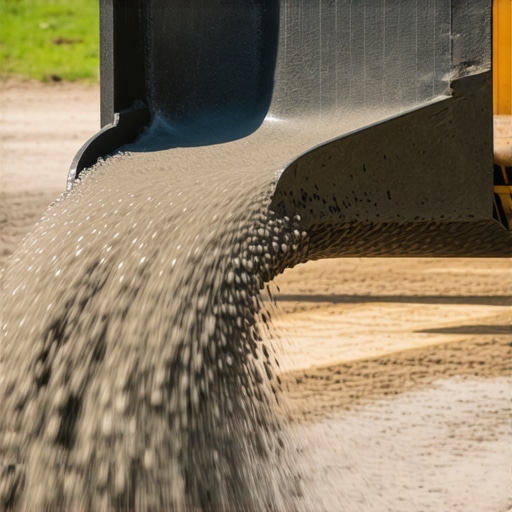
In the world of structural masonry inspection, we see the aftermath of bad mixes every day. When you are pumping concrete or grout into a wall, you aren’t just moving a liquid; you are transporting a suspension of solids. The tooth of the aggregate matters. If your sand is too sharp or your stone is too large for the hose diameter, you get internal friction that creates a ‘plug.’ Most DIYers reaching for tuckpointing tools for DIY projects think they can just scale up their mortar mix for structural fill. They are wrong. A pumpable mix requires a specific ‘lubricity’—a coating of cement paste that acts as a bearing for the aggregates. Without this, the water is squeezed out of the mix under pump pressure, a phenomenon known as bleeding, leaving a dry, unmovable mass of rock in your line.
“Grout for masonry should have a consistency that allows it to be poured or pumped into small voids without segregation of the constituents.” – ASTM C476: Standard Specification for Grout for Masonry
The Chemistry of the Mix: Micro-Zooming into Hydration
To get that perfect flow, you have to look at the molecular level. It’s about the formation of Calcium Silicate Hydrate (C-S-H). When water hits the Portland cement, it starts a chemical fire. In a pump mix, we often use fly ash or plasticizers to butter the aggregate. Fly ash particles are spherical—think of them as microscopic ball bearings that allow the jagged sand grains to slide past one another. If you’re dealing with spalled concrete steps repair or filling deep structural voids, your water-to-cement ratio is your god. Too much water and you destroy the crystalline structure. As the excess water evaporates, it leaves behind microscopic tunnels—capillary pores—that become the entry point for the freeze-thaw cycle. In the North, where water expands 9% upon freezing, those pores lead to spalling that will eat your foundation alive.
Foundation Wall Bowing Repair and the Grout Injection
When we handle foundation wall bowing repair, we often use high-slump grout to solidify the wall after installing steel reinforcement. This isn’t just about strength; it’s about density. If the mix is too stiff, it hangs up on the rebar, creating a cold joint. A cold joint is a structural fracture waiting to happen. The slicker the mix, the better it encapsulates the steel. We see a lot of robotic masonry repair systems coming onto the market now that can sense the resistance of the fill, but even a robot can’t fix a bad recipe. The mix must be designed to stay cohesive under the pressure of the pump’s pistons. We often talk about ‘suction’ in a dry brick, but in a CMU core, the block itself will suck the moisture out of your grout before it can settle. This is why we pre-dampen the cores—a step the ‘handyman specials’ always skip.
Tuckpointing and the External Skin
While the internal grout provides the muscle, tuckpointing is the skin that protects the skeleton. If you’ve spent any time with a hawk and a slicker, you know that the mortar used for tuckpointing weatherproofing is a different beast entirely. It shouldn’t be pumpable; it should be stiff. We use tuckpointing tools for DIY to pack that mortar into the joints to prevent water ingress. If the exterior is failing, the best internal pump job in the world won’t save you from the hydrostatic pressure of a wet winter. Once the joints are struck—perhaps in a soldier course for aesthetic flair—we often apply porous stone sealers. These aren’t your cheap hardware store sprays. We’re looking for silanes or siloxanes that allow the masonry to breathe. If you seal a wall with a non-breathable film, you’re just trapping the monster inside. The moisture will migrate to the face of the brick, freeze, and pop the face off like a scab.
“Water penetration is the single greatest threat to masonry durability. Proper mortar selection and joint finishing are the primary defenses against this intrusion.” – BIA Technical Note 7: Water Resistance of Brick Masonry
The Evolution: From Hand-Mixed to Robotic Masonry Repair
The industry is changing. We are seeing mortarless masonry systems that rely on precision grinding rather than a bed of mud. While these have their place in modern commercial builds, they lack the ‘soul’ and the forgiveness of a traditional lime-based system. For masonry staining and restoration, we still look back to the old ways. When I’m doing a structural masonry inspection on a building from the 1920s, I’m not looking for 5,000 PSI concrete. I’m looking for a mortar that is softer than the brick. If you pump a high-strength, modern Portland mix into a historic cavity, the expansion and contraction will shatter the original clay. You have to respect the sacrificial nature of the mortar.
Pro-Tip: The ‘Bucket Test’ for Pump Readiness
Before you commit five cubic yards to the hopper, perform a field test. Take a standard five-gallon bucket, cut the bottom out, and place it on a flat, non-absorbent surface. Fill it with your mix, lift the bucket straight up, and measure the ‘slump.’ For a masonry pump, you’re looking for a 10-inch slump that stays together. If the rocks settle at the bottom and the water runs off to the side (segregation), your pump is going to clog, and your back is going to break. It’s better to waste a bucket of mud than to have a 100-foot hose full of hardened concrete. Remember, once that cold joint forms in your foundation, you aren’t just a mason anymore—you’re a forensic case study in waiting. Do it once, do it right, and keep the water out of the hopper and in the mix design where it belongs.