
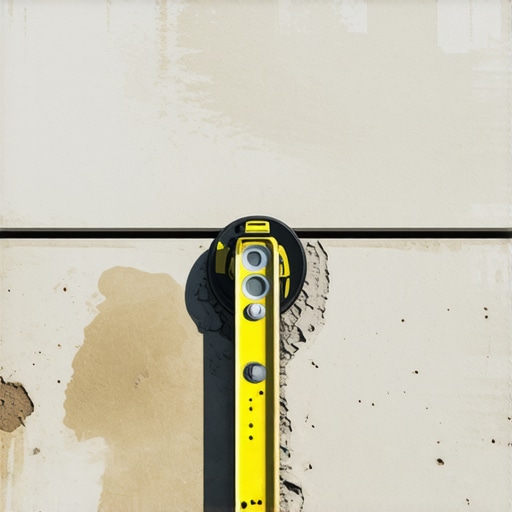
The Wavy Patio: A Monument to Poor Compaction
I walked onto a job site last Tuesday that looked more like a rolling sea than a backyard retreat. The homeowner was convinced that the earth had simply grown tired of holding up his thousand-square-foot stamped concrete patio. He called it ‘character.’ I called it a failure of the sub-grade. When I see a patio that has tilted three inches toward the foundation, I don’t see a cosmetic issue; I see a structural liability that is actively funneling thousands of gallons of rainwater directly into the home’s basement. This is the reality of concrete flatwork services performed by people who think a hand-tamper is ‘good enough.’ The physics of settlement are cold and unforgiving. If you don’t respect the soil’s load-bearing capacity, the soil will eventually respect gravity.
The Forensic Scene: A Cavern Beneath the Surface
The homeowner thought it was just a hairline crack. But when I put my scope inside a small drill hole near the sliding glass door, I saw the structural reality: a four-inch void where the sub-base had simply washed away. The gravel hadn’t vanished; it had migrated. Because the previous contractor failed to install proper drainage, every rainstorm was a hydraulic mining operation underneath the slab. The soil was saturated, the ‘fines’ in the gravel were gone, and the concrete was essentially bridging a cavern. One more heavy freeze and that entire section would have snapped, potentially taking the stone veneer repair work on the adjacent wall with it.
“Water penetration is the single greatest threat to masonry durability, leading to sub-grade erosion and cyclic expansion that can heave or sink even the most robust slabs.” – BIA Technical Note 7
The Physics of the Freeze-Thaw Cycle
In our climate, we deal with the brutal expansion of water. When water is trapped in the void beneath a sinking patio, it undergoes a phase change. As it freezes, it expands by roughly 9%. In a confined space beneath a 4,000-pound concrete slab, that expansion generates thousands of pounds of pressure per square inch. This is what causes spalling and masonry damage assessment nightmares. If your patio has sunk, it’s not just the weight of the concrete; it’s the lack of ‘tooth’ in the soil. We need to talk about the hydrostatic pressure that builds up when a slab loses its pitch. Once the ‘suction’ between the concrete and the sub-grade is broken, the slab becomes a piston, pumping more water into the soil every time someone walks on it.
Slab Jacking: The Precision Cure
Forget the ‘Band-Aid’ approach of pouring a new layer of ‘mud’ on top. That just adds more weight to a failing base. We use precise slab jacking—specifically high-density polyurethane injection. This isn’t just filling a hole; it’s a controlled chemical reaction. We drill penny-sized holes and inject a two-part polymer that expands with enough force to lift thousands of pounds of concrete. We monitor the lift with laser levels, watching for 1/16th of an inch of movement. It’s an exothermic reaction; the foam heats up as it expands, seeking out every ‘honeycombing’ pocket in the soil and densifying it. This turns the unstable sub-base into a structural composite that won’t wash away during the next spring thaw.
“Concrete repair and restoration must address the underlying cause of movement, rather than merely concealing the manifestation of the failure.” – ASTM C1583 Standards
The Anatomy of a Proper Restoration
A sinking patio is often a symptom of a larger ‘envelope’ failure. While I’m out there with the slab jacking rig, I’m usually looking at the chimney leak detection results or the state of the commercial parapet wall repair. Why? Because water moves in a system. If your chimney damper repair is neglected, water enters the flue, works its way down to the smoke shelf, and eventually exits through the foundation or the patio transition. We look at mortar matching services and re-pointing services for the surrounding brickwork because if the patio has moved, the brick wall restoration needs to be handled with a soft lime-based mortar—never that hard Portland cement that snaps the faces off old bricks like a dry cracker. You want a soldier course that actually supports the weight, not one that is just ‘buttered’ on with cheap adhesive.
The Hardscape Truth: Do it Once or Do it Twice
The ‘handyman special’ involves throwing some bags of quick-set concrete into the cracks and hoping for the best. That’s a cold joint waiting to happen. A cold joint is where the new material never actually bonds to the old, creating a weak point where moisture will sit and rot the structure from the inside out. When we perform foundation waterproofing alongside slab jacking, we are ensuring that the entire ‘wet’ side of the assembly is protected. This involves more than a ‘slicker’ and a ‘hawk’; it involves understanding the mineralogy of the concrete flatwork services and how they interact with the local clay soil. We ensure the pitch is at least a quarter-inch per foot away from the structure. If you don’t get the pitch right, you’re just building a very expensive pond against your house. Whether it’s stone veneer repair or fixing a wavy driveway, the goal is stabilization, not just aesthetics. A patio should be a permanent floor for the outdoors, not a shifting liability that keeps you up at night when the clouds turn gray.