
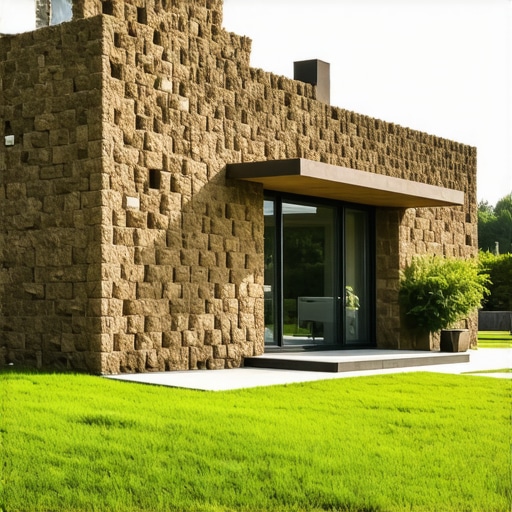
My old mentor once stood before a 19th-century brownstone that had been slathered in modern acrylic paint. He didn’t say a word; he just took a small mason’s hammer and tapped the surface. The sound wasn’t a solid ‘thwack’; it was a hollow, wet thud. He turned to me and said, ‘Kid, they didn’t just paint this wall; they suffocated it. This building is drowning in its own sweat.’ He was right. When we peeled back that plastic membrane, the brick crumbled like wet graham crackers. That was my first real lesson in the physics of historic masonry preservation: a wall must breathe, or it will die.
The Chemistry of the Carbonation Cycle
To understand why we are moving toward hempcrete and lime for a lower carbon footprint, you have to look at the microscopic dance of calcium. Modern Portland cement, the grey stuff most guys call mud, hardens through hydration—a rapid chemical reaction that creates a rigid, crystalline structure. But historic lime mortar is different. It hardens through carbonation. As the lime mortar dries, it absorbs carbon dioxide from the atmosphere, slowly turning back into limestone over decades. It’s a slow-motion chemical feast that makes the wall stronger with age rather than more brittle. When we talk about historic tuckpointing, we aren’t just making the joints look pretty; we are re-introducing a material that shares the same modulus of elasticity as the original brick. If you put a hard, Type S Portland mortar into a soft, handmade brick wall, the brick will lose the fight every time. During the freeze-thaw cycle, the water trapped in the brick expands by 9%, and since the mortar won’t budge, the face of the brick simply pops off. We call that spalling, and it’s a death sentence for a historic facade.
“Mortar should always be weaker than the masonry units it binds together, allowing for movement and moisture evaporation through the joints rather than the masonry units.” – BIA Technical Note 2
The Physics of Hempcrete and Thermal Mass
Hempcrete is the next logical step in our masonry repair services evolution. It’s a bio-composite made from the inner woody core of the hemp plant (the shiv) and a lime-based binder. Unlike concrete, which is a massive carbon emitter, hempcrete is carbon-negative. The hemp plant sequesters carbon as it grows, and the lime binder continues to suck CO2 out of the air once it’s in the wall. But the real magic is the ‘pore throat’ of the material. Hempcrete is incredibly vapor-permeable. In brick wall restoration, we often find that the biggest enemy isn’t the rain hitting the outside; it’s the vapor trying to get out from the inside. Hempcrete acts as a hygroscopic buffer, absorbing excess moisture when the humidity is high and releasing it when the air dries out. This prevents the honeycombing effect often seen in poorly poured concrete where air pockets and moisture trap salt, leading to internal erosion.
The Forensic Approach: Drone Chimney Inspections and Damage Assessment
Before we even touch a trowel or a hawk, we have to know what’s happening behind the scenes. This is where drone chimney inspections have changed the game for masonry damage assessment. In the old days, I’d have to build a three-story scaffold just to see if a soldier course was leaning. Now, I can fly a high-resolution thermal camera 50 feet up and see the exact heat signature of moisture trapped behind the masonry. Moisture shows up as ‘cold spots’ on the thermal scan because of evaporative cooling. If I see a dark blue plume near the crown of a chimney, I know the masonry waterproofing solutions previously applied were likely a film-forming sealer that trapped water inside the flue. We can’t just butter some new mortar over that; we have to strip it back and restore the breathability.
The Craft of Tuckpointing and Joint Striking
When we perform tuckpointing on a historic structure, the process is surgical. We use a slicker or a jointer tool to strike the joint, but the secret is in the ‘suction’ of the brick. If the brick is too dry, it will suck the water out of the mortar too fast, causing it to ‘flash set’ or burn. This results in a weak, crumbly joint that won’t last five years. We have to pre-wet the masonry, bringing it to a ‘saturated surface dry’ state. Then we lay the mud. For those looking for a contemporary edge, metallic masonry finishes can be integrated into the lime wash, providing a shimmering, reflective quality that still allows the masonry to breathe. This is a far cry from the ‘lick-and-stick’ stone veneer you see on suburban McMansions, which often lack proper drainage planes and lead to massive structural rot within a decade.
“The thickness of the walls should be such that they can resist the pressure of the earth, and the materials used must be compatible with the environment to ensure longevity.” – Vitruvius, De Architectura
The Structural Reality: Retaining Walls and Soil Pressure
It’s not all about bricks and mortar; sometimes it’s about the earth itself. I’ve seen retaining wall block replacement jobs where the homeowner thought they could just stack heavy stones and call it a day. They forgot about hydrostatic pressure. Without a proper drainage layer of 1-inch clean stone and a weep hole system, a retaining wall is just a dam waiting to break. Soil expands when wet, and that pressure will snap a cold joint in a concrete wall like a toothpick. When we integrate lime and hempcrete into these systems, especially in non-load-bearing infill, we are creating a flexible system that can handle the micro-movements of the earth without catastrophic cracking. We aren’t just building walls; we are managing the relationship between the atmosphere, the earth, and the shelter.
Preserving Value Through Forensic Mastery
Choosing historic masonry preservation isn’t just about being a ‘green’ enthusiast; it’s about asset protection. A building that is restored with the wrong materials—hard cement, plastic paints, non-breathable sealers—is a liability. It will require constant maintenance as the bricks continue to spall and the mortar falls out in chunks. By switching to hempcrete and lime, we are returning to a 1,000-year-old logic that works with the laws of physics rather than against them. Do it once, and do it right. If you want a wall that will be standing when your grandkids are old men, you don’t use the cheap stuff. You use the materials that have already proven they can stand the test of time.