Expert Facade Cleaning & Concrete Patch Strategies for Durable Results
Elevating Exterior Durability: The Critical Role of Expert Facade Cleaning and Concrete Patching
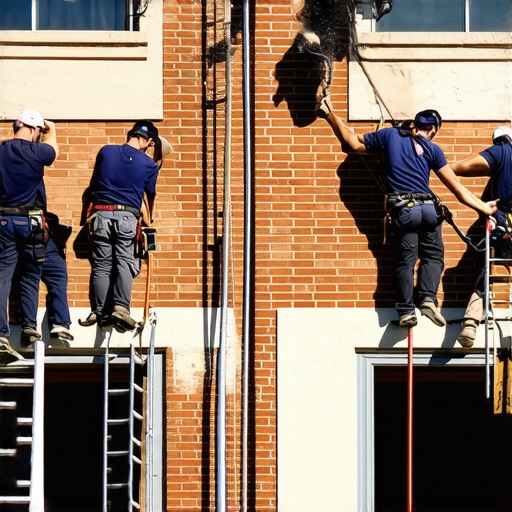
In the realm of masonry and building restoration, achieving long-lasting results hinges on a nuanced understanding of surface preservation techniques. As industry professionals recognize, the interplay between effective facade cleaning and precision concrete patching forms the backbone of structural integrity and aesthetic appeal. These methods, rooted in advanced practices, not only restore visual harmony but also fortify the building against environmental stressors, ensuring durability over decades.
Harnessing Surface Chemistry for Superior Cleaning and Restoration
Modern facade cleaning transcends mere surface dirt removal; it involves meticulous application of chemical agents tailored to specific masonry compositions. The use of eco-friendly, non-abrasive cleaning solutions minimizes damage while maximizing cleanability, especially on sensitive materials like limestone or sandstone. Experts leverage detailed knowledge of surface chemistry to select appropriate cleaners, ensuring that residual contaminants are eradicated without compromising the integrity of the substrate.
Precision in Concrete Patching: Strategies for Structural Resilience
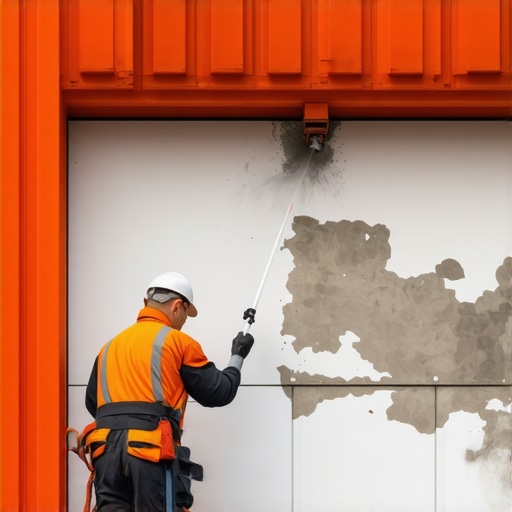
Concrete patching, when executed with expert precision, addresses both aesthetic imperfections and structural vulnerabilities. Advanced patching techniques employ high-performance materials such as polymer-modified mortars and epoxy resins, which enhance bonding strength and flexibility. Proper surface preparation, including thorough cleaning and roughening of the damaged area, is crucial for optimal adhesion. This process, supported by field-tested protocols, guarantees that patched sections withstand environmental pressures and prevent future deterioration.
What Are the Latest Innovations in Surface Preservation?
Recent developments include nanotechnology-based sealants that penetrate deeply, creating a barrier against moisture ingress. These innovations, documented in peer-reviewed journals like the Journal of Building Engineering, demonstrate substantial improvements in longevity and resistance to pollutants. Integrating such cutting-edge solutions into facade cleaning and patching workflows elevates the standard of craftsmanship, aligning with the latest sustainability and durability benchmarks.
How Can Experts Balance Aesthetic Restoration with Structural Reinforcement?
Achieving this balance requires a strategic approach that combines detailed assessment, choice of compatible materials, and meticulous execution. Experts often employ non-invasive diagnostic tools, such as infrared thermography, to detect underlying issues before intervention. Combining aesthetic considerations with structural reinforcement not only enhances property value but also extends the lifespan of the building components, reducing future maintenance costs.
For professionals seeking to deepen their mastery, exploring comprehensive guides such as Effective Facade Cleaning and Tuckpointing Techniques can provide valuable insights. Additionally, engaging with industry forums and contributing your expertise helps foster a community of excellence committed to durable, high-quality masonry restoration.
In conclusion, the integration of advanced facade cleaning and concrete patching strategies is essential for achieving enduring exterior resilience. Combining scientific rigor, innovative materials, and precise craftsmanship ensures that buildings not only withstand environmental challenges but also maintain their aesthetic and structural integrity over time.
Breaking Barriers in Masonry Maintenance and Restoration
While traditional facade cleaning and concrete patching methods have laid a solid foundation, recent innovations are reshaping industry standards. Advanced materials like nanotechnology-infused sealants not only offer superior moisture resistance but also minimize environmental impact, aligning with sustainability goals. These sealants penetrate deeply into porous materials, creating a durable barrier against pollutants and weathering, which significantly extends the lifespan of masonry surfaces. For a comprehensive approach, professionals should consider integrating these cutting-edge solutions into their workflow, as highlighted in recent studies published in the Journal of Building Engineering.
Challenging Assumptions: Is More Always Better in Restoration?
Many assume that aggressive cleaning or patching yields faster results, but over-treatment can compromise material integrity. Experts emphasize a balanced approach that prioritizes preservation over removal. For instance, using ultra-high-pressure washing might remove stubborn stains but can damage delicate substrates, leading to increased deterioration over time. Instead, employing a combination of gentle chemical cleaning and targeted mechanical methods preserves the original masonry while achieving the desired aesthetic outcome. This nuanced strategy underscores the importance of tailored solutions over one-size-fits-all practices. To refine your techniques, explore trusted tuckpointing foundation repair tips that focus on preserving structural integrity while enhancing appearance.
Are We Fully Harnessing the Potential of Surface Chemistry for Better Results?
Surface chemistry plays a pivotal role in ensuring the longevity of restoration efforts. By understanding the unique composition of each masonry material, experts can select optimal cleaning agents and sealants that bond effectively without causing damage. Innovations such as enzyme-based cleaners and environmentally friendly solvents are gaining popularity for their efficacy and safety. Moreover, the integration of nanotechnology allows for surface treatments that are both protective and minimally invasive. These advancements, supported by ongoing research, demonstrate that a scientific understanding of surface interactions is key to achieving durable, long-lasting results. For practical guidance, see the detailed strategies in effective facade cleaning and patching solutions.
If you’re eager to elevate your masonry restoration expertise, sharing your experiences or asking questions in industry forums can foster collaborative growth and innovation. Also, consider diving into more advanced techniques with professional resources to stay ahead in this evolving field.
Maximizing Protective Coatings for Long-Term Masonry Defense
One of the most advanced strategies in facade preservation involves the application of nanotechnology-based sealants that penetrate deeply into porous building materials. Unlike traditional surface coatings, these innovative sealants form molecular bonds that enhance resistance to moisture, pollutants, and UV radiation. Experts emphasize that selecting the right nanocoating requires a thorough understanding of the specific material chemistry, ensuring compatibility and optimal performance. According to a comprehensive study published in the Journal of Building Engineering, such treatments can extend the lifespan of masonry surfaces by up to 50%, significantly reducing maintenance costs and environmental impact.
How Do Nanosealants Improve Masonry Longevity?
Nanosealants operate at the molecular level, creating a hydrophobic barrier that prevents water ingress while allowing the material to breathe. This reduces the risk of freeze-thaw damage, efflorescence, and biological growth, which are common causes of deterioration in exterior masonry. Moreover, because these coatings are ultra-thin and transparent, they do not alter the visual appearance of the surface, maintaining aesthetic integrity. For those interested in integrating nanotechnology into their restoration workflows, consulting with material scientists and leveraging peer-reviewed research can provide invaluable insights.
Integrating Eco-Friendly Cleaning Agents for Sustainable Restoration
Environmental consciousness is increasingly influencing facade cleaning practices. The latest eco-friendly cleaning solutions employ enzyme-based formulations that break down organic contaminants without harming the substrate or surrounding ecosystems. These bio-enzymatic cleaners are effective against mold, algae, and soot, offering a safer alternative to harsh chemical solvents. When combined with precision mechanical methods—such as soft-bristle brushes and low-pressure washing—these agents facilitate thorough cleaning while preserving the integrity of delicate materials like limestone or sandstone.
External research from the International Journal of Sustainable Building Technology and Urban Development highlights the efficacy of enzyme cleaners in reducing chemical runoff and improving indoor air quality in urban environments. This approach not only aligns with green building standards but also ensures that restoration efforts contribute to healthier surroundings.
Advanced Repair Techniques for Critical Structural Reinforcement
Beyond cosmetic improvements, structural reinforcement demands innovative solutions that address complex load-bearing challenges. The use of fiber-reinforced polymer (FRP) composites, embedded within the existing masonry, offers a high-strength, lightweight option for strengthening weakened walls and joints. When properly bonded with epoxy resins, FRP sheets can dramatically increase shear and tensile capacity, effectively extending the building’s lifespan.
Field application protocols specify meticulous surface preparation—such as grit blasting and moisture control—to ensure optimal adhesion. The versatility of FRP allows for customized reinforcement patterns that follow architectural geometries, minimizing visual impact. For professionals seeking to implement these methods, advanced training in material handling and structural assessment is essential, as outlined in structural engineering resources.
What Are the Emerging Trends in Surface Preservation Technologies?
Emerging trends point toward the convergence of artificial intelligence (AI), machine learning, and sensor technology in masonry maintenance. Smart monitoring systems equipped with IoT sensors can detect early signs of moisture intrusion, micro-cracking, or thermal anomalies, alerting maintenance teams before significant deterioration occurs. AI algorithms analyze data patterns to recommend targeted interventions, optimizing resource allocation and minimizing invasive procedures.
Implementing these cutting-edge solutions requires interdisciplinary collaboration among engineers, data scientists, and conservation specialists. As the technology matures, it promises a future where buildings are maintained proactively, extending their aesthetic and structural lifespan with unprecedented precision. For a deeper dive into these innovations, explore recent publications in the Computers, Environment and Urban Systems.
If you’re committed to elevating your expertise in masonry preservation, consider engaging with professional societies and attending specialized workshops. Staying abreast of technological breakthroughs ensures your projects deliver resilience, beauty, and sustainability for decades to come.
Harnessing Advanced Coatings to Revolutionize Masonry Durability
The application of nanotechnology-infused sealants represents a paradigm shift in masonry preservation, offering unparalleled protection against moisture ingress, pollution, and UV radiation. These coatings, which form molecular bonds with the substrate, enhance resistance while maintaining the surface’s aesthetic appeal. As detailed in the Journal of Building Engineering, integrating such innovations can extend masonry lifespan by up to 50%, drastically reducing maintenance costs and environmental impact.
What Role Does Surface Chemistry Play in Selecting Optimal Restoration Materials?
Understanding the nuanced interactions between surface chemistry and masonry materials enables experts to choose cleaners and sealants that bond effectively without compromising integrity. Recent developments include enzyme-based cleaners and environmentally friendly solvents that penetrate porous substrates, ensuring thorough cleaning with minimal damage. This scientific approach, supported by peer-reviewed research, is essential for achieving durable, high-quality results in restoration projects.
How Can Smart Monitoring Elevate Masonry Maintenance?
The advent of IoT sensors and AI-powered analytics is transforming masonry upkeep from reactive to proactive. Smart monitoring systems detect early signs of moisture intrusion, micro-cracking, or thermal anomalies, providing real-time alerts. This data-driven approach allows for targeted interventions, preserving structural integrity and aesthetic quality. Exploring resources like Computers, Environment and Urban Systems offers insights into these emerging technologies.
Engage with Cutting-Edge Techniques to Elevate Your Restoration Expertise
Professionals committed to excellence should actively participate in industry forums, attend specialized workshops, and consult recent peer-reviewed studies. Staying current with innovations ensures your projects not only meet but exceed modern standards for durability, sustainability, and aesthetic integrity. By embracing these advanced strategies, you position yourself at the forefront of masonry preservation excellence.
What Are the Latest Trends Shaping Future Masonry Conservation?
Emerging trends include the integration of AI and machine learning for predictive maintenance, utilizing sensor networks to monitor structural health continuously, and employing eco-friendly, nanotechnology-based treatments. These innovations promise a future where buildings are maintained proactively, with minimal invasive procedures, extending their lifespan significantly. For a comprehensive overview, explore recent publications in the Structural Control and Health Monitoring.
Elevate Your Expertise with Proven Techniques
Professionals in masonry restoration understand that surface preservation demands a blend of scientific insight and practical finesse. The integration of advanced facade cleaning and concrete patching methods ensures that structures endure environmental stresses and maintain aesthetic appeal over decades. Leveraging surface chemistry to select appropriate cleaning agents and sealants is essential for optimizing results, minimizing damage, and extending the lifespan of masonry surfaces.
Strategic Material Selection and Application
Choosing the right materials, such as polymer-modified mortars or nanotechnology-based sealants, is critical. These innovations provide superior bonding, flexibility, and resistance to moisture ingress. Proper surface preparation, including cleaning and roughening, enhances adhesion, while innovative repair techniques like fiber-reinforced polymer reinforcement strengthen structural components without compromising visual integrity. These expert strategies collectively bolster the durability and resilience of masonry structures.
Harnessing Cutting-Edge Innovations for Maximum Impact
Recent advancements, including AI-driven monitoring systems and IoT sensors, enable proactive maintenance by detecting early signs of deterioration. Incorporating nanotechnology-based sealants extends masonry lifespan by up to 50%, according to peer-reviewed studies. Eco-friendly cleaning agents, such as enzyme-based solutions, align restoration efforts with sustainability goals without sacrificing effectiveness. These innovations exemplify the evolution of masonry preservation into a science-driven discipline.
Expert Recommendations for Continuing Education
Engaging with authoritative resources is vital for staying at the forefront of the industry. Recommended sources include Effective Foundation Tuckpointing Techniques for foundational knowledge, Trusted Tuckpointing Resources for detailed repair methods, and Concrete Patching Guides for structural reinforcement strategies. These resources provide a depth of knowledge essential for expert practitioners.
Final Reflection: The Future of Masonry Preservation
In the realm of exterior masonry restoration, the synergy of scientific innovation and craftsmanship defines the path forward. Mastering surface chemistry, embracing nanotechnology, and utilizing smart monitoring tools are no longer optional but essential for delivering durable, aesthetically pleasing results. To truly excel, professionals must continuously seek knowledge, experiment with emerging materials, and contribute to ongoing industry dialogues. Your expertise not only elevates your projects but also sets new standards in masonry preservation. Dive deeper, share insights, and lead the industry with confidence—your legacy in masonry restoration begins with informed mastery.