
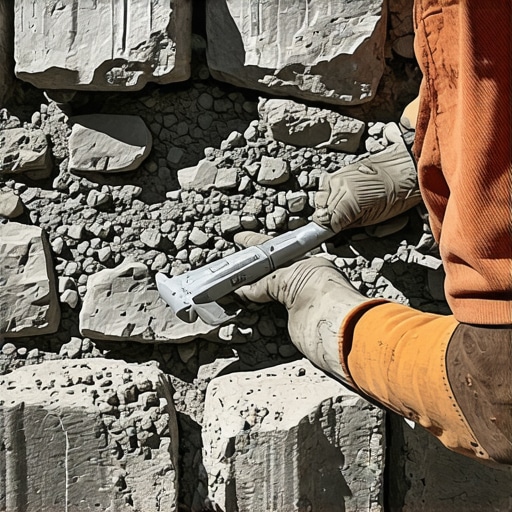
The Forensic Scene: When the Dust Settles
The homeowner called me out because they thought they had a standard settlement issue after the tremor. They pointed at a jagged, diagonal line tracing through the mortar joints of their primary facade. On the surface, it looked like a 1/8th inch separation. But when I inserted the borescope into that void, the reality was grim. The header bricks—the structural anchors that tie the outer wythe of the wall to the internal load-bearing frame—had sheared clean through. The wall wasn’t just cracked; it was delaminated. It was essentially a five-ton sheet of clay hovering over the flower beds, held up by nothing but friction and luck. This is the deceptive nature of cracked brick wall repair in a post-seismic environment. What you see is rarely what you get.
The Physics of the Shiver: Why Masonry Fails in a Shift
Masonry is a king in compression. You can stack bricks to the moon and the bottom course will smile under the weight. But the moment you introduce lateral shear or tensile stress—the kind of whip-crack energy an earthquake sends through the earth—masonry behaves like glass. It doesn’t bend. It shatters. When a seismic shift occurs, the foundation moves with the ground, but the upper mass of the building tries to stay still due to inertia. This creates a terrifying shear force that targets the weakest point: the mortar joint.
“Water penetration is the single greatest threat to masonry durability, but structural movement is its most violent executioner.” – BIA Technical Note 7
In regions where the ground behaves like a fluid during a quake, the masonry rescue after disaster begins with understanding the ‘X-crack.’ This is the signature of seismic failure in brick infill panel repair. The wall is pushed one way, then the other, creating crossing diagonal fractures. If the mortar is too hard—like a modern Type M high-portland mix—it won’t give. Instead, the bricks themselves will crack. We look for ‘spalling’ or ‘honeycombing’ at the base of the walls where the pressure was greatest. If we see the faces of the bricks popping off, we know the building was screaming under the load.
The Chimney: A Pendulum of Destruction
During a seismic event, your chimney is essentially a giant vertical pendulum. Because it is tall, narrow, and often lacks the lateral bracing of the house’s main frame, it whips back and forth at a different frequency than the rest of the structure. This is why chimney rebuild services are the most requested after-action repairs. The failure usually happens at the roofline. The house moves one way, the chimney top lags behind, and the throat of the chimney snaps.
When we approach a chimney rebuild, we aren’t just slopping ‘mud’ (mortar) back onto the bricks. We are looking at the internal flue liners. If those terracotta liners are cracked, the chimney is a fire hazard. We have to ‘butter’ the new units with precision, ensuring a full bed of mortar to handle future vibrations. We often integrate sustainable masonry materials like recycled brick or volcanic ash-based cements that offer a better ‘tooth’ for the mortar to grab onto, providing a more resilient bond than standard portland mixes.
The Restoration Reality: Mortar Chemistry and the ‘Sacrificial’ Principle
Many ‘handyman specials’ involve grabbing a bag of high-strength cement and smearing it into a seismic crack. This is a death sentence for the wall. In masonry repair services, we follow the principle that the mortar must always be softer than the brick. If the ground shifts again, we want the mortar to crack, not the brick. Cracked mortar is easy to fix; a shattered brick is a structural failure. We use Type N or even Type O lime-rich mortars for historic facade cleaning and repair. The lime provides a ‘self-healing’ property through carbonation. As water carries dissolved lime into the hairline cracks, it reacts with CO2 and solidifies, essentially knitting the wall back together over decades.
“Mortar is the lung of the wall. It must breathe, and it must give, or the wall will surely die.” – Vitruvius, De Architectura (Modified Translation)
Step-by-Step Recovery: The Forensic Fix
First, we address the ‘Cold Joints.’ These are places where new work meets old work without a proper bond. In a masonry waterproofing solutions plan, these are the primary entry points for moisture. We use a ‘slicker’ to deeply tool the joints, ensuring the mud is compacted. This isn’t just for looks; compaction creates a dense surface that resists water penetration. For cracked brick wall repair, we might employ ‘helifix’ anchors—stainless steel threaded rods that we ‘butter’ into the bed joints to bridge the fracture, acting like internal rebar for the brickwork.
Once the structural integrity is restored, we look at the exterior skin. Facade cleaning is more than aesthetics; it removes the salts and acids that have been shaken loose during the quake. Following this, we apply brickwork sealants application, but not just any ‘lick-and-stick’ sealer. We need siloxanes that allow the brick to ‘breathe.’ If you seal a brick wall with a plastic-like coating, you trap moisture inside. When the temperature drops, that water expands 9% as it turns to ice, and it will blow the face off your expensive brickwork faster than any earthquake.
Modern Integration: Green and Resilient
In high-density urban areas, we are seeing more green roofing masonry integration. These systems add significant weight to the top of a structure. If you are doing a masonry rescue after disaster on a building with a green roof, the structural calculations change entirely. The lateral load during a quake is magnified by that wet soil on top. We often have to reinforce the brick infill panel repair with carbon-fiber grids or steel strapping hidden behind the soldier course (the vertical bricks often seen over windows).
The hard truth is that masonry is a living, breathing thing. It moves with the heat of the sun and the shifting of the tectonic plates. You can’t fight the earth; you can only build something that knows how to dance with it. Do it once with the right ‘mud’ and the right mind, or you’ll be doing it twice when the next tremor hits.