
The Death of a Building Starts with a Bag of Modern Cement
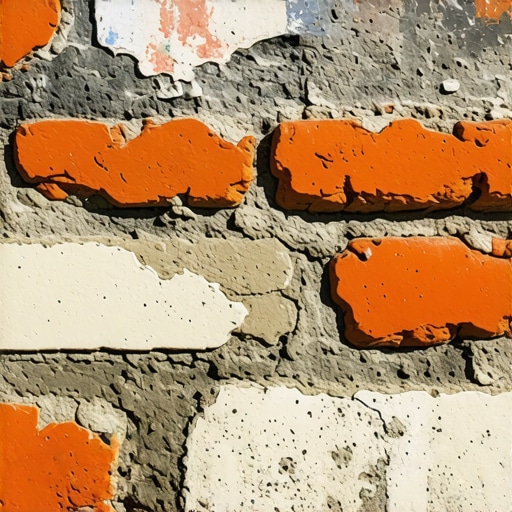
I’ve spent forty years listening to walls. To most, a brick wall is a static object, a pile of baked clay and sand. To a forensic mason, it’s a living, breathing lung. When I walk up to a 1920s Chicago bungalow or a Victorian-era brownstone and see shimmering, grey, rock-hard mortar joints, I don’t see ‘repair.’ I see a death sentence. The homeowner usually calls me because the faces of their bricks are popping off like scabs, a process we call spalling. They think they have ‘bad bricks.’ I have to tell them the truth: your bricks are fine, but your last mason murdered them with Portland cement.
The Wisdom of the Old Hand
My Uncle Sal, a man who had calluses thicker than the soles of his boots, taught me a lesson when I was twelve that no engineering degree could replicate. He’d take a chunk of original mortar from a 19th-century brick arch restoration project, crush it into a fine powder in his palm, and tell me to smell it. It smelled like the earth after a rainstorm—damp, mineral, and alive. ‘That’s lime, kid,’ he’d say. ‘It’s soft, it moves, and it breathes. You put that hard modern grey mud in here, and you’re putting a lead cast on a bird’s wing.’ He was talking about the sacrificial principle of masonry. In any historic structure, the mortar must be the weakest link. It’s designed to erode so the brick doesn’t have to. When modern contractors ignore this, the physics of the wall shift from a flexible system to a brittle one.
“Mortar should always be weaker than the masonry units it binds, and it must be more permeable than the units themselves to allow for moisture evaporation.” – BIA Technical Note 2: Rules of Thumb
The Micro-Chemistry of the ‘Vintage’ Joint
To achieve a true vintage look with modern tuckpointing, we have to look at the chemistry of the ‘mud.’ Historical masonry before the 1930s relied on high-calcium lime and sand. This wasn’t just an aesthetic choice; it was a geotechnical necessity. Lime mortar undergoes a process called carbonation. Unlike Portland cement, which cures through a fast chemical hydration that creates a dense, crystalline lattice, lime mortar stays ‘open.’ It absorbs carbon dioxide from the air over decades, slowly turning back into calcium carbonate. If a micro-crack forms due to settlement or foundation wall bowing repair needs, moisture reacts with the uncarbonated lime in the core of the joint, dissolving it and redepositing it into the crack—a process known as autogenous healing. This is why 100-year-old walls are still standing while modern ‘lick-and-stick’ veneer projects fail in ten years.
Tuckpointing vs. Repointing: The Aesthetic Deception
Most people use the terms interchangeably, but in the world of high-end stone facade restoration, they are worlds apart. Repointing is the structural act of filling a recessed joint with new mortar. Tuckpointing is an optical illusion. It involves laying a base mortar that matches the color of the brick perfectly, then cutting a narrow, razor-straight groove into that wet mortar and ‘tucking’ in a contrasting fillet—usually a bright white lime putty. This creates the appearance of perfectly gauged, paper-thin joints. It was the Victorian way of making cheap, irregular bricks look like expensive, machine-cut masonry. Achieving this today requires a slicker and a steady hand. You aren’t just ‘buttering’ a joint; you’re performing surgery with a hawk and trowel.
The Physics of Suction and the ‘Tooth’ of the Stone
One of the biggest mistakes in modern brick column repair is failing to manage the Initial Rate of Absorption (IRA). If you slap fresh lime mortar onto a dry, thirsty historic brick, the brick will suck the water out of the mortar instantly. This ‘flash drying’ prevents the mortar from developing a ‘tooth’—the microscopic mechanical bond where the mortar grows into the pores of the brick. We have to ‘pre-wet’ the wall until it reaches a state of Saturated Surface Dry (SSD). Only then will the mortar cure slowly enough to form a bond that can withstand the freeze-thaw cycles of the north. When we talk about masonry joint sand repair, the grain size of the sand is equally critical. We use sub-angular river sand, not the round-edged play sand you find at big-box stores. Sub-angular sand locks together like a jigsaw puzzle, providing internal structural integrity to the joint.
“For the mortar will be of the best quality if the lime, after being slaked, is of such a thickness that it adheres like glue to the trowel.” – Vitruvius, De Architectura
High-Tech Forensics: AI and Digital Twins
While I’m a stickler for old-world methods, I’m not a Luddite. We are now using AI masonry assessment to analyze crack patterns across entire city blocks. By feeding drone-captured photogrammetry into digital twin masonry projects, we can simulate how a retaining wall installation will handle hydrostatic pressure over the next fifty years. This data allows us to predict where fire-rated masonry installation might be compromised by thermal expansion before a single brick is laid. It’s about merging the intuition of the ‘Old Master’ with the precision of modern physics.
The Reality of Tuckpointing Cost Estimation
When I provide a tuckpointing cost estimation, homeowners often experience sticker shock. They’ve had a ‘handyman’ quote them $10 a square foot to ‘grind and fill.’ A proper restoration mason knows that using a power grinder on 100-year-old lime joints is a sin. The dust is toxic, and the vibration can shatter the internal bond of the wall. We use hand-raking and oscillating scrapers to remove the old mud to a depth of at least 3/4 of an inch. This labor-intensive process, combined with the sourcing of historical pigments and hydraulic lime, can drive costs to $35 or $50 per square foot. But you have to ask yourself: do you want to pay for this once, or do you want to pay for a full facade replacement in eight years when your brick faces start falling onto the sidewalk? Whether it’s a simple masonry joint sand repair or a complex stone facade restoration, the rule is the same: the building always wins. If you fight its physics, it will eventually crush your investment.