
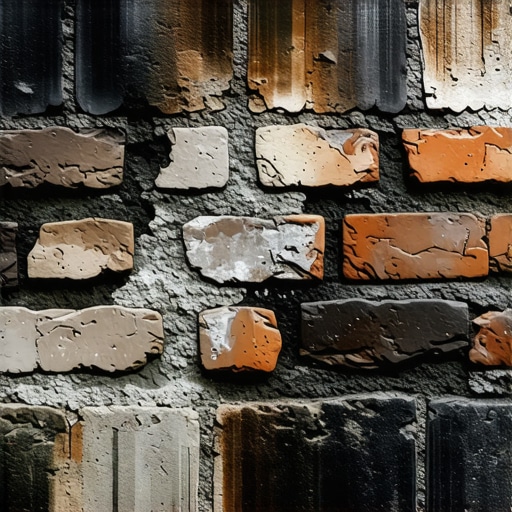
The Forensic Scene: When a Hairline Crack Becomes a Structural Autopsy
The homeowner stood on the sidewalk, pointing up at a faint, zig-zagging line in the brickwork of his 1920s bungalow. ‘It’s just a little cosmetic crack,’ he told me. I didn’t say a word. I pulled my fiber-optic scope from my kit and fed it through a small void in the mortar joint. On the screen, the truth was ugly. The structural steel lintel behind the soldier course wasn’t just rusted; it had delaminated into layers of orange flakes, expanding like a puff pastry and jacking up the masonry above it. What looked like a minor aesthetic flaw was actually the ‘death rattle’ of a wall that had been drowning for a decade. This is the reality of masonry forensics: by the time you see the damage on the outside, the war inside is already half-lost.
The Physics of the ‘Sacrificial Joint’
To understand why your tuckpointing is failing, you have to understand the chemistry of the wall. In the old world, we built with a ‘sacrificial’ mindset. The mortar was designed to be softer than the brick. Why? Because moisture is an absolute constant. It’s going to get into the wall through capillary action and hydrostatic pressure. If the mortar is soft—typically a high-lime mix like Type O or K—the moisture can migrate through the joint and evaporate. If you use a modern, rock-hard Portland cement on old, soft clay bricks, the moisture gets trapped. It can’t get out through the ‘mud,’ so it forces its way out through the face of the brick, causing it to pop and shatter. We call this spalling, and it’s the hallmark of a ‘handyman special’ repair job.
“Water penetration is the single greatest threat to masonry durability.” – BIA Technical Note 7
Warning Signs: Reading the Wall Like a Map
You need to look for efflorescence—that white, powdery salt deposit that looks like ghost breath on your brickwork. That’s not just a stain; it’s a sign that water is traveling through the masonry, dissolving minerals, and depositing them on the surface as it evaporates. If you see it, the ‘tooth’ of your mortar is likely gone. Another red flag is honeycombing or deep pitting in the mortar. When you run a screwdriver across the joint and it crumbles like dry cake, the binder has washed out, leaving only the sand behind. This is where an AI masonry assessment can actually be useful for commercial property managers, as it can scan thousands of square feet of facade cleaning needs and identify thermal anomalies where water is pooling behind the wythe. For smaller residential jobs, I rely on the ‘ring’ test. I tap the brick with the handle of my trowel. A solid wall ‘pings.’ A failing wall ‘thuds’ with a hollow, damp resonance.
The Freeze-Thaw War in Northern Climates
In the North, we deal with the most violent physics of all. Water expands by roughly 9% when it turns to ice. When your mortar joints have hair-line separations, they act like funnels. Rain enters, the temperature drops, and that 9% expansion acts like a thousand tiny hydraulic jacks pushing your wall apart from the inside out. This is why emergency masonry repair spikes in the spring; the winter has literally shattered the bond between the brick and the mud. We are now seeing the rise of fiber-reinforced mortars to combat this, providing a bit more tensile strength to the joint, though nothing replaces the need for proper commercial masonry maintenance and timely repointing.
The Anatomy of Failure: From Chimneys to Retaining Walls
It’s not just the main walls. Look at your chimney. If you don’t have a chimney heat shield installation or a proper crown, the flue gases mix with moisture to create an acidic slurry that eats mortar for breakfast. Down at the ground level, retaining wall weep hole cleaning is the most ignored chore in the trade. If those holes are plugged, the weight of the water-logged soil—hydrostatic pressure—will tilt a wall faster than you can say ‘lawsuit.’ For those dealing with cracked blocks in the basement, concrete block foundation repair often requires more than just a slicker and some butter; it requires addressing the soil drainage before the wall collapses.
“The durability of any masonry structure is directly proportional to its ability to shed water away from its core.” – Vitruvius, De Architectura
Modern Tools and Sustainable Solutions
We’ve come a long way from just mixing lime in a pit. Today, sustainable block cutting techniques reduce waste on-site, and outdoor kitchen masonry build projects now incorporate advanced weather-stripping and drainage planes that we didn’t have thirty years ago. But the fundamentals don’t change. You still have to butter the brick properly, ensuring full head and bed joints without cold joints—those weak spots where new mortar meets old, dried mortar without a proper bond. If you’re building a new patio, don’t let a contractor talk you into a thin base. Whether it’s an outdoor kitchen or a simple walkway, the base is the ‘soul’ of the masonry. Without 8 inches of compacted stone, your beautiful pavers will look like a stormy sea within two seasons.
The Master’s Verdict: Repair or Replace?
When I see a wall that’s been ‘tuckpointed’ by a guy with a bag of Premix and a kitchen spatula, I know I’m looking at a future demolition. True repointing involves grinding out the old joints to a depth of at least 3/4 of an inch—not just ‘smearing’ a thin layer of mud over the top. We call that ‘masking,’ and it’s a crime against the trade. Use a hawk to hold your mortar, keep your tools clean, and never, ever work in direct, scorching sunlight without wetting your bricks first, or they’ll ‘suck’ the moisture out of the mortar before it can hydrate, leaving you with a brittle, useless bond. Do it once, do it right, and your brickwork will outlive your grandkids. Do it cheap, and you’ll be calling me for a concrete block foundation repair and a structural assessment before the next census is taken.