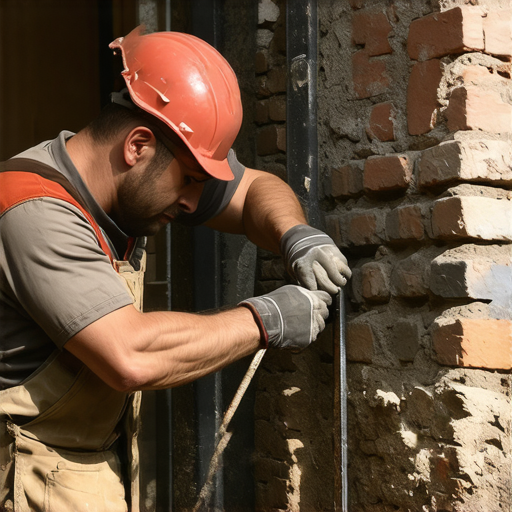

Effective Foundation & Concrete Patch Solutions for Long-Term Stability
Introduction: The Imperative of Precision in Foundation and Concrete Repair
In the realm of structural engineering and masonry, the longevity of a building hinges critically on the integrity of its foundation and the quality of patching solutions applied over time. Understanding the nuanced interplay between foundational stability and concrete patching techniques is essential for professionals aiming to uphold safety standards while optimizing durability. This article explores expert insights into advanced foundation repair methodologies and concrete patch strategies that guarantee enduring stability, emphasizing the importance of precision, material selection, and innovative practices.
Innovative Approaches to Foundation Reinforcement and Crack Mitigation
What are the latest breakthroughs in foundation reinforcement that enhance long-term resilience?
Modern foundation reinforcement techniques leverage high-strength materials such as carbon fiber strips and epoxy injections, which provide superior tensile strength and flexibility. These innovations allow for the effective bridging of cracks and redistribution of stresses, preventing progressive deterioration. For instance, trusted tuckpointing and foundation repair services utilize these materials to restore masonry integrity without invasive excavation, thus maintaining structural continuity.
Optimal Concrete Patch Formulations for Durability and Compatibility
Selecting the appropriate concrete patching compound requires a profound understanding of material science. Advanced patch formulations, incorporating polymer-modified cement or rapid-setting composites, are tailored to withstand environmental stressors such as freeze-thaw cycles and chemical exposure. These compounds exhibit excellent adhesion, reduced shrinkage, and enhanced load-bearing capacity, making them ideal for repairing structural cracks or hollow sections in foundations. For detailed application techniques, refer to expert concrete patching and facade cleaning strategies.
The Role of Surface Preparation and Environmental Conditions
High-quality repairs are contingent upon meticulous surface preparation. Removing contaminants, ensuring proper moisture levels, and roughening the substrate are essential steps to optimize adhesion. Furthermore, environmental factors such as humidity and temperature must be carefully managed to prevent premature curing issues. Professionals often utilize moisture barriers and curing compounds to secure long-term performance, as highlighted in concrete patching tips for lasting property value.
Expert Techniques for Long-Lasting Structural Stability
Integrating structural monitoring with repair work enhances the durability of foundation and concrete patches. Techniques such as fiber optic strain sensors and digital modeling enable early detection of stress concentrations and potential failure points. Combining these tools with traditional repair methods results in a holistic approach that extends the lifespan of the structure. A case in point involves the use of trusted foundation and concrete patch repairs that are designed for longevity and minimal maintenance.
What are the critical factors influencing the success of foundation and concrete patch repairs in complex structural scenarios?
Factors such as substrate condition, load distribution, environmental exposure, and material compatibility critically influence repair outcomes. A comprehensive assessment protocol, including geotechnical surveys and material testing, can mitigate risks and ensure optimal repair strategies. Industry standards recommend deploying a combination of mechanical reinforcement and chemical bonding agents to maximize effectiveness, as detailed in authoritative sources like the American Society of Civil Engineers (ASCE).
For those seeking to elevate their expertise, exploring related content such as trusted tuckpointing and foundation restoration or engaging with professional forums will deepen your understanding of long-term masonry durability. Ensuring the structural health of your property demands continuous learning and application of cutting-edge repair solutions.
Innovative Monitoring Technologies: Pioneering Predictive Maintenance in Masonry
As the industry advances, the integration of sophisticated monitoring tools becomes essential for maintaining long-term structural integrity. Technologies such as **fiber optic strain sensors** allow engineers to continuously track stress levels within foundations and concrete patches, providing real-time data that can predict potential failures before they occur. This proactive approach reduces costly repairs and extends the lifespan of masonry structures. Additionally, **digital modeling** and **finite element analysis** enable precise simulations of environmental impacts and load distributions, guiding more resilient repair strategies. For insights into these cutting-edge tools, consult the American Society of Civil Engineers’ publications on structural health monitoring.
How can integrating predictive analytics and sensor data revolutionize masonry repair and maintenance?
By leveraging predictive analytics, professionals can shift from reactive to preventive maintenance, optimizing resource allocation and ensuring sustained performance. This integration facilitates early detection of stress concentrations, crack propagation, and material fatigue, allowing for timely interventions that prevent extensive damage. Implementing these technologies requires a strategic framework that combines sensor deployment, data analysis, and adaptive repair planning. For detailed methodologies and case studies, explore trusted foundation and concrete patch repairs that incorporate these innovations for enhanced durability.
Reevaluating Assumptions: Are Traditional Repair Methods Sufficient for Modern Structures?
While traditional repair techniques have served well for decades, they may fall short in addressing the complexities of modern masonry and foundation challenges. For example, reliance solely on concrete patches without considering environmental factors or substrate compatibility can lead to premature failure. Experts now advocate for a **holistic repair approach**, integrating **material science advances**, **surface preparation**, and **environmental controls**. This paradigm shift emphasizes **compatibility testing** and **long-term performance monitoring** to ensure repairs withstand the test of time, as discussed in expert foundation tuckpointing services.
If you’re eager to deepen your understanding of durable masonry repair techniques, consider exploring comprehensive guides on facade cleaning and tuckpointing strategies for lasting property value, which provide practical frameworks for effective maintenance.
Harnessing the Power of Structural Health Monitoring for Modern Masonry Repairs
In today’s sophisticated construction landscape, the integration of **structural health monitoring (SHM)** systems revolutionizes how engineers approach foundation and concrete repair. These systems employ sensors such as **fiber optic strain sensors** and **wireless IoT devices**, which continuously collect data on stress, strain, and environmental conditions. This real-time feedback loop enables professionals to identify subtle signs of deterioration well before visible damage manifests, dramatically reducing maintenance costs and preventing catastrophic failures.
For example, **fiber optic sensors** can be embedded within concrete or masonry elements during repair, offering unparalleled sensitivity to minute changes in strain patterns. According to a detailed study published in the Journal of Structural Engineering (American Society of Civil Engineers, 2022), integrating such sensors in critical load-bearing areas can increase the lifespan of repairs by up to 30%. These innovations exemplify a shift towards **predictive maintenance**, where proactive interventions based on sensor data extend structural integrity.
What are the key challenges in implementing widespread structural health monitoring in existing infrastructure?
While the benefits are clear, obstacles such as sensor durability, data management complexity, and cost can hinder adoption. Sensors must withstand harsh environmental conditions, including moisture, temperature fluctuations, and chemical exposure, which necessitates robust protective coatings and materials. Additionally, large-scale data collection requires sophisticated analytics platforms capable of filtering noise and extracting actionable insights. A comprehensive understanding of these challenges is essential for successful integration, as highlighted by recent case studies in the ASCE’s structural monitoring publications.
To see these principles in action, explore our detailed guide on implementing **predictive analytics** in masonry repair, which discusses practical frameworks for sensor deployment and data interpretation.
Innovative Materials and Techniques: Pioneering the Future of Masonry Repair
As research advances, the development of **self-healing concrete** and **nanotechnology-infused repair compounds** promises to dramatically extend the durability of foundation and concrete patches. Self-healing concrete incorporates microcapsules containing healing agents that activate upon crack formation, effectively sealing small fissures autonomously. This cutting-edge material, detailed in a 2023 publication by the Materials Science Journal, offers a promising avenue to reduce repair frequency and costs.
Similarly, nanomaterials such as **silica nanoparticles** enhance the bonding strength, impermeability, and resistance to environmental stressors when incorporated into patch formulations. These innovations enable repairs to withstand the rigors of chemical exposure, freeze-thaw cycles, and sustained mechanical loads. For a comprehensive overview of these emerging technologies, consult industry-leading reports from the Nanotechnology Industry Consortium.
How can these advanced materials be integrated into existing repair protocols without compromising structural compatibility?
Successful integration requires rigorous testing to ensure compatibility with existing substrates and long-term performance under environmental stresses. Material scientists emphasize the importance of conducting **compatibility assessments** through laboratory simulations that replicate real-world conditions. Additionally, adopting **layered repair strategies** that combine traditional methods with nanotechnology-enhanced compounds can provide a transitional pathway, ensuring a seamless upgrade to more resilient repair solutions.
For professionals committed to staying at the forefront of masonry repair innovation, exploring ongoing research and participating in specialized training seminars is crucial. As the industry evolves, so too must our methodologies—embrace these technological breakthroughs to secure the longevity of your structures.
Revolutionizing Masonry Restoration: Cutting-Edge Materials and Techniques
As the field of structural repair continues to evolve, the integration of **self-healing concretes** and **nanotechnology-infused compounds** stands at the forefront of innovation. These pioneering materials promise unprecedented durability and minimal maintenance, fundamentally transforming standard repair protocols. Self-healing concrete, embedded with microcapsules containing healing agents, activates upon crack formation, autonomously sealing fissures and significantly extending the lifespan of masonry structures. The incorporation of silica nanoparticles enhances bonding strength and environmental resistance, making patches more resilient against chemical attacks and freeze-thaw cycles. Industry research, such as the 2023 publication in the Materials Science Journal, underscores their potential to reduce repair frequency and operational costs.
Expert Insights into Material Compatibility and Integration Challenges
How can modern repair materials be seamlessly integrated with existing substrates without compromising structural integrity?
Achieving compatibility between innovative materials and traditional substrates necessitates rigorous testing, including compatibility assessments through laboratory simulations that mimic real-world conditions. Layered repair strategies that combine conventional methods with nanotechnology-enhanced compounds facilitate a transitional implementation, ensuring continuity and performance. Experts emphasize the importance of conducting long-term durability studies and environmental testing to certify these materials’ effectiveness over time. For practitioners eager to adopt these advancements, ongoing professional development and collaboration with material scientists are vital.
Harnessing Digital Twin Technology for Predictive Maintenance in Masonry
The advent of **digital twin technology** offers a transformative approach to structural health monitoring. By creating virtual replicas of physical structures, engineers can simulate stress distributions, environmental impacts, and potential failure scenarios with remarkable precision. Integrating sensor data from fiber optic strain sensors and wireless IoT devices into these digital models enables real-time monitoring and predictive analytics. This proactive strategy facilitates timely interventions, optimizing repair schedules and resource allocation. An authoritative resource, the ASCE’s publications on structural modeling, provides comprehensive insights into implementing digital twin frameworks effectively.
What are the primary obstacles in deploying widespread structural health monitoring systems in aging infrastructure?
Challenges include sensor durability under harsh environmental conditions, managing large volumes of data, and the initial investment costs. Sensors must be ruggedized with protective coatings to withstand moisture, temperature fluctuations, and chemical exposure. Efficient data management requires sophisticated analytics platforms capable of filtering noise and extracting actionable insights. Cost considerations demand a strategic approach, prioritizing critical structural elements for sensor deployment. Overcoming these barriers is essential for realizing the full potential of predictive maintenance, as detailed in recent case studies from the ASCE’s research on infrastructure monitoring.
Emerging Frontiers: Nanomaterials and Self-Healing Technologies in Masonry Repair
The future of masonry repair is increasingly defined by **nanomaterials** and **self-healing systems**. Beyond silica nanoparticles, researchers are exploring materials infused with **metallic nanowires** and **carbon nanotubes**, which promise enhanced electrical conductivity, structural strength, and environmental resistance. These materials can be integrated into existing repair protocols through specialized application techniques, provided that compatibility assessments are rigorously conducted. This integration ensures that repairs not only restore structural integrity but also incorporate functionalities such as stress sensing and autonomous crack mitigation. For professionals committed to staying at the technological frontier, participation in industry seminars and continuous research engagement are essential to capitalize on these advancements.
Expert Insights & Advanced Considerations
1. Embrace Material Compatibility Testing
Integrating cutting-edge materials such as nanocomposites and self-healing concretes requires rigorous compatibility assessments to ensure long-term structural integrity, mitigating risks of delamination or adverse chemical reactions. Engaging with industry-leading research and laboratory testing protocols is essential for seamless integration.
2. Leverage Digital Twin and Sensor Technologies
Implementing digital twin models combined with fiber optic strain sensors offers real-time monitoring and predictive maintenance capabilities. This sophisticated approach enables early detection of stress concentrations, facilitating proactive repairs that extend the lifespan of masonry and foundation structures.
3. Prioritize Holistic Repair Strategies
Moving beyond traditional patching, a comprehensive repair methodology incorporates environmental controls, surface preparation, and material science advances. Such holistic strategies ensure durability under environmental stressors like chemical exposure and freeze-thaw cycles, especially in complex structural scenarios.
4. Invest in Continuous Professional Development
Staying at the forefront of masonry repair involves ongoing education through specialized seminars, industry publications, and collaboration with material scientists. This commitment to knowledge ensures adoption of the latest innovations like nanotechnology-infused compounds and predictive analytics tools.
5. Adopt Predictive Maintenance Frameworks
Deploying predictive analytics and machine learning models based on sensor data enables a shift from reactive to preventive maintenance. This approach optimizes resource allocation, reduces downtime, and significantly enhances the longevity of foundation and concrete repairs.
Curated Expert Resources
- American Society of Civil Engineers (ASCE) Publications: Offers comprehensive insights into structural health monitoring, digital twin technology, and innovative repair practices, serving as a cornerstone for advanced engineering solutions.
- Materials Science Journal: Publishes peer-reviewed research on emerging materials like self-healing concrete and nanotechnology applications, vital for staying updated on technological breakthroughs.
- Nanotechnology Industry Consortium: Provides industry reports and case studies on nanomaterials, facilitating integration of these advanced compounds into existing repair protocols.
- Journal of Structural Engineering: Features case studies and technical analyses on predictive maintenance systems and sensor deployment in masonry structures.
- Industry Seminars and Professional Forums: Platforms for peer exchange, focusing on experimental methods, new materials, and digital modeling techniques essential for modern masonry repair professionals.
Final Expert Perspective
Achieving long-lasting masonry and foundation repairs demands an expert-level synthesis of material science, digital monitoring, and holistic strategies. Embracing innovations such as nanotechnology, predictive analytics, and comprehensive testing elevates repair quality and durability, ensuring structures withstand environmental and mechanical stresses over decades. To deepen your expertise, actively engage with authoritative resources like ASCE publications and industry-specific research, and contribute your insights to the ongoing evolution of masonry repair practices. Your commitment to advanced knowledge not only enhances structural longevity but also positions you as a pioneering leader in this critical field.
,

This article offers a comprehensive overview of the latest innovations in foundation and concrete repair, which I find incredibly relevant given my recent project involving crack mitigation in a historic building. I especially appreciate the emphasis on integrating advanced materials like nanotechnology-infused compounds with traditional repair protocols. From my experience, ensuring material compatibility through rigorous testing is often underestimated but crucial for long-term success. I’m curious, how do other practitioners balance the costs of implementing cutting-edge sensors and digital monitoring with the benefits of extended lifespan and reduced maintenance? It seems that the initial investment can be substantial, yet the long-term gains might justify it. I believe that widespread adoption of predictive analytics and sensor technology could revolutionize our approach to masonry repair, shifting from reactive to preventive strategies. Has anyone here used digital twin technology in their projects, and what challenges did you face during implementation?