
The Ghost of the Port City: A Lesson in Material Hubris
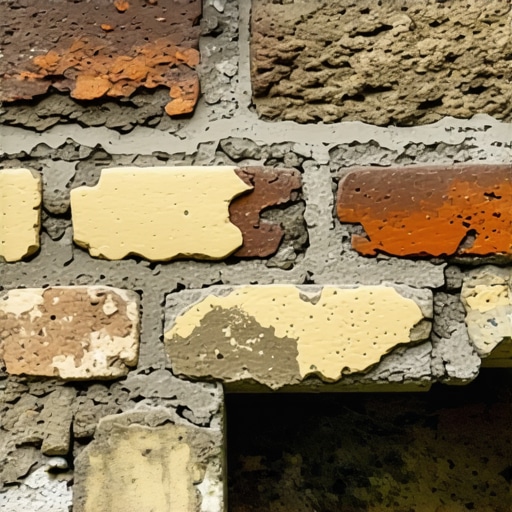
I remember a cold, damp morning on a job site in an old industrial port town. A homeowner had spent a fortune on a 1905 Victorian, only to watch the facade begin to crumble. He called me in after a ‘general contractor’ had finished full repointing services using modern Type S mortar. I walked up to the wall and saw the tragedy immediately: the faces of the bricks were littering the sidewalk like shattered pottery. My mentor, an old-school mason who could tell the sand content of mud just by the grit between his teeth, used to say that a building has to breathe or it will choke. This building was suffocating. The hard, Portland-based mortar had created an impermeable barrier, trapping moisture within the soft, porous clay of the historic bricks. When the first deep freeze hit, the water expanded, and since the mortar wouldn’t give, the brick faces snapped off. This is the sacrificial principle ignored, and it is the primary cause of brick veneer detachment repair in historic structures.
The Molecular Physics of the Freeze-Thaw Cycle
In the northern climates where freeze-thaw damage restoration is a seasonal reality, the physics of water is your greatest enemy. Water expands approximately 9% in volume when it transitions from liquid to solid. In a wall built before 1920, the bricks were typically fired at lower temperatures in beehive kilns, resulting in a highly porous internal structure. These bricks are essentially sponges. When you use sustainable tuckpointing mortars—specifically those based on high-calcium lime—you are providing a highway for that moisture to escape. Lime mortar has a high vapor permeability. It allows water to move to the surface and evaporate through the joints. Modern Portland cement, however, acts like a plastic plug. When the moisture is trapped behind that plug and freezes, the hydraulic pressure exceeds the tensile strength of the brick. This is why historic tuckpointing isn’t just about aesthetics; it’s about structural survival.
“Mortar for repointing should be softer (have a lower compressive strength) than the original units and no harder than the mortar used in the original construction.” – BIA Technical Note 7B
The Chemistry of Lime vs. Portland Cement
To understand why tuck pointing services must specify lime for older homes, we have to look at the chemistry of the ‘mud.’ Modern Portland cement cures through a process called hydration, a rapid chemical reaction that creates a rigid, crystalline lattice of tricalcium silicate. It’s brittle. It’s hard. It’s unforgiving. Historic lime mortar, on the other hand, cures through carbonation. As the lime putty (calcium hydroxide) is exposed to the air, it slowly absorbs carbon dioxide to revert back into calcium carbonate—essentially limestone. This process can take months or even years to fully complete, allowing the mortar to remain flexible. We call this ‘autogenous healing.’ If a small crack forms due to building settlement, the free lime in the joint can actually migrate into the crack and re-seal it. You don’t get that with a concrete flatwork services mix; you just get a permanent fracture.
The Process: From Drone Chimney Inspections to the Slicker
When I begin a stone wall repair or a full building restoration, I often start with drone chimney inspections. High-altitude masonry takes the brunt of the weather, and if the mortar is failing at the stack, the rest of the building isn’t far behind. Once we’ve identified the failure points, the real work begins. We don’t just ‘butter’ over the old joints. That’s a handyman’s trap. We grind out the failing material to a depth of at least twice the width of the joint, ensuring we reach ‘sound’ material. When mixing the mud on the hawk, we look for that specific ‘tooth’—a grit that indicates the sand-to-lime ratio is perfect for the specific brick’s suction. We pre-wet the masonry to prevent ‘flash setting,’ where the dry brick sucks the water out of the mortar too fast, burning the joint and leaving it crumbly. We then pack the joints in lifts, striking them with a slicker or jointer tool to compact the material and ensure a weather-tight bond.
“The best lime is that which has been long slaked, for then its heat is tempered and it becomes a more perfect body.” – Vitruvius, De Architectura
Preventing Catastrophe with Proper Stone Coping Installation
One often overlooked aspect of stone wall repair is the stone coping installation at the top of the parapet or retaining wall. Without a proper ‘overhang’ and drip edge, water is channeled directly into the vertical joints of the masonry below. Even the best lime mortar will eventually fail if it is subjected to constant hydrostatic pressure from above. A master mason ensures that the coping acts as an umbrella, shedding water away from the face of the stone or brick. This is especially critical when dealing with concrete flatwork services that abut a historic foundation. If the pitch of the concrete is toward the building, you are essentially hydraulic-mining your own foundation. You do it right once, or you do it twice at triple the cost. In the world of masonry forensics, there are no shortcuts—only the slow, patient work of matching the materials of the past with the knowledge of the present.
[IMAGE_PLACEHOLDER]