
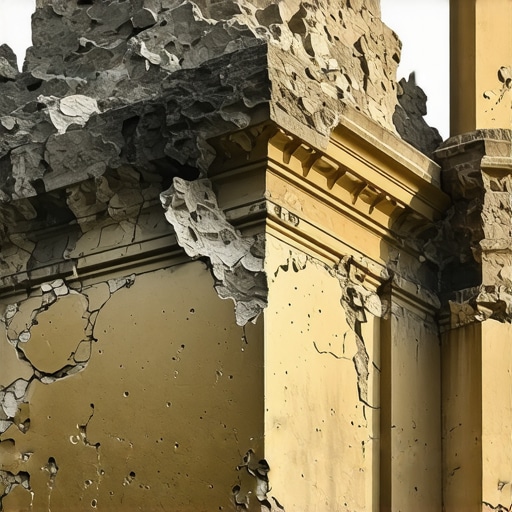
The Skin of the Building: A Master Mason’s Warning
I’ve spent forty years on the business end of a trowel, and if there’s one thing that makes my blood boil faster than a cold joint in July, it’s seeing a beautifully weathered 19th-century facade get eaten alive by a sandblaster. My father used to pull me aside when I was just a cub, pointing at the deep red of a kiln-fired brick or the tight grain of a limestone block. He’d say, ‘Boy, that stone has a skin just like you. If you scrape it off, it’ll bleed until there’s nothing left but dust.’ He was right. I’ve walked onto too many job sites where some handyman with a compressor and a bag of grit has turned a historic treasure into a porous sponge, all in the name of making it look ‘new.’
Sandblasting is mechanical murder for historic masonry. When you blast stone or brick with high-pressure abrasives, you aren’t just removing dirt and soot. You are obliterating the vitrified outer layer—the ‘fire skin’—that was created when the material was either formed in the earth or fired in a kiln. This protective layer is the only thing standing between the soft, inner core of the stone and the relentless assault of the weather. Once that skin is gone, the masonry begins to ‘sugar’ or spall, turning into a powdery mess that no amount of sealer can truly fix. It’s a tragedy I’ve seen play out from historic brownstones to commercial masonry maintenance projects across the country.
“Cleaning methods should be the gentlest possible. Abrasive cleaning methods can cause permanent, physical damage to historic masonry surfaces and should generally not be used.” – BIA Technical Note 20
The Physics of the ‘Pop’ and the Freeze-Thaw Trap
In the world of forensic masonry, we talk a lot about the ‘tooth’ of a surface and how it interacts with moisture. Historic stone is naturally breathable. It’s full of microscopic pores that allow water vapor to move in and out. This movement is a delicate dance. When you sandblast, you create a million tiny craters on the surface. These craters increase the surface area of the stone by ten or twenty times, giving rain and humidity a massive new playground. In cold climates, this is a death sentence. Water gets trapped in those jagged new pores, and as we know, water expands by about 9% when it turns to ice. That internal pressure has nowhere to go but out, ‘popping’ the face of the stone off in a process we call spalling. I’ve seen brick wall restoration projects where the entire soldier course had simply disintegrated because the protective surface was blasted away decades prior.
The Chemistry of Death: Subflorescence and Salt
It’s not just the ice. We have to look at the chemistry of the mud and the minerals. When you open up the pores of a stone, you’re inviting salts to migrate deep into the masonry. This leads to efflorescence—that white, chalky powder you see on walls—but worse is what happens beneath the surface: subflorescence. This is when salt crystals grow inside the pores of the stone. The pressure exerted by these growing crystals can exceed 100,000 psi. If the stone’s skin is intact, it can often resist this. If you’ve sandblasted it, the stone has no defense. It just crumbles into the gutter. This is why when we do chimney repair services, we never reach for the grit. We look at the chimney cap replacement and the chimney flue liner installation first, ensuring the moisture stays out of the core before we even think about the aesthetics.
The Restoration Reality: Lime vs. Portland
One of the biggest mistakes in modern brick infill panel repair is using the wrong mud. Historic masonry was built with lime-based mortars. These are ‘soft’ mortars that are designed to be sacrificial. They breathe and they move. Modern Portland cement is hard, brittle, and waterproof. If you sandblast a wall and then repoint it with hard Portland cement, you have created a structural cage. The stone wants to expand and breathe, but the mortar won’t let it. Since the stone is now weakened from the blasting, it’s the stone that breaks, not the mortar. I’ve seen 3D printed masonry repairs used to recreate intricate details lost to this kind of neglect, and while the tech is impressive, it’s an expensive way to fix a problem that shouldn’t have existed. We should be using digital twin masonry projects to map out the stresses before we ever touch a hammer to the wall.
“The mortar should always be weaker than the masonry units so that it acts as the sacrificial element in the wall system.” – ASTM C270 Standards
The Forensic Scene: A Cautionary Tale
I recall a forensic scene on a Gothic Revival church. The deacons thought they were doing the right thing by hiring a contractor to ‘clean’ the soot from the limestone. The guy used a high-psi sandblasting rig. Within five years, the intricate carvings of the saints looked like melting candles. When I put my scope into the joints, I saw that the moisture had traveled so deep it was rusting the internal iron cramps. What started as a $10,000 cleaning job turned into a $500,000 structural nightmare involving foundation slab jacking and a full retaining wall drainage upgrade just to manage the water that was now pouring through the porous walls. They should have used a low-pressure water wash or a gentle chemical peel that eats the soot but leaves the stone’s ‘skin’ intact.
Better Ways to Clean and Restore
If you’re looking at a dirty building, don’t reach for the sand. Proper brick wall restoration starts with patience. We use ‘slickers’ and ‘hawks’ to apply the right lime-based mud into the joints—a process called repointing, not just slapping ‘butter’ on the face of the brick. If the stone is truly damaged, we look at Dutchman repairs or specialized mortars that mimic the original stone’s porosity. For those managing commercial masonry maintenance, the goal should be longevity, not a quick shine. Sandblasting is a ‘handyman special’ that offers instant gratification at the cost of the building’s soul. In my three generations of laying stone, I’ve learned that the best tools are often the gentlest ones. Respect the suction of the brick, respect the tooth of the mortar, and for the love of the craft, leave the sandblaster in the shop.