
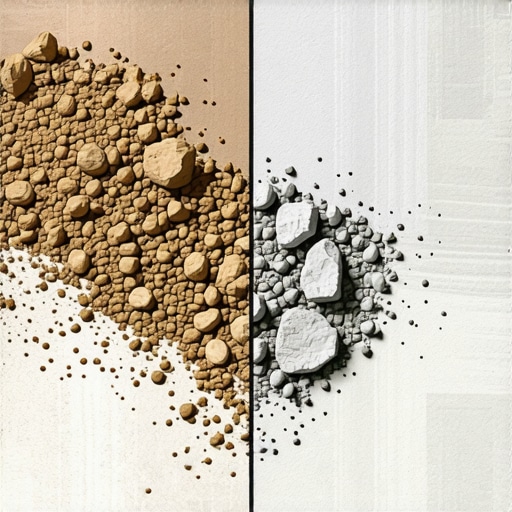
The Mortar Mismatch: A Silent Killer of Historic Masonry
I recently walked onto a site where a majestic 1880s carriage house was literally shedding its skin. The homeowner had hired a general contractor who thought ‘mortar is just mortar.’ They used a high-strength, Type S Portland cement to repoint the soft, hand-molded clay bricks. The result? Every single brick face had spalled off, lying on the ground like a pile of broken promises. This is the tragedy of professional masonry restoration gone wrong—using a material that is too hard for the substrate it’s meant to protect.
My mentor, a man who had more grit under his fingernails than a sand-blaster, once sat me down in front of a pallet of historic brick salvage. He didn’t say a word. He just poured a cup of water on a modern extruded brick and another on a reclaimed 19th-century unit. The modern brick shed the water like a duck; the old brick drank it in seconds. ‘If the brick breathes,’ he told me, ‘the mud has to breathe too. You put Portland on that old girl, and you’re suffocating her.’ He was talking about the ‘sacrificial principle’ of masonry. The mortar must always be softer and more permeable than the masonry units themselves. If the wall moves or moisture enters, the mortar should be the one to fail, not the brick.
“Mortar should be designed to be weaker than the masonry units so that any stress-induced cracking occurs in the mortar joints, where it can be easily repaired through repointing.” – ASTM C270 Standard Specification for Mortar for Unit Masonry
The Chemistry of the Set: Carbonation vs. Hydration
To understand why Portland cement is the enemy of historic brick, we have to micro-zoom into the molecular level. Portland cement cures through a chemical reaction called hydration. When water hits the powder, it forms a crystalline structure that sets fast and hard. It’s a race against the clock. Once it’s hard, it’s a rigid, impermeable rock. Natural lime mortar, specifically non-hydraulic lime or lime putty, cures through carbonation. It absorbs CO2 from the atmosphere over months, slowly turning back into limestone. This process is much slower, but it creates a ‘breathable’ network of pores.
When we talk about porous stone sealers, we’re often trying to fix a problem caused by the wrong mortar. In a lime-based system, moisture enters the brick and escapes through the mortar joint. It’s a natural wick. When you butter a joint with Portland cement, you block that exit. The water gets trapped behind the hard cement ‘cap.’ When the temperature drops, that water expands by 9%. Since it can’t push through the cement, it pushes the face off the brick. This is why concrete masonry unit restoration on modern buildings is a completely different beast than working on a 150-year-old chimney. The physics of modular masonry construction simply don’t apply to the hand-laid craft of the past.
Tuckpointing Curved Walls and the Art of the Slicker
Working on a radius adds another layer of complexity. Tuckpointing curved walls requires a level of ‘mud’ control that most modern masons haven’t mastered. You’re on the hawk, working the mortar with a slicker tool, trying to maintain a consistent joint width while the geometry of the wall is constantly fighting you. If you’re using a Portland-heavy mix, the mud is too sticky; it tears and drags. A proper lime-rich mix has a ‘fatty’ consistency. It stays plastic longer, allowing the mason to strike the joint perfectly. We often use flush pointing services for these historic applications to ensure the water sheds away from the delicate edges of the salvaged brick.
“For the lime, it is best to use that which has been slaked for a long time, so that it may be more easily worked and more thoroughly carbonated.” – Vitruvius, The Ten Books on Architecture
The Hidden Details: Birdsmouth Cuts and Parging
True professional masonry restoration is found in the details no one sees. Take masonry birdsmouth cuts on a corner. If those aren’t set with a mortar that can handle slight thermal expansion, the corner will ‘zip’ open within five years. The same goes for chimney interior parging. We use a lime-based parge coat inside the flue because it can withstand the extreme temperature fluctuations without cracking. Portland cement would simply bake and crumble under that heat. Whether we are providing concrete flatwork services for a new patio or restoring a soldier course on a Victorian lintel, the material science dictates the longevity of the work.
Don’t let a ‘handyman’ tell you that a bag of pre-mixed cement from the big-box store is good enough for your historic home. That mud is a death sentence for old clay. You need a mix that understands the tooth of the stone and the thirst of the brick. You need a mason who knows that the mortar is the soul of the wall, and if the soul is too hard, the body will eventually break. Do it once with the right lime, or prepare to do it twice when the Portland destroys your heritage.