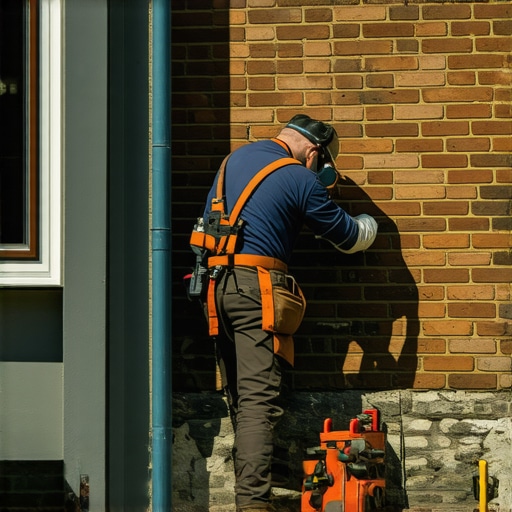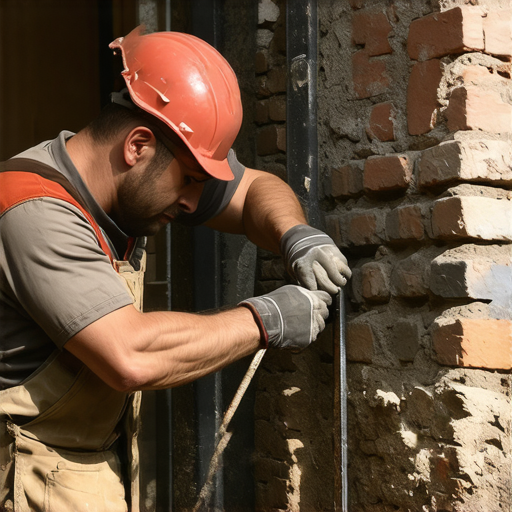
Expert Foundation & Concrete Patch Repairs for Lasting Stability
Unveiling the Complexity of Foundation and Concrete Patch Repairs in Structural Engineering
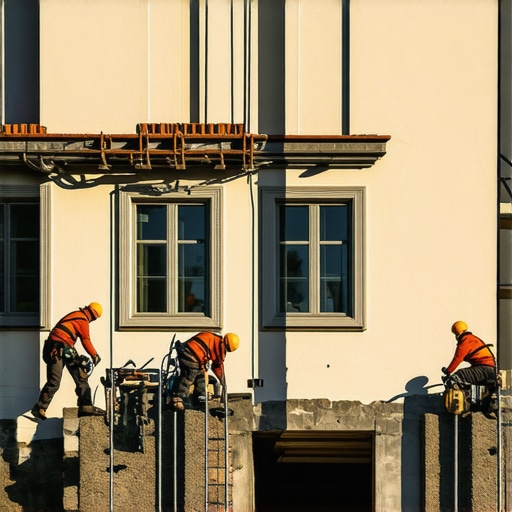
In the realm of structural integrity, expert foundation and concrete patch repairs play a pivotal role in maintaining the enduring stability of masonry structures. These repairs, often underestimated by less experienced practitioners, require a nuanced understanding of material science, load distribution, and long-term durability. From seismic considerations to environmental impacts, the intricacies of these repairs necessitate a comprehensive approach rooted in advanced engineering principles.
Why Precision in Foundation Repair Is Critical for Long-Term Masonry Resilience
Foundations are the bedrock of any masonry edifice, and their proper repair is fundamental to preventing progressive deterioration. Expert-level repairs involve detailed site analysis, including soil stability assessments and load-bearing capacity evaluations. Techniques such as underpinning, helical piers, or micro-pile installation are employed to restore foundational integrity effectively. The choice of repair method hinges on nuanced factors like existing structural loads, soil-structure interaction, and the potential for future settlement issues. Ensuring the longevity of these interventions often involves integrating advanced materials such as carbon fiber reinforcement or high-performance concrete mixes.
Innovative Solutions in Concrete Patch Restoration for Structural Durability
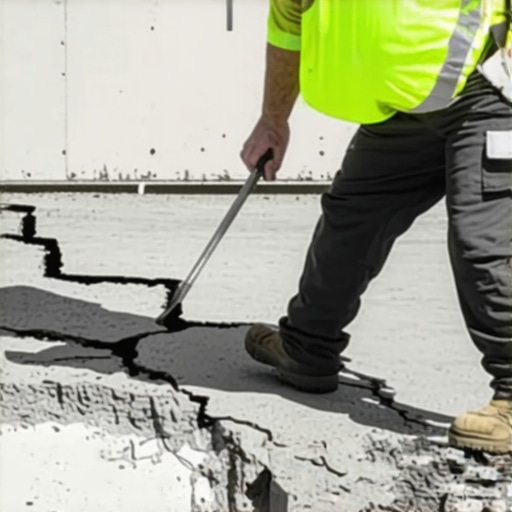
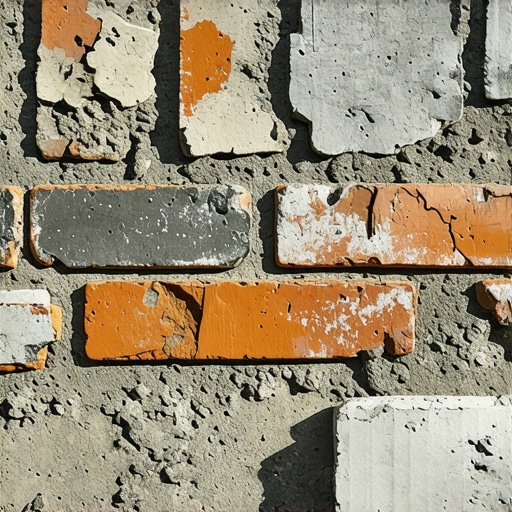
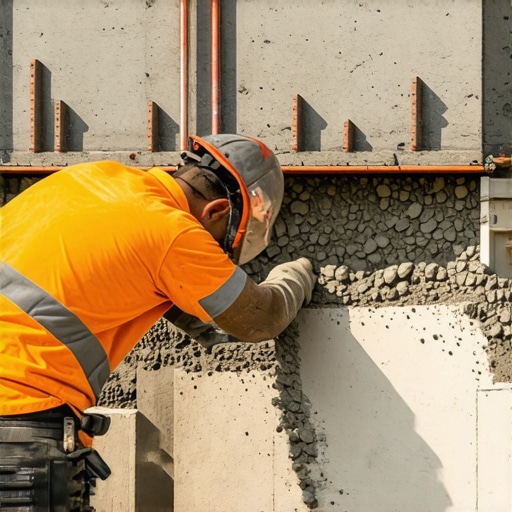
Concrete patching, when executed by seasoned professionals, transcends superficial aesthetics and becomes a strategic intervention for structural preservation. High-quality repair materials like epoxy-based compounds or polymer-modified concrete are selected based on their bonding, flexibility, and resistance to environmental stressors. The process involves meticulous preparation, including surface cleaning, crack injection, and reinforcement where necessary. These steps are critical in preventing moisture ingress and chemical attacks, thereby extending the lifespan of the masonry. Moreover, innovative techniques such as shotcrete application or fiber-reinforced overlays offer enhanced structural resilience.
Addressing Challenges in Complex Repair Scenarios: A Technical Perspective
One of the pressing questions among experts is,
How do we ensure that patch repairs do not compromise the overall structural integrity during seismic activity or extreme weather conditions?
This challenge underscores the importance of integrating repair strategies with comprehensive structural health monitoring. Techniques like fiber optic sensors embedded within patches enable real-time data collection on strain and deformation. Additionally, adopting a holistic repair plan that considers load redistribution, crack arresting, and moisture management is crucial. Collaboration with geotechnical experts and adherence to ASTM standards further reinforce repair durability.
For those seeking to deepen their understanding of expert foundation and concrete patch repairs, consulting authoritative sources such as the American Concrete Institute offers invaluable insights into best practices and emerging technologies.
If you are a professional or a researcher in the field, consider contributing your insights on innovative repair methodologies or case studies to enrich the collective knowledge base.
Explore related content on foundation tuckpointing repairs or concrete patch foundation restoration.
Harnessing Modern Technologies for Superior Foundation and Concrete Patch Repairs
In the pursuit of long-lasting masonry stability, the integration of cutting-edge technologies such as structural health monitoring (SHM) systems and advanced material sciences has revolutionized repair methodologies. Experts now leverage fiber optic sensors embedded within patches to provide real-time data on strain, deformation, and moisture levels, enabling proactive maintenance and early detection of potential failures. These innovations facilitate adaptive repair strategies that respond to evolving structural conditions, ensuring durability beyond traditional approaches.
What Are the Nuanced Considerations When Selecting Repair Materials for Critical Masonry Structures?
The choice of repair materials is crucial, especially in structures exposed to harsh environmental conditions or seismic activity. Modern materials like ultra-high-performance concrete (UHPC) and epoxy-based composites exhibit exceptional bonding, flexibility, and chemical resistance, which are essential for maintaining structural integrity over decades. The compatibility between new repair materials and existing substrates also demands meticulous evaluation, considering factors such as thermal expansion coefficients and moisture permeability. For a comprehensive understanding, consulting authoritative sources like the American Concrete Institute provides valuable insights into material standards and testing protocols.
Could emerging nanotechnology-based repair materials redefine the durability standards in masonry restoration?
Nanotechnology introduces possibilities for creating ultra-durable, self-healing, and environmentally responsive repair materials. Nano-enhanced concretes and coatings can improve resistance to chemical attacks, reduce permeability, and promote micro-crack healing, significantly extending the lifespan of repairs. These advancements challenge the traditional boundaries of repair durability and open avenues for more resilient structures, especially in extreme climates or seismic zones. Exploring such innovations requires collaboration between materials scientists and structural engineers to develop standards and best practices aligned with these emerging technologies.
If you’re interested in staying ahead with innovative repair techniques, consider exploring our detailed guide on trusted foundation tuckpointing repairs and how they complement concrete patch solutions for comprehensive structural health.
Integrating Innovative Materials and Techniques for Enhanced Structural Longevity
As engineering disciplines evolve, the emphasis on durability and resilience in foundation and concrete repairs intensifies. Modern advancements have introduced a spectrum of specialized materials and techniques designed to address complex structural challenges. For instance, ultra-high-performance concrete (UHPC) now offers unparalleled strength and durability, enabling repairs that withstand extreme loads and environmental stressors. Its low permeability and exceptional bonding capabilities make UHPC a preferred choice for critical structural components, extending repair longevity significantly.
Complementing material innovations, advanced application methods such as robotic-assisted concrete placement and laser-guided surface preparation are transforming repair precision. These technologies minimize human error, ensure uniform material distribution, and optimize surface conditions for bonding. Additionally, the integration of fiber-reinforced polymers (FRPs) into repair strategies provides versatile, lightweight reinforcement options that can be tailored to specific load conditions and structural geometries.
The Role of Structural Health Monitoring in Predictive Maintenance and Repair Optimization
Beyond initial repairs, ongoing assessment of structural integrity is essential for proactive maintenance. Embedding sensor networks—ranging from strain gauges to acoustic emission detectors—allows real-time monitoring of stress distribution and crack evolution. These data streams inform targeted interventions before minor issues escalate into critical failures, substantially reducing long-term repair costs and downtime.
For example, fiber optic sensors integrated within repair patches can detect minute deformation patterns indicative of underlying structural stress. This continuous feedback loop enables engineers to adapt maintenance plans dynamically, optimizing repair timing and methods. As these technologies mature, their integration into Building Information Modeling (BIM) frameworks facilitates comprehensive lifecycle management, ensuring that repair strategies evolve with structural needs.
Addressing Complex Repair Scenarios with Multi-Disciplinary Collaboration
Complex repair scenarios often demand a multi-disciplinary approach, uniting geotechnical, structural, and materials science expertise. For example, in seismic zones, repair designs must incorporate seismic isolation systems, energy dissipation devices, and resilient materials to mitigate future quake impacts. Collaborating with geotechnical specialists ensures that soil-structure interactions are adequately addressed, especially when underpinning or soil stabilization is involved.
Furthermore, adherence to evolving standards such as those outlined in ASTM C1583 (Standard Test Method for Tensile Strength of Concrete) and ASTM C1435 (Standard Guide for Design and Construction of Repair Materials) guarantees that repairs meet rigorous safety and durability benchmarks. Staying abreast of these standards and integrating emerging research enhances the robustness of repair strategies.
What are the latest innovations in nanotechnology-based repair materials that could redefine durability standards in masonry restoration?
Nanotechnology introduces groundbreaking possibilities for creating self-healing concretes and surface coatings. Nano-sized additives can fill micro-cracks autonomously, significantly extending the lifespan of repairs. For instance, nano-silica particles enhance the matrix density of concrete, reducing permeability and chemical attack susceptibility. Similarly, nano-encapsulated healing agents release upon crack formation, initiating micro-repair processes that restore structural integrity without intervention.
Leading research institutions such as the National Institute of Standards and Technology (NIST) are actively developing standards and testing protocols for nano-enhanced repair materials, aiming to facilitate their widespread adoption in structural applications. As adoption increases, these innovations promise to set new benchmarks for repair durability, especially in environments subject to aggressive chemical or climatic conditions.
Engaging with ongoing research through conferences, publications, and industry collaborations is crucial for professionals seeking to leverage these cutting-edge solutions. For a deeper dive into emerging material innovations, consult resources like the American Concrete Institute.
Exploring the Cutting-Edge of Structural Repair Technologies: Beyond Conventional Wisdom
In the rapidly evolving field of structural engineering, the integration of innovative materials and methodologies is revolutionizing foundation and concrete patch repairs. Recent advancements have introduced ultra-high-performance concretes (UHPC), nano-engineered composites, and smart monitoring systems that significantly enhance the durability and resilience of masonry structures. These developments not only extend the lifespan of repairs but also enable proactive maintenance strategies that preempt failure modes.
How Do Emerging Nanotechnologies Influence Long-Term Structural Stability?
Nanotechnology has opened new frontiers in masonry repair by enabling the development of self-healing concretes, nano-enhanced surface coatings, and micro-crack fillers. Nano-silica and encapsulated healing agents can autonomously respond to stress-induced microcracks, sealing them before they propagate into critical failure points. According to a comprehensive review by the National Institute of Standards and Technology (NIST), these materials demonstrate remarkable improvements in permeability resistance, chemical durability, and microstructural integrity, setting unprecedented standards for long-term stability.
What Are the Best Practices for Integrating Structural Health Monitoring with Modern Repair Strategies?
Embedding fiber optic sensors, strain gauges, and acoustic emission detectors within repaired zones facilitates continuous, real-time assessment of structural health. This integration allows engineers to monitor stress redistribution, crack evolution, and environmental effects, thus enabling data-driven decision-making for maintenance and further interventions. The synergy between advanced materials and SHM technology transforms reactive repairs into proactive resilience management, significantly reducing lifecycle costs.
Can Sustainable and Eco-Friendly Repair Materials Match Traditional Strengths?
Eco-conscious innovations have produced sustainable repair solutions such as geopolymer concretes and recycled aggregate composites that offer comparable, if not superior, mechanical properties to traditional materials. These environmentally friendly options reduce carbon footprints and resource consumption while maintaining structural integrity under demanding conditions. The American Concrete Institute’s guidelines emphasize the importance of material compatibility and environmental resilience, encouraging the adoption of greener alternatives in critical infrastructure repairs.
How are Industry Leaders Developing Future-Ready Repair Protocols for Seismic and Extreme Weather Conditions?
Leading firms and research institutions are pioneering multi-disciplinary approaches that incorporate seismic isolation systems, energy dissipation devices, and adaptive materials. Their focus is on creating repair protocols that anticipate evolving climate patterns and seismic risks, utilizing simulation-driven design and robust testing standards such as ASTM C1583 and ASTM C1435. These comprehensive frameworks facilitate resilient repair strategies capable of withstanding the most extreme environmental challenges.
Engage with authoritative sources like the American Concrete Institute to stay abreast of emerging standards and innovative practices shaping the future of masonry repair.
Why Should Structural Engineers Embrace a Holistic Approach to Foundation and Patch Repairs?
Adopting a holistic approach that combines material science, structural analysis, geotechnical insights, and real-time monitoring fosters sustainable, durable, and resilient repairs. This methodology emphasizes not only immediate structural stabilization but also long-term performance under environmental and load variations. By leveraging multidisciplinary expertise and cutting-edge technologies, engineers can deliver solutions that surpass traditional repair paradigms, ensuring safety and longevity for decades to come.
Expert Insights & Advanced Considerations
Innovative Material Integration Enhances Durability
Engineers are increasingly leveraging nano-engineered composites and ultra-high-performance concretes (UHPC) to achieve repairs that surpass traditional standards, ensuring longer service life and resilience against environmental stressors.
Real-Time Structural Health Monitoring Revolutionizes Maintenance
Embedding fiber optic sensors and acoustic emission detectors within repair zones allows for continuous data collection, facilitating proactive interventions and optimizing repair longevity through predictive analytics.
Multi-Disciplinary Collaboration Is Key
Successful complex repairs integrate geotechnical, structural, and material science expertise, enabling comprehensive solutions that address soil-structure interaction, load redistribution, and environmental impacts.
Adoption of Sustainable Materials Gains Momentum
Recycled aggregates, geopolymer concretes, and eco-friendly coatings are becoming standard among experts seeking to balance durability with environmental responsibility without compromising structural integrity.
Advanced Application Technologies Improve Precision
Robotic-assisted placement and laser-guided surface preparation minimize human error, ensure uniform material application, and enhance bonding, significantly extending repair durability.
Curated Expert Resources
- American Concrete Institute (ACI): Offers comprehensive standards, guidelines, and research on concrete materials and repair methodologies, essential for in-depth technical mastery.
- NIST (National Institute of Standards and Technology): Provides cutting-edge research on nano-enhanced and self-healing materials, setting benchmarks for innovation in masonry repair.
- Concrete Sustainability Council (CSC): Focuses on sustainable practices and materials, aiding engineers in selecting environmentally responsible solutions.
Final Expert Perspective
Mastering advanced foundation and concrete patch repairs in structural engineering demands a synthesis of innovative materials, real-time monitoring, and multidisciplinary collaboration. Embracing emerging technologies and sustainable practices not only elevates repair quality but also ensures the resilience and longevity of masonry structures in the face of environmental challenges. For professionals committed to excellence, engaging with authoritative sources like the American Concrete Institute and staying abreast of technological advancements is indispensable. Your expertise and proactive innovation will shape the future of durable masonry repair—continue to lead with knowledge and precision.