
The Forensic Scene: When the Earth Decides to Move In
The homeowner pointed to a thin, vertical hairline crack in the mortar joint, tucked behind a stack of old paint cans. ‘It’s just a little dampness during the spring thaw,’ he told me, wiping a smudge of dust off his expensive flannel shirt. I didn’t say a word. I pulled my fiber-optic scope from my kit and fed the lens into a 3/8-inch hole I bored near the footer. What I saw wasn’t just ‘dampness.’ The structural steel rebar inside that poured concrete wall was so badly oxidized it looked like charred wood. It had expanded to three times its original thickness, a process we call ‘oxide jacking,’ and it was literally detonating the concrete from the inside out. The hydrostatic pressure from the outside soil had turned his basement into a slow-motion shipwreck. This is the reality of masonry forensics: by the time you see the stain on the drywall, the battle for the foundation is already half-lost.
The Hydraulic Jack: Understanding Hydrostatic Pressure
To understand why an exterior membrane alone is often a failing strategy, you have to understand the physics of the soil. We aren’t just dealing with ‘wet dirt.’ We are dealing with a hydraulic system. When it rains, the soil surrounding your home becomes saturated. This water has mass—about 62.4 pounds per cubic foot. As the water table rises, it exerts a lateral force known as hydrostatic pressure. If your foundation is ten feet deep, that pressure can reach hundreds of pounds per square foot at the base. Modern ‘lick-and-stick’ stone veneer and thin parge coats stand no chance against this. The water will find the ‘honeycombing’—those small voids left in the concrete because the original crew didn’t vibrate the mud properly during the pour—and it will scream through them.
“The primary goal of any moisture management system is to reduce the hydrostatic head against the foundation wall.” — ASTM D448-12 Standard Classification for Sizes of Aggregate for Road and Bridge Construction
The Exterior Membrane: The First Line of Defense
The exterior waterproofing membrane is your shield. In the old days, my grandfather would slap some hot tar on the block and call it a day. Today, we use high-density polyethylene (HDPE) dimpled membranes. These aren’t just ‘plastic wraps.’ They are engineered air-gap systems. The dimples face the wall, creating a small void that allows any moisture that does get past the first layer to trick down to the footer drain. This is critical for brick veneer installation, where a lack of proper flashing can trap moisture against the sheathing. However, even the best membrane can be compromised by ‘thermal shock’ or simple soil settlement. If the soil heaves during a freeze-thaw cycle, it can tear the membrane or pull it away from the termination bar at the grade line. Once that seal is broken, the membrane acts like a funnel, trapping water against the wall rather than keeping it out.
The Interior French Drain: The Pressure Relief Valve
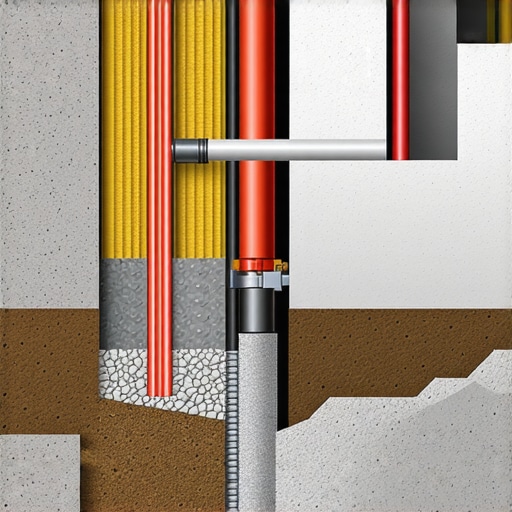
This is where the ‘Restoration Reality’ sets in. An interior French drain is not a ‘leak catcher’; it is a pressure relief valve. We cut a trench into the slab, usually about 12 inches wide, right at the perimeter. We are looking for the ‘cold joint’—the place where the wall meets the footer. This is the most vulnerable point in any masonry structure. By installing a perforated pipe bedded in 3/4-inch washed stone (the ‘tooth’ of the aggregate matters here for filtration), we are giving the water an easier path to travel. Instead of pushing through the wall, the water drops into the drain. This is the same logic we use in retaining wall installation: you don’t fight the water; you lead it where you want it to go. Without this interior relief, the hydrostatic pressure continues to build until the masonry reaches its ‘modulus of rupture’ and snaps.
The Micro-Zoom: Chemistry of the Capillary Break
Why does water travel upward through a concrete wall? It’s a process called capillary action. Think of the concrete as a series of trillions of microscopic straws. Water can actually climb feet above the water table through these pores. When we install an interior system, we often incorporate a ‘vapor barrier’ that extends up the wall and tucked into the dimpled membrane. This breaks the capillary cycle. It stops the ‘efflorescence’—that white, salty powder you see on old bricks—which is actually the mineral remains of groundwater that has evaporated after traveling through your brick arch restoration or foundation wall. If you ignore this chemistry, your stone veneer repair will be a seasonal ritual because the salts will keep popping the stones off the wall.
“Water penetration is the single greatest threat to masonry durability.” — BIA Technical Note 7: Water Resistance of Brick Masonry
The Synergistic Fix: Why You Need Both
If you only do the exterior, you are relying on a perfect seal that doesn’t exist in a world of shifting soils. If you only do the interior, you are allowing the wall itself to stay saturated, which leads to spalling and structural degradation over decades. True forensic masonry demands a dual-track approach. The exterior membrane stops the bulk water and prevents the ‘burn’ of the mortar from acidic soil chemistry, while the interior French drain manages the rising water table and relieves the physical pressure. This is especially vital in commercial smokestack repair or green roofing masonry integration, where moisture loads are constant and unforgiving. Even a simple chimney heat shield installation can be undermined if the base of the structure is sitting in a ‘soup’ of saturated earth.
Trade Wisdom: Don’t Trust the ‘Handyman Special’
I’ve seen guys try to fix these issues with ‘waterproofing paint.’ It’s a joke. You’re trying to hold back the weight of the earth with a layer of latex thinner than a human hair. Real masonry work involves getting your hands in the mud. It involves understanding the ‘suction’ of the substrate and the ‘slicker’ used to finish the joints. Whether you are doing a brick patio restoration or a chimney sweep and repair, the fundamental rule is the same: Water wins eventually, unless you give it an exit strategy. If your contractor doesn’t talk about ‘hydrostatic relief’ or ‘capillary breaks,’ send them packing. You want a craftsman who knows the difference between Type N and Type S mortar, and who understands that a foundation is a living, breathing part of the earth’s crust.
The Final Forensic Verdict
A basement is a hole in the ground that wants to be filled with water. Your job is to make that physically impossible. By combining an exterior HDPE membrane with an interior French drain and a high-capacity sump pump, you are creating a fail-safe system. This isn’t just about a dry basement; it’s about the ‘structural integrity’ of the entire building. From the brick arch restoration on the facade to the retaining wall installation in the yard, every piece of masonry relies on a stable, dry base. Do it once, or do it twice. My grandfather always said, ‘The trowel doesn’t lie.’ Listen to your house. Those cracks aren’t just ‘settling’—they are the building’s way of screaming for help. Don’t wait until the steel is dust and the wall is a memory.