The Language of Concrete and the Lies It Tells
I have spent forty years in the dark. Not the metaphorical dark, but the damp, limestone-scented darkness of crawlspaces and basements where the weight of a house meets the unyielding reality of the earth. I have run my hands over more miles of mortar joints than most men have walked. In this trade, you learn that every house is trying to tell you something. A crack isn’t just a gap in the masonry; it is a transcript of a battle between gravity, soil mechanics, and the sheer physics of thermal expansion. The homeowner sees a line in the wall and thinks of aesthetics. I see it and think of the 9 percent expansion of water molecules as they transition to ice, or the lateral load of a saturated clay soil pushing against a wall that was never designed to be a dam.
The Forensic Scene: When a Hairline is a Heart Attack
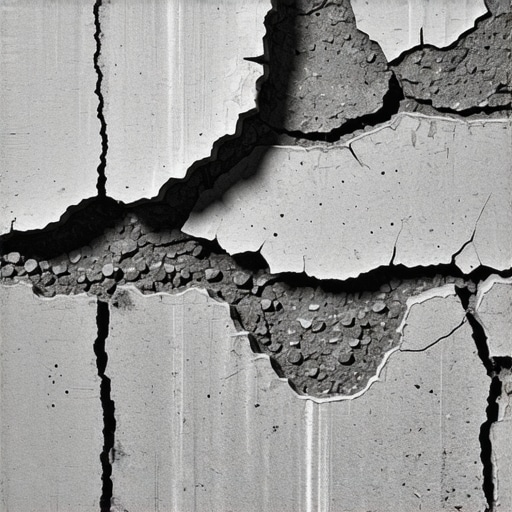
The call came in on a Tuesday. A homeowner in a century-old neighborhood was complaining about a bit of moisture behind their fancy new stone veneer repair job. They thought it was a flashing issue. But when I pulled up, I didn’t even need to get out of the truck to know they were in trouble. The chimney had a slight lean, maybe two degrees, but that was enough to tell me the chimney repair services they’d hired years ago were just putting lipstick on a corpse. When I stepped into the basement and put my borescope into a seemingly minor fissure, I didn’t find solid concrete. I found that the internal structural steel—the very skeleton of the home—had been reduced to a heap of oxidized dust. What looked like a simple hairline crack on the surface was actually the final gasp of a foundation wall that had lost its internal integrity. This is the reality of structural masonry inspection: the worst damage is often the quietest.
The Physics of the Freeze-Thaw Cycle
In the North, we deal with the brutal reality of the freeze-thaw cycle. It is a relentless mechanical force. When water penetrates the microscopic pores of a brick or a low-slump concrete block, it waits. As the temperature drops, that water crystallizes. Because ice occupies more volume than liquid water, it exerts internal pressure that can exceed 100,000 psi. This is what causes spalling, where the face of your brick pops off like a scab. If you are seeing masonry damage assessment reports that ignore the pore structure of the material, you’re getting a surface-level lie.
“Water penetration is the single greatest threat to masonry durability. Moisture can cause efflorescence, freeze-thaw damage, and corrosion of embedded metals.” – BIA Technical Note 7
This isn’t just about a wet basement; it’s about the molecular destruction of your home’s support system. If your brick column repair involves just slapping some “mud” over the gap, you’re ignoring the hydration process. Proper masonry requires a chemical bond, not just a physical one. When I “butter” a brick, I’m ensuring the suction of the unit pulls the cementitious paste into its pores, creating a monolithic structure.
Blueprint of a Failure: Stair-Step vs. Horizontal Cracks
To the untrained eye, a crack is a crack. To a master mason, the orientation of the failure tells the story of the soil. Stair-step cracks following the mortar joints are the classic sign of differential settlement. One corner of your house is moving faster than the rest. This usually points to a footings issue or localized soil saturation. However, if you see a horizontal crack, usually located mid-way up the wall, you are looking at a structural emergency. This is the signature of hydrostatic pressure. The earth outside is saturated, and the weight of that water is literally pushing your wall inward. This is where failing retaining wall repair principles come into play. Without a retaining wall geogrid installation or proper drainage, even the thickest concrete will eventually bow and snap. If that wall moves more than an inch, you aren’t looking at a cosmetic fix; you’re looking at the need for helical piers or carbon fiber reinforcement to arrest the movement.
The Cosmetic Facade: Stone Veneer and Modern Mistakes
Modern construction has a lot to answer for, especially “lick-and-stick” stone veneer. These products are often installed without a proper drainage plane. Water gets trapped behind the stone, hits the OSB sheathing, and starts a slow rot that you won’t see for years. By the time the homeowner calls for stone veneer repair, the structural studs behind the masonry are often compromised. I’ve seen modular masonry construction fail because the installer didn’t understand the coefficient of thermal expansion. Everything moves. If you don’t provide relief joints, the house will create its own. A vertical crack that runs straight through the bricks—rather than zig-zagging through the joints—is a sign that the wall was built too tight. It’s a “stress relief” crack. While it looks terrifying, it is often less dangerous than the subtle, creeping horizontal shift of a foundation wall under load.
The Forensic Toolkit: Assessment and Restoration
When I perform a masonry damage assessment, I’m looking for more than just gaps. I’m looking for honeycombing in the concrete—areas where the aggregate didn’t mix properly with the paste, leaving a porous, weak spot. I’m looking for cold joints, where one pour of concrete started to set before the next one began, creating a permanent plane of weakness. If you have a brick column repair project, don’t let a handyman just point the surface. You need to ensure the core is sound.
“The mortar should always be weaker than the masonry units so that any movement-induced cracking occurs in the easily repairable mortar joints rather than in the masonry units themselves.” – ASTM C270 Standard Specification
This is the “Sacrificial Principle” of masonry. In historic homes, using a modern, high-Portland cement mortar is a death sentence for old, soft bricks. You need a lime-heavy “mud” that can breathe and flex. If you use a hard mortar, the brick will be the thing that breaks during the next freeze. This is why masonry staining and proper retaining wall block replacement require an understanding of material compatibility, not just a trip to the big-box hardware store.
The Hard Truth of the Base
Whether it’s a patio or a foundation, it’s all about the base. I see so many failing retaining wall repair jobs where the contractor skimped on the gravel. You can have the most expensive blocks in the world, but if they are sitting on uncompacted silt, they will shift. In my grandfather’s day, we didn’t have geogrid, but we understood gravity. We built with a “batter”—a slight lean into the hill—to counteract the weight of the earth. Today, we use retaining wall geogrid installation to turn the soil itself into a structural mass. If your wall is leaning, a retaining wall block replacement is just a temporary fix. You have to solve the drainage. If the water has nowhere to go, it will find a way through your wall, carrying your investment with it into the mud.
When to Panic and When to Pivot
If you can fit a dime into the crack, keep an eye on it. If you can fit a thumb into it, call me. If the crack is horizontal, or if you see the soldier course above a window sagging, the time for “cosmetic” thinking is over. You are in the realm of structural masonry inspection and heavy engineering. Don’t fall for the “quick fix” epoxy injection if the underlying soil is still moving. That’s like taping a broken leg without setting the bone. You do it once, or you do it twice. And in masonry, doing it twice usually costs four times as much as doing it right the first time. Respect the suction, understand the physics of the soil, and never, ever trust a contractor who doesn’t own a slicker and a hawk and know how to use them to create a packed, weather-tight joint. Your home is a mountain of stone held together by chemistry; don’t let it turn back into a pile of rubble through neglect.