
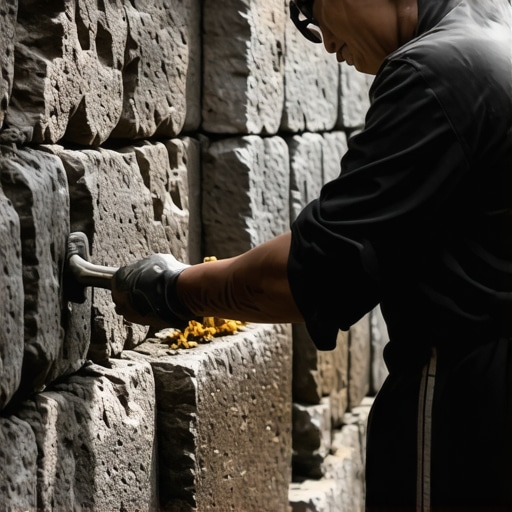
The Tragedy of the Ruined Facade
I’ve seen it a thousand times: a beautiful 19th-century brownstone or a rugged limestone foundation stripped of its dignity by a ‘handyman’ with a 4,000 PSI pressure washer and a bottle of hardware-store acid. They think they are cleaning it; in reality, they are performing a chemical lobotomy on the structure. My uncle used to carry a small vial of muriatic acid in his pocket, not to use on the stone, but to test the ‘wisdom’ of the previous mason. He’d drop a bead on the old mortar; if it didn’t fizz like a panicked soda, he knew the wall was already dead, choked by Portland cement where lime should have been. This taught me that masonry cleaning isn’t just about aesthetics; it’s about forensic recovery. When you blast away the ‘dirt’ from a historic stone, you are often blasting away the very carbonation crust that has protected that stone from the elements for a century. The goal of any legitimate masonry cleaning project is to remove harmful pollutants—the sulfuric acids and carbon deposits that eat away at the stone—without disturbing the ‘tooth’ of the material or its natural patina.
“The use of harsh chemicals or high-pressure water can cause irreversible damage to the masonry surface and should be avoided.” – BIA Technical Note 20
The Forensic Chemistry of the Pore
To understand stone, you have to understand its breath. Old stone is a living, breathing lung. It absorbs moisture through capillary action and exhales it as the sun warms the surface. When soot and industrial grime clog these pores, moisture gets trapped. This is where the physics of the freeze-thaw cycle becomes a weapon. In the North, if that trapped water can’t escape, it expands by 9% when it freezes, popping the face of the stone off in a process we call spalling. But if you use a harsh chemical cleaner, you might inadvertently create a ‘hydroscopic salt’ deposit inside the stone. These salts attract even more water, accelerating the decay. We talk about the ‘suction’ of a stone when we are about to butter a joint, but that suction also works against you during cleaning. If you apply a cleaner to a dry stone, it sucks the chemicals deep into its core where they can never be fully rinsed out, leading to ‘efflorescence’—that white, ghostly powder that haunts poorly cleaned buildings. You must saturate the stone with clean water first, filling the pores so the ‘mud’ or the cleaning agent stays on the surface where it belongs.
Historic Tuckpointing vs. The Sacrificial Joint
Cleaning and historic tuckpointing are inseparable. You can’t clean a wall if the joints are failing, because your cleaning water will pour into the cavity, rusting out the wall ties or rotting the timber frame. When we look at a brick arch restoration or a commercial parapet wall repair, the first thing we check is the mortar’s hardness. If a previous contractor used a high-strength Portland cement on soft 1920s brick, the brick will be the one to break. We follow the ‘sacrificial principle’: the mortar must always be softer than the stone. This is why we lean on Type O or even pure lime putty for restoration. When we are striking the joint with a slicker, we aren’t just making it look pretty; we are compacting the face to ensure water sheds off rather than soaking in. Tuckpointing cost estimation often shocks people because they don’t realize the forensic labor involved in grinding out joints by hand without nicking the stone edges. If you see a guy with a large circular saw diving into your historic joints, fire him on the spot. He’s destroying the ‘bond’ and the history of the building.
“Mortar should always be weaker than the masonry units it binds to ensure that any stress-induced cracking occurs in the mortar joints rather than the stone or brick.” – ASTM C270 Standards
Modern Tech in Old World Walls
We are now seeing a massive shift toward digital twin masonry projects. We use LIDAR to map the exact movement of a failing foundation or a leaning chimney before we ever touch a hawk or a trowel. This allows us to see if a crack is a ‘live’ structural failure or just a ‘settlement’ scar. For instance, when we integrate green roofing masonry integration, we have to account for the massive increase in moisture retention. A green roof is a literal sponge sitting on top of a parapet. If that parapet hasn’t been properly treated with a breathable masonry cleaning and a silane-siloxane sealer (the only type I trust because it doesn’t form a plastic film), the masonry will disintegrate within a decade. We also see this in concrete pump masonry mixes where we use specialized flowable fill to stabilize a foundation from the inside out, without the need for massive excavation that could disturb the ‘natural patina’ of the surrounding landscape stone.
The Restoration Reality: Do It Once
Whether you are dealing with a chimney sweep and repair or a full-scale historic facade, the rules don’t change. You don’t use ‘slick’ modern solutions for ‘rough’ old problems. I hate ‘lick-and-stick’ stone because it has no ‘tooth’ and no soul. It’s just concrete molded to look like stone, stuck on with what amounts to expensive glue. Real stone cleaning and restoration require patience. It requires knowing the difference between a ‘cold joint’ and a structural crack. It requires understanding that a little bit of moss might be fine, but a climbing ivy is a slow-motion wrecking ball for your masonry. When you’re looking at your tuckpointing cost estimation, remember that you are paying for the 30 years of experience it takes to know exactly when to stop scrubbing. Preservation is about doing as little as possible, but as much as necessary. Keep the patina; lose the decay. That is the master mason’s way.