
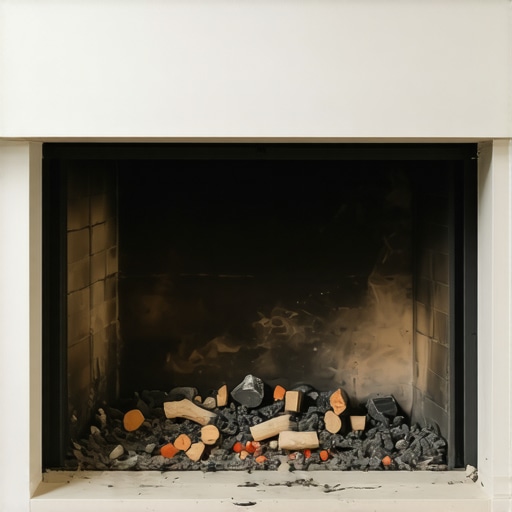
The homeowner thought it was just a bit of soot or perhaps some minor scaling on the firebricks. But when I dropped the 360-degree forensic scope down into the throat of that chimney, I didn’t see a functioning venting system; I saw a scorched graveyard of calcined silicate and dust. The structural steel lintel was warped like a piece of saltwater taffy, and the mortar joints had the consistency of dried oatmeal. All of this because they decided a $200 heat shield was an unnecessary expense during the last renovation. This isn’t just about aesthetics; it is about the thermal physics that govern whether your house stays standing or becomes a pile of ash.
The Forensic Reality of Thermal Shock
In my thirty years of pulling apart failing chimneys, the most common culprit isn’t age—it is ignorance of heat transfer. When you light a fire, you are initiating a violent chemical reaction. Without a proper heat shield or a correctly installed refractory plate, that energy radiates directly into the firebrick and the mud holding it together. In the masonry world, we deal with something called the coefficient of thermal expansion. Different materials grow at different rates. When the firebrick hits 800 degrees and the backup common brick is still at 60 degrees, something has to give. Usually, it is the bond between the brick and the mortar.
“Water penetration is the single greatest threat to masonry durability, but in the context of high-heat environments, thermal degradation of the mortar matrix is a close second.” – BIA Technical Note 7
When you skip a heat shield, you are subjecting your flue to calcination. At roughly 900 to 1100 degrees Fahrenheit, the chemically combined water in the calcium silicate hydrate (the glue of your mortar) is driven off. The mortar literally un-makes itself. This is why you see crumbling mortar joint repair as a recurring theme in neglected chimneys. Once that mortar turns back into powder, the bricks lose their tooth. They start to shift. They start to lean. And eventually, they start to fall.
The Anatomy of a Failing Chimney Throat
Let’s talk about the brick arch restoration that usually follows a lack of flue protection. The arch is the most stressed part of the fireplace. It bears the weight of the entire masonry breast above it. When the heat isn’t reflected back into the room by a shield, it soaks into the arch. The tuckpointing on the interior face begins to pop. I’ve seen historic pointing styles—beautiful grapevined joints that survived a century—ruined in three seasons by a modern high-efficiency wood stove that lacked a proper heat diverter.
We also need to discuss chimney leak detection. Most people think a chimney leak is just rain coming down the top. In reality, a