
The Anatomy of a Failing Wall
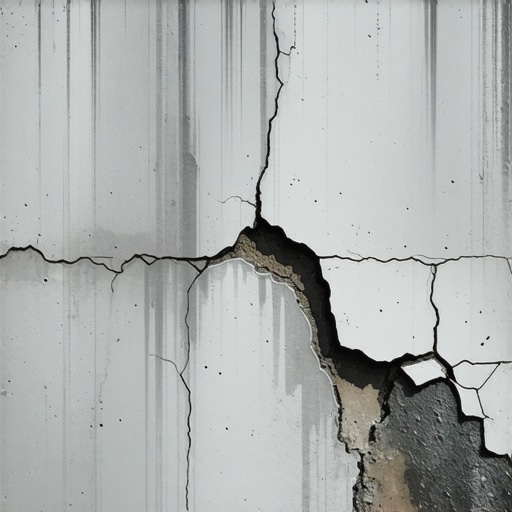
If you walk into a commercial structure and smell that heavy, metallic tang of oxidized steel mixed with the damp scent of lime, you aren’t just smelling an old building. You are smelling the slow, chemical decay of a structural system. Most property owners look at a crack in a Concrete Masonry Unit (CMU) wall and see a cosmetic eyesore that needs a bit of caulk. They are wrong. As a third-generation mason who has spent thirty years carrying a hawk and trowel, I can tell you that a crack is rarely just a crack; it is a signature of distress written in the language of physics and chemistry. [IMAGE_1]
I remember a forensic scene on a job site in the North. The building owner thought he had a simple hairline fracture in his warehouse. He’d been told by a local handyman to just ‘butter’ some new mud over the gap and forget it. But when I pushed my fiber-optic scope into a weep hole and looked at the core, the reality was grim. The structural brick ties replacement that should have happened a decade ago had been ignored. The internal steel reinforcement was rusted to nearly four times its original thickness. This volumetric expansion—a process called ‘oxide jacking’—was literally detonating the block from the inside out. This wasn’t a cosmetic issue; it was a slow-motion explosion.
“Water penetration is the single greatest threat to masonry durability, leading to efflorescence, freeze-thaw damage, and the corrosion of embedded metals.” – BIA Technical Note 7
The Physics of the Fracture
To understand why CMU cracks, you have to understand the ‘tooth’ of the material. A CMU is a thirsty animal. It has a high initial rate of suction. When we use modular masonry construction, we are relying on a chemical bond between the cementitious mortar and the aggregate of the block. If the mortar is mixed too hot—meaning it has too much Portland cement and not enough lime—it becomes brittle. In the freeze-thaw cycles of a harsh winter, water trapped in the microscopic pores of the block expands by roughly 9%. If the mortar is harder than the block, the block breaks. This is why mortar matching services are not about color; they are about compressive strength and modulus of elasticity.
When we see a stair-step crack following the head joints and bed joints, we are looking at settlement. The earth beneath the footer is shifting, often due to poor compaction or hydrostatic pressure. If that crack is horizontal, you have a much bigger problem. Horizontal cracking usually indicates that the wall is ‘bowing’ under the weight of the soil behind it. In these cases, we aren’t just looking at flush pointing services; we are looking at the potential for a total structural collapse. The ‘slicker’ tool won’t fix a wall that has lost its verticality.
The Spalling Epidemic and Brick Veneer Failures
We see a lot of spalled concrete steps repair in my line of work, and the cause is almost always the same: salt and the wrong finish. People love metallic masonry finishes for their aesthetic, but if they aren’t breathable, they trap moisture behind the surface. When that water freezes, it pops the ‘face’ of the concrete or brick off. It’s the same tragedy I see with modern brick veneer installation. These ‘lick-and-stick’ operations often forget the air space and the flashing. Without a way for the wall to breathe, the moisture sits against the wood framing, rotting the house from the inside while the brick looks perfectly fine—until it doesn’t.
“Standard Specification for Loadbearing Concrete Masonry Units requires a minimum net area compressive strength that must account for the moisture-dependent shrinkage and thermal movement of the assembly.” – ASTM C90
In the world of commercial parapet wall repair, thermal expansion is the primary antagonist. A roof-line parapet is exposed to the sun on both sides. It gets hot, it expands, and without proper relief joints, it shears the bricks right off the shelf angle. We often have to go in and perform a surgical structural brick ties replacement to bridge the gap between the backup wall and the facade, ensuring the wall can move without crumbling. We use different brickwork pointing styles, like a weather joint or a concave joint, to shed water away from the core, but if the internal ties are gone, the joint style is just a shroud on a corpse.
The Hardscape Reality
It isn’t just walls. I often get calls for brick paver driveway repair where the pavers look like a rolling sea. The homeowner thinks the bricks are bad. The bricks are fine; the base is a lie. If you don’t have 8 to 12 inches of compacted 21A gravel and a proper sand setting bed, those pavers will sink. It’s about compaction physics. You can’t build a cathedral on a swamp, and you can’t build a driveway on uncompacted topsoil. It’s the same logic we apply to modular masonry construction: the strength is in the preparation, not the decoration. When you see honeycombing in the concrete or a cold joint where the pour was interrupted, you are looking at a future failure point. There are no shortcuts in masonry. You either do it once, or you pay me to do it twice after the first guy disappears with your deposit.
The Forensic Fix
When we approach a repair, we don’t just slap on some ‘mud.’ We analyze the soil, the moisture content, and the original chemistry of the masonry. Are we looking at a need for helical piers to stop settlement? Or do we simply need to restore the breathability of the facade with lime-based flush pointing services? A real master mason knows that his work must be sacrificial. In historic restoration, the mortar must be softer than the brick. It is better for the mortar to crumble over fifty years than for the brick to shatter in five. This is the ‘Old World’ way that the modern ‘handyman specials’ fail to grasp. We don’t just fix cracks; we resolve the forces that created them.