
The Crack That Tells a Story: Decoding the Masonry Smile
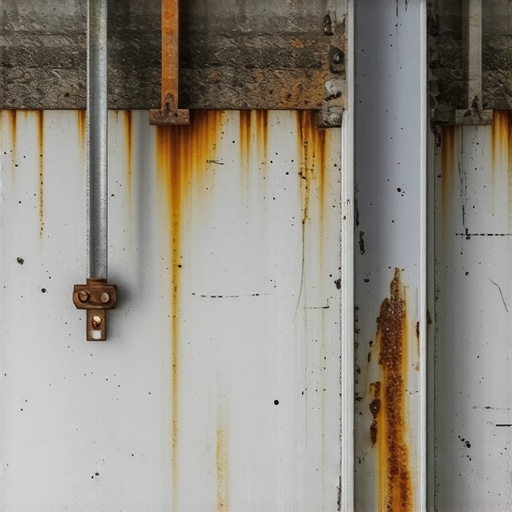
I was standing on a rusted scaffold in the middle of a November drizzle when a homeowner pointed to a tiny hairline fracture above her front window. She thought she needed a bit of caulk. I put my digital scope into the weep hole, and what I saw was a horror show: the structural steel lintel, once a sturdy L-shaped angle iron, had transformed into a bloated, flaking mess of iron oxide that was literally lifting the house. The steel had rusted to dust, and the only thing holding up five tons of brick was habit and hope. This is the reality of internal lintel failure. Most people ignore the signs until the brick veneer detachment repair costs more than the car in their driveway. You have to understand the physics of ‘oxide jacking.’ When carbon steel meets moisture, the resulting rust expands to nearly ten times the thickness of the original metal. That expansion doesn’t just sit there; it exerts thousands of pounds of pressure against the mortar and the brick. It is a slow-motion explosion occurring right above your head.
“Corrosion of metal lintels and the resulting expansion can cause significant displacement of the surrounding masonry, leading to cracking and potential structural instability.” – BIA Technical Note 31B
The Physics of the Stair-Step Crack
In my forty years of masonry repair services, I have learned that cracks are the building’s way of screaming. A horizontal crack directly above the window frame is the first stage of grief. It means the lintel has begun to swell. But when you see ‘stair-step’ cracks radiating from the upper corners of the window, the situation has moved from cosmetic to critical. These cracks follow the path of least resistance—the mortar joints. As the steel lintel expands, it pushes the bricks upward and outward. This isn’t just settlement; it is active displacement. If you are in a freeze-thaw climate like the Northeast, this process accelerates every winter. Water enters the crack, freezes, expands by 9%, and pushes the crack open a little wider. By spring, you have a gap large enough to fit a trowel into. At this point, foundation crack repair techniques won’t help you because the problem is localized to the structural openings.
Why Lintel Failure Happens: The Chemistry of Corrosion
Most modern builders treat lintels as an afterthought. They throw a piece of primed steel into the wall and call it a day. But masonry is porous. It breathes. When it rains, the brick absorbs water like a sponge. That moisture migrates to the back of the brick and hits the steel. If the flashing is clogged or the weep holes are painted shut by a ‘handyman special’ painter, that water sits on the steel. The oxygen in the water reacts with the iron. This chemical dance creates iron oxide. In the trade, we call the resulting layers of rust ‘scaling.’ As the scales build up, they ‘jack’ the soldier course—those vertical bricks above the lintel—out of alignment. We see this often in concrete masonry unit restoration projects where the backup wall is rigid but the veneer is moving. Without proper masonry waterproofing solutions, your lintel is essentially a ticking time bomb of rust.
The Forensic Inspection: What to Look For
Before you call for brick arch restoration or start looking at metallic brick colors application to hide the eyesore, perform a tactile inspection. First, look at the underside of the lintel. Is the paint bubbling? If you poke those bubbles with a screwdriver and a flake of rust the size of a silver dollar falls out, the lintel is ‘exfoliating.’ Second, check the suction of the surrounding mortar. If the mortar is crumbly and soft, the moisture level behind the wall is far too high. This is where tuckpointing machine services become necessary to ground out the old, failing mud and replaced it with a breathable Type N or Type O mortar.
“Steel components embedded in masonry must be protected from corrosion by either a thick coating of zinc or by being encased in a waterproof membrane.” – ASTM A153/A153M Standards
The Repair Reality: Beyond the Band-Aid
I’ve seen guys try to ‘butter’ over lintel cracks with a bit of metallic masonry finishes or thick caulk. It never works. Within one season, the ‘oxide jacking’ will snap that new mortar like a dry twig. The only real fix is a full lintel replacement. This involves shoring up the masonry above the opening, removing the offending courses of brick, and installing a hot-dipped galvanized steel lintel with a proper stainless steel flashing system. This is also the time to apply porous stone sealers to the surrounding masonry to prevent the ‘wicking’ effect that started the mess. If the bricks have already started to pull away from the wall, you are looking at a brick veneer detachment repair, which requires specialized wall ties to re-secure the facade to the framing. This isn’t a weekend DIY project; it’s structural surgery.
When to Panic (And When to Plan)
If the cracks are wider than 1/4 inch, or if you can see the window frame bowing downward under the weight of the sagging masonry, it is time to panic. That lintel is no longer supporting the load; the window glass is. At any moment, the lintel could fully fail, dropping the soldier course and the bricks above it through your window. If the cracks are hairline, you have time to plan. Start by ensuring your weep holes are clear. Use a slicker to check the depth of the mortar. If you catch it early, you can sometimes mitigate the damage with high-performance masonry waterproofing solutions and localized repointing. But remember: rust never sleeps. Once the oxidation process has started inside that dark, damp cavity, it will continue until the steel is gone. Do not let a $2,000 lintel replacement turn into a $50,000 facade collapse. Trust the trowel, respect the chemistry, and never trust a ‘handyman’ with your structural steel.