The Ghost in the Wall: A Forensic Look at High-Rise Decay
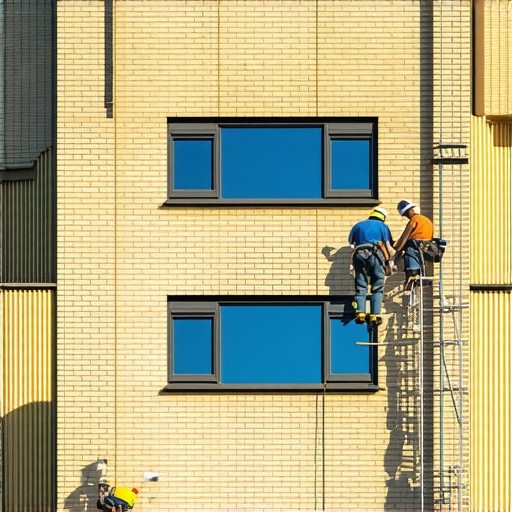
I’ve spent forty years dangling off the side of skyscrapers, looking at the kind of rot that would make a developer’s stomach turn. Last June, on a 32-story pre-war tower, a property manager called me about a “hairline crack” near a limestone lintel. When I got my bore-scope inside that cavity, the galvanized structural brick ties weren’t just rusted; they were gone. Red dust was all that held the outer wythe of brick to the building’s skeleton. One good wind gust, one significant thermal snap, and ten thousand bricks would have rained down like hail onto the sidewalk below. This is the reality of urban masonry: it is a battle against gravity, wind loads, and the silent intrusion of moisture.
“Water penetration is the single greatest threat to masonry durability. Proper drainage and moisture control are essential to the longevity of brick masonry structures.” – BIA Technical Note 7
The Micro-Physics of High-Rise Masonry
A high-rise isn’t just a big house; it is a vertical pressure cooker. On the lower floors, foundation wall bowing repair becomes a concern as the sheer weight of the structure interacts with hydrostatic pressure in the soil. But as you go up, the physics change. You deal with the ‘stack effect’—air pressure differentials that suck moisture deep into the masonry core. When we perform a structural masonry inspection, we aren’t just looking for cracks; we are looking for the ‘tooth’ of the mortar. If the mortar repointing services used a high-Portland mix on soft, historic brick, the brick becomes the sacrificial lamb. The mortar stays hard, but the brick face shatters under the pressure of thermal expansion. In the North, the freeze-thaw cycle is a brutal hammer. Water enters the pores of the brick, expands by 9% as it turns to ice, and physically rips the molecular structure of the clay apart.
[image_placeholder_1]
Phase 1: The Digital and Diagnostic Baseline (Annual)
Every high-rise needs a baseline. We now use digital twin masonry projects to create a 3D thermal and structural map of the facade. This allows us to track movement over millimeters. If a soldier course over a window starts to sag, the digital twin catches it before the eye can. Annual checks must focus on the ‘coping’ stones at the top—the hat of the building. If the hat leaks, the whole suit gets wet. We also look at chimney heat shield installation for central boiler flues. High-rise chimneys endure extreme thermal shock, and without a proper shield, the internal masonry undergoes ‘honeycombing,’ where the binder in the mortar literally bakes out into a powder.
Phase 2: The Soft-Joint and Sealant Cycle (Every 5–7 Years)
At this stage, you focus on the movement joints. A 200-foot vertical span of clay masonry can expand significantly between a February freeze and an August heatwave. If your brickwork pointing styles are too rigid, the building will create its own ‘joints’—otherwise known as structural cracks. This is the time for tuckpointing curved walls around decorative turrets or rounded corners, where the stress is concentrated. We use a ‘slicker’ to pack the mud deep. If you’re just ‘buttering’ the surface, you’re wasting the client’s money; that mortar will pop out in two seasons. We look for ‘cold joints’ where different pours of concrete or different batches of mortar meet, as these are the first points of failure for water ingress.
“The selection of mortar should be based on the strength and suction of the masonry units. A mortar that is too strong can cause the masonry units to fail when movement occurs.” – ASTM C270 Standards
Phase 3: The Structural Restoration (Every 15–20 Years)
This is where the real work happens. We’re talking about structural brick ties replacement. In older buildings, these ties were often mild steel, prone to oxidation. Once they rust, they expand to four times their original thickness, causing ‘jacking’ that lifts the bricks above them. In some cases, we utilize robotic masonry repair for precision drilling in high-risk zones where human access is limited. This phase often includes chimney rebuild services. A high-rise chimney isn’t just a stack of bricks; it’s a high-velocity exhaust system. If the internal masonry has degraded, it’s a massive fire and structural hazard. We also evaluate the need for mortar repointing services across the entire windward facade, which takes the brunt of the weather’s ‘bite.’
The Technical Execution: Mixing the ‘Mud’
When we’re on the ‘hawk,’ mixing a batch for a high-rise, the chemistry has to be perfect. For historic high-rises, we avoid modern Portland cement. We want a lime-heavy mix that allows for vapor permeability—it has to ‘breathe.’ If you trap moisture behind a hard cement shell, you’re creating a pressure bomb. The ‘suction’ of the brick—the initial rate of absorption—dictates how we temper the mud. If the brick is thirsty, it will suck the water out of the mortar before the hydration process finishes, leaving you with a ‘burnt’ joint that has no structural integrity. Doing it right means wetting the wall, using the right ‘slicker’ for the joint style, and ensuring the carbonation process happens slowly, over weeks, not hours. Do it once, do it right, or you’ll be paying me twice to fix the ‘handyman special’ that’s currently falling onto your sidewalk.