
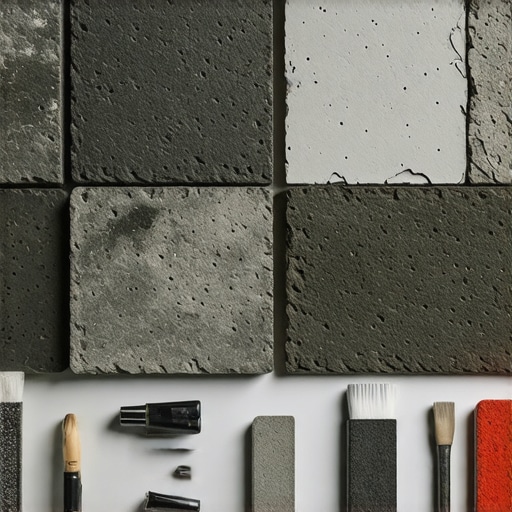
The smell of an industrial zone is the smell of masonry suicide. Between the sulfurous exhaust of the heavy-duty HVAC systems and the constant vibration of the machinery inside, a commercial brick envelope is under a level of stress that would make a suburban bungalow crumble in a decade. I’ve spent forty years on scaffolds, and if there is one thing I’ve learned, it’s that industrial masonry doesn’t just ‘age’—it’s actively being dismantled by the environment. The facility manager at a heavy manufacturing plant once pointed to a hairline crack on a 40-foot parapet. He thought a bit of caulk would fix it. I brought out the borescope. The structural steel inside was so oxidized it looked like puff pastry; the industrial sulfur had turned his mortar into mush. The homeowner thought it was just a hairline crack. But when I put my scope inside, I saw the structural steel was rusted to dust. This is the reality of forensic masonry in the industrial corridor. You aren’t just looking for leaks; you’re looking for a chemical warzone.
The Chemistry of Decay: Why Industrial Zones Are Different
In a standard residential setting, we worry about rain. In an industrial zone, we worry about acid rain and carbonation. Carbonation isn’t just for soda; it’s a process where carbon dioxide from the atmosphere penetrates the concrete and masonry, lowering the pH of the material. When the pH drops from its natural alkaline state (around 12 or 13) to below 9, the protective layer around the reinforcing steel vanishes. That’s when the ‘jacking’ starts—the steel expands as it rusts, blowing the face off your brickwork. This is why commercial parapet wall repair is so frequent in cities; these walls are exposed on both sides, doubling the carbonation rate. Before we even talk about porous stone sealers, we have to talk about the ‘tooth’ of the masonry. If the surface is choked with soot and oily particulates, your sealant won’t bond; it’ll just sit there like a bad coat of paint, waiting to peel. We use a micro-zoomed approach, looking at the pore structure of the brick. A hard-fired ‘clinker’ brick has almost no suction, while a soft-mud brick will drink up anything you put on it. You have to match the sealant’s molecular weight to the brick’s pore size. It’s not just ‘waterproofing’; it’s molecular engineering.
“Water penetration is the single greatest threat to masonry durability.” – BIA Technical Note 7
The Sealant Spectrum: Silanes vs. Siloxanes
When I see a contractor ‘buttering’ a joint with cheap acrylic sealer, I want to throw my hawk at him. Industrial masonry requires breathability. If you seal a wall so tight that water vapor can’t escape, you’ve just built a slow-motion bomb. The liquid water gets in through a cracked brick wall repair that was missed, but it can’t get out as vapor. Then the freeze-thaw cycle hits, and the face of the brick pops off in a process we call spalling. For industrial zones, I swear by penetrating silanes. Silane molecules are tiny—roughly 0.5 to 1.5 nanometers. This allows them to penetrate deep into the capillaries of the masonry, sometimes up to 3/8 of an inch. They react chemically with the silica in the substrate to create a hydrophobic barrier. Siloxanes are larger molecules and better for porous stone sealers or rougher surfaces like CMU (Concrete Masonry Unit). They don’t penetrate as deep, but they provide excellent surface protection against the aggressive salts found in industrial runoff.
“The use of impermeable coatings on historic masonry is the most common cause of accelerated decay.” – National Park Service Preservation Brief 2
This is the ‘Sacrificial Principle’—the mortar must always be the weakest link, and the sealer must never be a vapor barrier.
The Pre-Sealant Ritual: Repointing and Repair
You can’t seal a ruin. I’ve seen guys try to spray sealer over honeycombing concrete or joints that are falling out. It’s a waste of good mud. First, you need a historic mortar analysis if the building is pre-1940. You can’t put modern Type S mortar in an old industrial warehouse; the Portland content is too high, and it’ll crush the soft bricks when the wall expands. We look for ‘cold joints’—places where the masonry was interrupted during original construction—and we grind them out. Mortar repointing services are the foundation of a good seal. We use a slicker to pack the mud deep into the joint, ensuring there are no voids. Whether you need flush pointing services for a specific industrial look or a standard concave joint, the compaction is what matters. If you don’t ‘strike’ the joint properly, you leave a shelf for water to sit on. And don’t forget the chimney sweep and repair; industrial stacks are the primary entry point for moisture in many old plants. If the crown of the chimney is cracked, the sealer on the walls won’t save you from the water running down the inside of the flue and rotting the building from the heart out.
Structural Stability and Foundation Waterproofing
In many industrial zones, the soil is as contaminated and unstable as the air. Heavy machinery causes vibration that leads to settling, which manifests as stair-step cracks. This is where foundation waterproofing becomes more than just a coating; it’s a structural necessity. If you have hydrostatic pressure pushing against a basement wall, no surface sealer will stop it. You need a drainage plane. I’ve seen stone veneer repair jobs where the ‘lick-and-stick’ stones were falling off in sheets because the installer didn’t understand the physics of the air gap. In industrial applications, we often use a soldier course at the base to provide extra rigidity, but if the foundation is moving, the brick will crack. We use historic brick salvage for repairs to ensure the thermal expansion coefficient matches the existing wall. If you mix a modern, dense brick with an old, porous one, the wall will tear itself apart during the summer months when the sun hits that industrial facade.
The Final Word on Industrial Protection
The goal isn’t to make the building look new; it’s to make it survive. Using porous stone sealers correctly means understanding the ‘suction’ of the material. I tell my crews: if you don’t see the sealer disappearing into the brick, you’re doing it wrong. We are looking for that chemical bond. Don’t fall for the ‘one-size-fits-all’ products at the big box stores. Industrial masonry demands a forensic approach. You analyze the crack, you analyze the mortar, you analyze the environment, and then—and only then—do you pick up the sprayer. Do it once, or do it twice and watch your profits crumble into the dust of a spalled soldier course. Industrial masonry is a testament to our history; let’s not let it dissolve because we were too lazy to check the chemistry of the mud.