The Forensic Scene: When Modern Materials Meet Ancient Physics
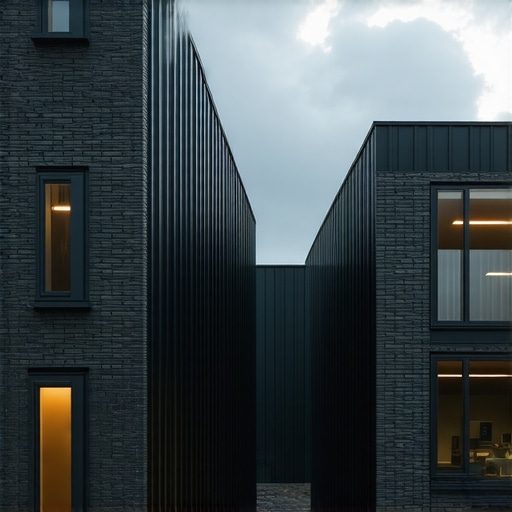
The developer called me out to a five-year-old commercial complex in the dead of winter. From the street, the building looked like a triumph of modern engineering—sleek, modular masonry lines and sharp architectural angles. But when I put my scope inside the wall cavity through a weep hole, I saw the structural steel was already rusted to dust. The ‘modular’ promise of speed and efficiency had ignored the basic physics of water management. The homeowner and the board thought it was just a hairline crack in a soldier course. In reality, it was a systemic failure of the building envelope. This isn’t just a repair job; it’s an autopsy of a failed philosophy.
The Anatomy of Modular Masonry Under Stress
Modular masonry, often composed of pre-cast concrete units or standardized brick dimensions, is marketed as the ultimate solution for rapid construction. However, extreme weather doesn’t care about your construction schedule. Whether it’s the relentless freeze-thaw cycles of the North or the brutal thermal expansion of the desert South, these units are under constant attack. To understand if they can survive, we have to look at the ‘tooth’ of the material. A traditional kiln-fired brick has a capillary structure that breathes. A modern concrete masonry unit (CMU) behaves differently. When we discuss commercial parapet wall repair, we aren’t just talking about fixing cracks; we are talking about managing the differential movement between the roof deck and the masonry skin.
“Water penetration is the single greatest threat to masonry durability, particularly in assemblies where thermal bridging has not been addressed.” – BIA Technical Note 7
When water enters a modular unit that hasn’t been properly kiln-dried or cured, it sits in the micro-pores. During a freeze event, that water expands by approximately 9%. If the concrete pump masonry mixes used to grout the cells are too dense or lack air-entrainment, there is no place for that pressure to go. The result? Spalling. I’ve seen the faces of stone veneer over brick pop off like bottle caps because the installer didn’t understand the suction rates of the substrate versus the veneer.
The Physics of Thermal Expansion and ‘Flash Setting’
In hotter climates, the enemy isn’t ice; it’s the sun. A long stretch of modular wall can expand significantly over a twelve-hour period. Without properly spaced control joints, the wall will find its own relief, usually in the form of jagged vertical cracks that ignore the mortar lines. This is where masonry damage assessment becomes a forensic exercise. We look for ‘honeycombing’ in the grout—voids left behind when the ‘mud’ was poured too dry or when the units ‘sucked’ the moisture out of the mix before it could properly hydrate. This is known as ‘burning’ the mortar. If you don’t ‘butter’ your units correctly in 100-degree heat, you’re essentially laying stones on dry sand.
Sustainable Masonry Materials: The Breathability Myth
Everyone wants sustainable masonry materials these days, but sustainability without durability is a scam. I’ve seen ‘eco-bricks’ made of recycled fly ash that crumble when exposed to acid rain. True sustainability in masonry is found in longevity. This brings us to stone balustrade restoration and the preservation of historic facades. In the old days, we used lime-based mortars. Why? Because the mortar was the sacrificial lamb. It was softer than the stone. If the building moved or water got in, the mortar cracked, not the expensive hand-carved stone. Modern ‘handyman specials’ often use high-strength Portland cement for tuckpointing on old buildings. This is a death sentence. The hard cement traps moisture in the soft brick, and the brick shatters during the next freeze. You must use Type N or Type O mortar for restoration—something with enough ‘give’ to handle the weather.
The High-Tech Frontier: Robotic Repair and Self-Healing Concrete
We are entering an era of robotic masonry repair, where drones can map the thermal signature of a facade to find hidden moisture pockets. But even the best robot can’t overcome bad chemistry. We are now seeing the rise of self-healing concrete foundations, which utilize calcite-precipitating bacteria or crystalline admixtures. When a crack forms and water enters, the bacteria ‘wake up’ and produce limestone to seal the gap. It sounds like science fiction, but when you’re dealing with commercial parapet wall repair in high-rise environments, this technology is the only thing standing between a minor leak and a catastrophic structural failure.
“The selection of mortar should be based on the physical properties of the masonry units to be joined. A mortar that is too strong can cause the units themselves to fail under stress.” – ASTM C270 Standard Specification
Critical Maintenance: Chimney Caps and Parapets
The most vulnerable point of any masonry structure is the ‘sky-facing’ surface. Chimney cap replacement is the most common call I get, and it’s usually because the original installer used a ‘slicker’ to smooth out a bit of leftover mortar instead of installing a proper concrete or stainless steel wash. Without a proper drip edge, water runs down the face of the brick, leading to efflorescence—that white, salty staining—and eventual structural rot. The same applies to stone balustrade restoration; if the capstones aren’t shed-aligned, the entire assembly will fail from the top down. We use a ‘hawk’ and a trowel to build these slopes, ensuring that gravity works for us, not against us.
The Verdict: Can It Handle the Weather?
Modular masonry can handle extreme weather, but only if the mason understands the ‘cold joint’ and the ‘bond break.’ It requires a meticulous approach to moisture management, including high-quality flashing and clear weep holes. You can’t just ‘lick-and-stick’ a stone veneer over brick and expect it to last fifty years in a Chicago winter. You need a mechanical bond, a drainage plane, and a deep respect for the sheer power of expanding water. Do it once, or do it twice—the weather will decide based on how much you respected the physics of the ‘mud.'”