
The Crack That Whispers: A Forensic Investigation
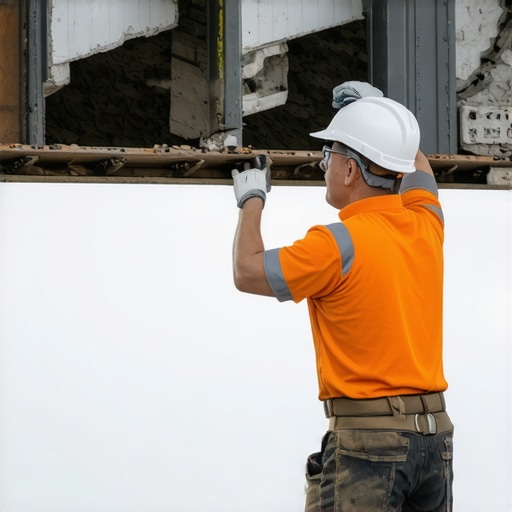
I pushed my fiber-optic scope into a weeping, jagged crack above a 1920s brownstone window, and what I saw was the masonry equivalent of a stage-four cancer. The homeowner had been told by a ‘handyman’ that a quick bead of weld on the exposed steel angle iron and a smear of concrete patch would stabilize the facade. They were wrong. When I peered through the lens, I saw the structural steel was not just rusted; it was exfoliating. The iron had transformed into a brittle, laminated mess of oxide that had expanded to three times its original thickness. This is the reality of a structural masonry inspection: the damage you see is always the tip of the iceberg. Looking at that soldier course—those bricks standing vertically like loyal guards—I could see they were being pushed outward by a force called oxide jacking. The steel was ‘growing,’ and no amount of surface welding was going to stop the physics of decay. This wasn’t just a cosmetic flaw; it was a foundation of failure waiting to drop a thousand pounds of historic brick salvage onto the sidewalk.
The Physics of the Lintel: Why Your Walls Breathe and Move
To understand why you never weld a lintel in place, you have to understand the ‘tooth’ of the masonry. A lintel is a bridge. It carries the dead load of the masonry above an opening and transfers it to the jambs. In the old days, we used stone or heavy cast iron; today, it is mostly L-shaped steel. But here is the catch: steel and brick are fundamentally different organisms. Steel has a high coefficient of thermal expansion, meaning it grows and shrinks significantly with the sun’s path. Brick is more stable but porous. When you weld a new piece of steel to an old, rusted lintel that is still embedded in the wall, you are creating a localized heat-affected zone. That intense heat—reaching thousands of degrees—causes the metal to warp instantly. Since the steel is trapped by the mud and the surrounding masonry, it has nowhere to go but up or out, shattering the bond between the brick and the mortar.
“Steel lintels should be designed with a minimum thickness of 1/4 inch and must be protected from corrosion through proper flashing and weep holes.” — BIA Technical Note 31B
The Scam of the Surface Weld
I see it every month: a contractor tries to save time by ‘scabbing’ a piece of flat bar over a sagging lintel. They butter the edges with some cheap concrete patch and call it a day. This is a ‘handyman special’ that ignores the chemistry of the rust. Rust is an electrochemical process. If you weld over a rusted surface, you aren’t just creating a weak joint; you are sealing in the moisture that started the problem. The heat from the welder can also cause ‘flash setting’ in any damp mud nearby, leading to honeycombing—a structural void that leaves the brick unsupported. True emergency masonry repair requires the removal of the failing member, not a metallic facelift. When you use metallic masonry finishes to hide a structural flaw, you are essentially painting over rot. The masonry damage assessment must prioritize the structural integrity of the ‘bridge’ over the aesthetics of the joint.
Hydrostatic Pressure and the Freeze-Thaw War
In our climate, the real enemy is the 9% expansion of water as it turns to ice. If your lintel is rusted, it usually means the flashing has failed. Water gets trapped behind the brick, sits on the steel, and freezes. This pressure, combined with the oxide jacking of the rusting steel, creates those classic stair-step cracks. If you’ve welded a ‘patch’ in place, you’ve likely blocked the natural drainage path. Now, the water can’t escape through the masonry joint sand repair or weep holes. It stays in the cavity, saturating the historic brick salvage. When the deep freeze hits, the faces of your bricks will pop off in a process called spalling. This is why spalled concrete steps repair and lintel repair are so similar; you have to manage the water or you lose the battle. I’ve seen fiber-reinforced mortars used to try and ‘hold’ these cracks together, but even the highest tensile strength ‘mud’ can’t fight the expansion of ice. You need a slicker to properly tool those joints, ensuring water sheds away from the structural steel rather than into it.
The Cure: Proper Replacement and Material Science
The only real fix for a failing lintel is a full ‘surgical’ replacement. You have to shore up the soldier course, grind out the mud with a diamond blade, and pull that rusted iron out. We then replace it with hot-dipped galvanized steel, properly flashed with a stainless steel or rubberized membrane. This creates a ‘slip plane’ so the steel can move without tearing the building apart. When we lay the brick back in, we use fiber-reinforced mortars for their superior bond and flexibility, ensuring we don’t get a cold joint where the old work meets the new.
“Water penetration is the single greatest threat to masonry durability. Proper detailing of flashings and weeps is mandatory for the longevity of steel lintels.” — ASTM C270 Standards
This is the difference between a hawk-and-trowel professional and a guy with a welder and a dream. You must respect the suction of the brick; if the brick is too dry, it will suck the moisture out of your mud too fast, leading to a weak bond. If it’s too wet, the brick will float and the wall will ‘swim.’
When to Panic: Identifying Critical Failure
Not every crack means the building is falling down, but lintel failure is a ‘red zone’ issue. If you see a horizontal crack that is wider than 1/8th of an inch, or if the brick directly above the window is sagging below the level of the rest of the course, the lintel has lost its structural capacity. This is when a structural masonry inspection becomes non-negotiable. Don’t be fooled by metallic masonry finishes or a quick concrete patch. If your contractor pulls out a welder instead of a hawk and a bucket of mud, fire them. Masonry is a game of gravity and chemistry. You don’t weld a bridge while it’s collapsing; you rebuild it. If you ignore the signs, that hairline crack will eventually become a foundation-shaking event that no amount of masonry joint sand repair can fix. Do it once, do it right, and keep the steel dry. That is the only way to ensure your home stands for another hundred years.