
The Forensic Reality of the ‘Weeping’ Wall
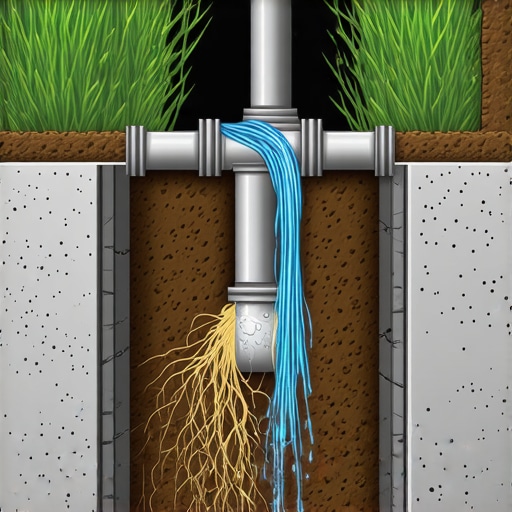
I was called out to a job site last October where a fifteen-foot-high modular retaining wall was doing a slow-motion imitation of a breaking wave. The homeowner, a man who had clearly spent a fortune on ‘curb appeal,’ pointed at the slight belly in the center of the wall. He thought it was a minor settling issue. I pulled out my borescope and threaded it through one of the four-inch PVC weep holes at the base. What I saw wasn’t just dirt; it was a microscopic graveyard of poor engineering. The perforated pipe, which should have been the wall’s lungs, was completely choked with a black, anaerobic slurry of silt and decomposed organic matter. The ‘contractor’ had skipped the filter fabric, thinking the gravel alone would act as a sieve. He was dead wrong. I stood there looking at a wall that was effectively a ticking time bomb, holding back thousands of tons of saturated earth because the drainage system had failed on a molecular level.
The Physics of Failure: Why Water Always Wins
To understand why your modular retaining walls are failing, you have to understand hydrostatic pressure. Water is heavy—it weighs approximately 62.4 pounds per cubic foot. When your backfill becomes saturated because the drainage pipes are clogged, that weight is no longer just soil; it’s a liquid mass. This creates lateral earth pressure that exceeds the design capacity of the blocks.
“Water penetration is the single greatest threat to masonry durability, accounting for nearly 90% of all premature failures in structural systems.” – BIA Technical Note 7
In the North, where we deal with the brutal freeze-thaw cycle, this problem is amplified ten-fold. When that trapped water freezes, it expands by 9% in volume. This isn’t a gentle push; it’s a hydraulic jack. This expansion is what leads to foundation wall bowing repair needs when the wall is tied to a residence, or total collapse when it’s a standalone structure.
The Micro-Zoom: Silt Migration and the ‘Burrito’ Failure
The reason your pipes are clogged usually comes down to the ‘void ratio’ of your drainage stone. Many guys will dump a load of #57 stone behind the wall and call it a day. But without a non-woven geotextile filter fabric—what we call a ‘burrito wrap’—the ‘fines’ (tiny particles of clay and silt) migrate from the native soil into the stone. Over time, these fines fill the gaps between the rocks, turning your drainage layer into a solid, impermeable mass. This process, known as siltation, is the silent killer of failing retaining wall repair projects. Once the stone is ‘blinded’ by silt, the water has nowhere to go but out the face of the wall. This is why you see efflorescence—that white, chalky powder—blooming on the blocks. It’s the wall’s way of sweating out the mineral salts because it’s drowning from the inside out.
[IMAGE_PLACEHOLDER]
Modern Engineering vs. Old World Logic
In high-end BIM masonry projects, we model the flow of water before a single block is laid. We look at the ‘Atterberg Limits’ of the soil to determine its plasticity. If you’re building on heavy clay, your drainage needs to be twice as robust. I’ve seen modular retaining walls built with ‘lick-and-stick’ stone veneer on the face that just pops right off because the moisture behind the wall can’t escape. If you’re dealing with a historic stone wall, the logic shifts slightly. Historic mortar analysis tells us that old-timers didn’t use pipes; they used gaps. But when a modern ‘handyman’ comes along and performs tuck pointing services using hard Portland cement instead of a soft lime putty, he seals those gaps. The wall can’t breathe, the pressure builds, and the ‘tooth’ of the stone is lost as the face spalls off.
The Anatomy of a Proper Drainage System
A real drainage system starts with the pipe placement. I’ve seen ‘professionals’ lay perforated pipe with the holes facing up. That’s a rookie mistake. The holes should face down into a leveled bed of clean aggregate. This allows the water table to rise into the pipe from below, which is then whisked away by gravity. If the pipe is clogged, we often have to resort to foundation underpinning or invasive excavation to clear the line. We also look at the ‘Angle of Repose.’ If the soil behind the wall is too steep, no amount of drainage will save a poorly reinforced wall. We need to look at the geogrid—those layers of plastic mesh that tie the wall back into the earth. If the soil is saturated, the friction that holds that geogrid in place vanishes, and the wall ‘walks’ forward.
Forensic Masonry Damage Assessment
When I perform a masonry damage assessment, I’m looking for the ‘cold joint’ where the new work meets the old. I’m looking for honeycombing in the concrete footings, which suggests the mud was too dry when it was poured. For chimney structural repair, the drainage issue is vertical, but the physics are the same. If the crown is cracked, water gets into the flue and freezes, blowing the soldier course of bricks apart. We use porous stone sealers on the exterior to shed water, but these only work if the interior drainage—the ‘weep’—is clear. If you seal a wall that has a clogged pipe, you are just trapping the enemy inside the gates.
“The stability of a retaining structure is inversely proportional to the pore water pressure within the retained soil mass.” – ASTM D6910/D6910M
The Fix: From Band-Aids to Surgery
If you’re lucky, we can clear a clog with high-pressure jetting. But usually, by the time a homeowner calls me, the wall is already ‘pregnant’—bowing out in the middle. At that point, the fix isn’t just cleaning a pipe; it’s a structural intervention. This might involve installing helical piers for foundation underpinning or completely dismantling the wall to replace the drainage core. Don’t let a contractor tell you he can just ‘butter’ the cracks and call it a day. That’s like putting a band-aid on a compound fracture. You need to address the hydrology. You need to ensure the tuck pointing services use a mortar that is softer than the surrounding stone, and you must ensure the porous stone sealers aren’t creating a vapor barrier that will cause the face of your stone to explode during the first hard freeze. In this business, you either do it once, or you do it twice—and the second time always costs three times as much.