
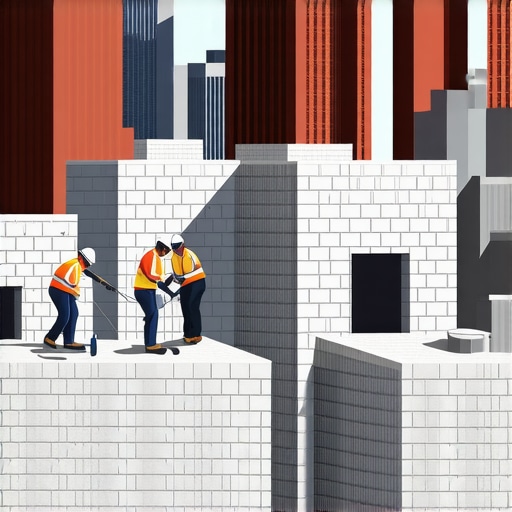
The facility manager called me out to a mid-rise in the city because he noticed what he called a ‘slight blemish’ on the fifth-floor header. When I climbed the scaffolding and pressed my thumb against the brick, the face of the unit simply fell away, crumbling like a dry biscuit. I didn’t even need my hammer. Behind that brick, the steel shelf angle—the very bone of the building—was so swollen with iron oxide that it had expanded to twice its original thickness. This is what we call ‘rust jacking.’ The homeowner or manager might see a hairline crack, but when I put my digital scope into the cavity, I saw structural steel that had been reduced to orange dust. This is why cities are tightening the screws; a five-pound brick falling from sixty feet isn’t an ‘accident’—it’s a preventable tragedy. Understanding why commercial masonry maintenance is now a legal mandate in high-density areas requires looking past the surface and into the very chemistry of the wall.
The Physics of the Freeze-Thaw War
In regions where the thermometer swings across the freezing point fifty times a year, masonry isn’t a static object; it’s a living, breathing, and often suffering organism. The core enemy is the simple physics of water. When water enters a pore in a brick or a crack in concrete flatwork services, it waits. As the temperature drops, that water transitions to ice, expanding by approximately 9% in volume. This exerts an internal pressure that can exceed 100,000 psi—far greater than the tensile strength of any brick ever fired.
“Water penetration is the single greatest threat to masonry durability. Moisture reaching the steel reinforcement or shelf angles leads to corrosion and subsequent expansion, which can displace entire masonry sections.” – BIA Technical Note 7
When you see spalling—that’s when the face of the brick pops off—you’re looking at the aftermath of a microscopic explosion. In mandatory inspection zones, the city is looking for this specific failure because it indicates that the building’s ‘envelope’ has been breached. If the water is getting in, it’s not just the brick that’s failing; it’s the internal structural integrity. This is where structural repointing becomes a forensic necessity rather than an aesthetic choice. We don’t just ‘slap some mud’ in the hole. We have to grind out the failed mortar to a specific depth, usually 3/4 of an inch, to ensure the new ‘mud’ has enough ‘tooth’ to bond.
The Lick-and-Stick Disaster: Stone Veneer and Modern Failures
I have a particular disdain for the modern obsession with thin stone veneer. It’s often applied by guys who should be laying carpet, not masonry. They use advanced masonry adhesives or cheap Type S mortar to glue these stones to a substrate without a drainage plane. In the trade, we call it ‘lick-and-stick.’ When moisture gets behind that veneer—and it always does—it sits against the OSB or plywood. Without stone veneer repair performed by someone who understands weeps and flashing, the entire wall system rots from the inside out. This is why commercial codes are now demanding fire-rated masonry installation and strictly regulated brick veneer installation protocols. A wall must be able to shed water. If your mason doesn’t know what a ‘weep hole’ is or thinks flush pointing services are just for looks, you’re looking at a future lawsuit. The ‘slicker’ or jointer tool isn’t just for making pretty lines; it compacts the mortar, creating a ‘skin’ that resists water penetration. If you leave the mortar ‘sandy’ or open, you’re just inviting the rain to stay for dinner.
Retaining Wall Batter Correction: Gravity Always Wins
Another major point of failure in commercial inspections is the retaining wall. I’ve seen walls that were ten degrees off-plumb, held up by nothing but prayer and a bit of overgrown ivy. Retaining wall batter correction is the process of fixing a wall that is ‘leaning’ into the world. The physics here is hydrostatic pressure. When soil gets wet, it becomes incredibly heavy and exerts lateral force. If the wall wasn’t built with a ‘batter’—meaning it leans back into the hill—or if the drainage is clogged, the wall will eventually ‘blow out.’ Forensic inspectors look for ‘honeycombing’ in the concrete or ‘cold joints’ where the pour was interrupted, creating a weak point. If we’re called in for a masonry rescue after disaster, we’re often looking at a wall that failed because the original contractor didn’t understand soil mechanics. We have to excavate, install proper drainage, and sometimes use helical piers to pin the structure to something more stable than shifting dirt.
The Chemistry of the Mud: Why Mortar Choice Matters
One of the most common sins I see in the field is the use of Portland cement on historic buildings. If you have a building from 1920, the bricks were fired at lower temperatures; they are soft and porous. If you use a hard, modern Type M mortar to perform structural repointing, you have effectively killed that wall.
“Mortar should always be weaker than the masonry units it binds. This ensures that any stress or movement is absorbed by the mortar joints, which are sacrificial and easily repaired, rather than the bricks themselves.” – ASTM C270 Standards
When the building shifts—and all buildings shift—the hard cement won’t budge, so the soft brick cracks instead. I’ve seen 100-year-old ‘soldier courses’ (bricks standing on end) sheared in half because some ‘handyman’ thought stronger was better. In a proper commercial masonry maintenance program, we analyze the existing mortar’s lime content. We use ‘Type O’ or even pure lime putty for restoration. This ‘soft mud’ allows the building to breathe and move. It’s the difference between a suit that fits and a suit of armor that crushes the wearer.
Why the City Inspector is Actually Your Best Friend
Mandatory inspections for fire-rated masonry and structural stability aren’t just bureaucratic red tape; they are the only thing keeping some of these aging structures from becoming piles of rubble. When we perform a masonry rescue after disaster, the cost is often ten times what a simple maintenance program would have been. Whether it’s ensuring concrete flatwork services are properly reinforced with rebar or checking that flush pointing services haven’t masked a deeper structural void, the goal is longevity. You do it once, or you do it twice. And doing it twice in the world of masonry usually involves a crane and a very large bill. My grandfather used to say that a mason’s mistakes are buried in the ground or hidden behind the drywall, but eventually, the building always tells the truth. Listen to the cracks; they are trying to tell you something before the city has to do it for them.