
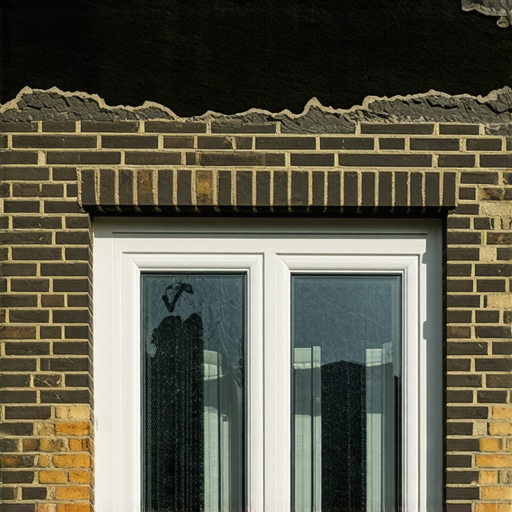
The homeowner thought it was just a hairline crack. A cosmetic nuisance, perhaps. But when I slid my fiber-optic scope through a 1/4-inch weep hole, the reality of the situation became clear: the structural steel was rusted to dust. The lintel—that horizontal workhorse hidden behind the brick—had lost 40% of its mass to oxidation. What remained was a swollen, flaky mess of ferric oxide that was actively pushing the brickwork apart. This is the reality of structural masonry. It doesn’t scream when it’s failing; it whispers in the form of binding windows and subtle diagonal fissures.
The Physics of the Silent Heavy Lifter
In the world of structural masonry inspection, the lintel is the unsung hero. Whether it’s a steel angle iron, a reinforced concrete beam, or a historic timber, the lintel’s job is to bridge the gap of a window or door opening and transfer the weight of the masonry above (the dead load) to the vertical jambs. When a lintel fails, the masonry loses its support system, leading to a structural collapse that can cost ten times more than a simple mortar repointing services call. In northern climates, where the freeze-thaw cycle is relentless, the enemy is moisture. Water penetrates the masonry through microscopic pores in the brick or failing mortar joints. If the flashing is compromised, that water sits on the steel lintel. As it freezes, it expands by 9%, but the real damage comes from ‘rust jacking.’ When steel oxidizes, it can expand up to ten times its original thickness. This internal pressure is immense, capable of lifting entire sections of a soldier course or cracking a stone veneer repair job right down the middle.
“Water penetration is the single greatest threat to masonry durability, particularly at structural transitions like lintels and shelf angles.” – BIA Technical Note 7
Identifying the Early Warning Signs
How do you know if your building is suffering from more than just settling? The first sign is often felt before it is seen. If a window that used to glide open suddenly binds or sticks in the frame, the lintel is likely sagging (deflecting). This deflection puts downward pressure on the window frame, squeezing it like a vice. Next, look for the ‘Stair-Step.’ In commercial masonry maintenance, we look for cracks that follow the mortar joints in a diagonal pattern starting from the upper corners of the window. These aren’t your typical foundation crack repair issues; these are specific to the opening. If you see bricks ‘heaving’ or pulling away from the facade, you are witnessing the final stages of rust jacking. The mud (mortar) will often crumble and fall out, exposing the raw, orange rust of the failing steel. Unlike a failing retaining wall repair where soil pressure is the culprit, lintel failure is a battle against gravity and corrosion.
The Chemistry of Repair: Mortar and Metal
When we talk about brickwork pointing styles, it’s not just about aesthetics. It’s about breathability. In historic restorations, using a hard Portland-based cement is a death sentence for old, soft bricks. The mortar must be the sacrificial lamb. If the mortar is harder than the brick, the brick will be the one to crack when the building moves. For lintel repairs, we often use Type N or Type O mortar, ensuring the ‘tooth’ of the mud grips the brick without suffocating it. When we replace a lintel, we don’t just ‘butter’ the new steel and call it a day. We install high-density polyethylene (HDPE) flashing and weep holes to ensure that any water that gets behind the brick has an escape route. This is where many concrete flatwork services and general handymen fail; they plug the weep holes, thinking they are ‘sealing’ the building, when in fact they are creating a slow-motion pressure cooker.
“The stability of any masonry opening is entirely dependent upon the integrity of the horizontal support and the redirection of moisture away from the load-bearing members.” – ASTM C270 Standards
Beyond the Window: Integrated Masonry Health
Structural integrity doesn’t stop at the window frame. A failing lintel is often a symptom of larger moisture management issues. For instance, if your outdoor kitchen masonry build or metallic masonry finishes are showing signs of efflorescence (that white, salty staining), you have a water intrusion problem. Even concrete flatwork services play a role; if a patio is pitched toward the house, it dumps gallons of water into the foundation, increasing the humidity in the wall cavity and accelerating lintel rot. A proper structural masonry inspection looks at the whole ecosystem—from the foundation crack repair needs in the basement to the way the brickwork pointing styles on the chimney are shedding water. Do it once, or do it twice. If you ignore the binding window today, you’ll be replacing the entire facade tomorrow. [image placeholder] Always ensure your mason understands the ‘sacrificial principle’ of mortar. It’s the difference between a repair that lasts a century and one that fails before the mud is even dry.