
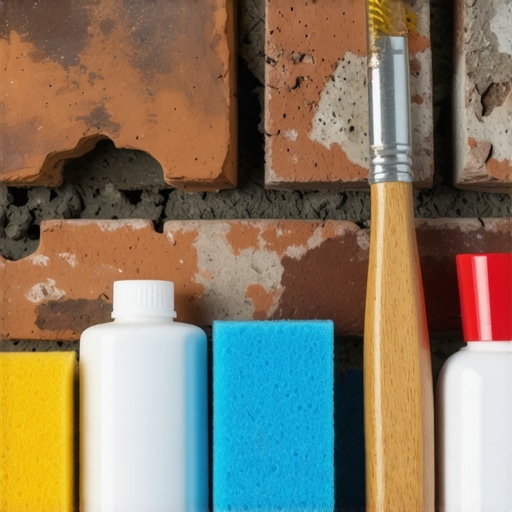
The Ghost in the Hearth: Why Salvaged Brick Demands Respect
I remember pulling a pallet of 19th-century reds from a collapsed textile mill in New England. When I ran my thumb over the face of those bricks, I could feel the irregular ‘tooth’ of the clay, a texture formed by hand-pressing into wooden molds over a hundred years ago. But they were black—choked with a century of soot and creosote that had baked into the silicate structure during the hearth’s lifetime. The homeowner wanted to sandblast them. I told him if he touched those bricks with a sandblaster, he’d be stripping the ‘fireskin’—that vitrified outer layer that protects the soft, porous heart of the brick—and he’d end up with a pile of red dust within five winters. Salvaging brick isn’t just about cleaning; it’s about forensic preservation. When you deal with smoke damage, you aren’t just looking at a stain; you’re looking at carbon particles that have been driven into the capillary network of the clay by extreme thermal expansion. Most guys see a dirty brick. I see a porous lung that has been breathing smoke for eighty years, and now we have to clear its airway without killing it.
“Water penetration is the single greatest threat to masonry durability, but the improper use of chemical cleaners on historic clay masonry can cause irreversible damage to the unit’s pore structure.” – BIA Technical Note 20
The Chemistry of the Carbon Stain
To clean a salvaged brick, you have to understand the physics of the ‘soot-bond.’ Smoke isn’t a liquid; it’s a suspension of fine particulate matter—carbon, ash, and volatile organic compounds. When a fireplace is active, the heat causes the brick’s pore structure to expand. As the fire dies down, the bricks cool and contract, literally vacuuming those microscopic carbon chains deep into the brick. This is why a simple scrub with soapy water usually fails. You’re only hitting the surface. If you’re planning an outdoor kitchen masonry build or a brick patio restoration using these salvaged units, you have to extract that carbon, or the first time it rains, you’ll see ‘bleeding’—a nasty grey streak that ruins your new retaining wall installation. The science of extraction requires a surfactant that can break the surface tension of the water, allowing it to penetrate the capillaries and lift the carbon out through hydrostatic lift. We don’t just wash; we emulsify.
The Restoration Reality: Why Breathability is Life
Modern ‘lick-and-stick’ veneers use high-strength Portland cements that act like plastic wrap. On a historic salvaged brick, that’s a death sentence. Old bricks are ‘soft.’ They were fired at lower temperatures than modern kiln-run units. This means they are highly breathable. If you use a hard, modern mortar when tuckpointing brick walls made of salvaged material, you create a moisture trap. The brick wants to move; the mortar won’t let it. The result is ‘spalling,’ where the face of your historic brick pops off like a scab. In my years of chimney rebuild services, I’ve seen 100-year-old chimneys destroyed in five years because some ‘handyman’ used Type S mortar instead of a traditional lime-based tuckpointing brick walls mix. You need a ‘sacrificial’ mortar—something softer than the brick itself. If there is movement or stress, the mortar should crack, not the brick. Mortar is cheap; 19th-century salvaged clay is irreplaceable.
The Step-by-Step Forensic Clean
First, we start with the ‘dry’ phase. Never add water to a soot-damaged brick until you’ve removed the loose friable material. I use a stiff natural bristle brush—never steel, which can leave microscopic metal fragments that will rust and cause ‘staining’ later. Once the loose soot is gone, we move to the ‘poultice’ method for deep stains. You mix a cleaning agent—often a trisodium phosphate (TSP) substitute or a specialized masonry detergent—with an absorbent material like kaolin clay or even shredded acid-free paper to create a ‘mud.’ You butter the face of the brick with this mix, about a quarter-inch thick, and let it sit. As the poultice dries, it draws the water—and the dissolved smoke particles—out of the brick and into the paste. It’s a slow process. It’s the difference between a quick fix and a forensic restoration. While waiting for the bricks to dry, I often inspect the structural brick ties replacement needs if these are going back into a load-bearing wall. You can’t trust old iron ties; they’re usually ‘rusted to dust’ inside the cavity. I prefer stainless steel helical ties that bite into the backup wythe without shattering the salvaged face.
“The use of harsh acid cleaners on historic masonry can lead to the formation of insoluble salts, leading to efflorescence and sub-florescence that disintegrates the brick from within.” – ASTM C67/C67M Standard Test Methods for Sampling and Testing Brick
The Invisible Enemy: Creosote and Oils
Sometimes you run into a brick that was at the very back of the throat of the fireplace. These aren’t just smoked; they’re ‘creosoted.’ Creosote is a tar-like substance that is hydrophobic. Water-based cleaners will just bounce off it. In these cases, you need a solvent-based emulsifier. But be careful. If you’re using these for an outdoor kitchen masonry build, any residual solvent can interfere with advanced masonry adhesives you might use for the countertop slabs. You have to neutralize the solvent with a secondary wash. This is where the ‘forensic’ part comes in. I’ll take a slicker or a small chisel and scrape a tiny sample of the residue. If it’s tacky and smells like burnt pine, it’s creosote. If it’s dry and dusty, it’s just carbon soot. Knowing the difference saves you three days of wasted labor.
Integrating Salvaged Brick into Modern Hardscapes
If you’re taking those cleaned bricks and moving them outside for a brick patio restoration, you have a new set of physics to worry about: the freeze-thaw cycle. A fireplace brick was never meant to sit in saturated soil. To make it work, your base must be perfect. We’re talking 6 to 8 inches of compacted 3/4-inch minus gravel, topped with an inch of coarse sand. Drainage is the only thing that will save a salvaged brick in a northern climate. If that brick sits in a puddle, the water will find those old smoke-damaged pores, freeze, and expand by 9%, shattering the unit. The same applies to a retaining wall installation. You must ensure retaining wall weep hole cleaning is part of your yearly maintenance. If the ‘weeps’ are clogged, hydrostatic pressure builds up behind the wall, pushing water through the bricks and bringing all those old minerals to the surface as white, crusty efflorescence.
When the Damage is Structural
Sometimes the smoke isn’t the problem—it’s the heat. Extreme chimney fires can ‘calcine’ a brick, essentially re-firing it at such a high temperature that it becomes brittle and loses its structural integrity. During my chimney rebuild services, I perform the ‘ring test.’ I hold a brick and tap it with my hawk or a light hammer. A healthy brick ‘rings’ with a clear, metallic note. A calcined or ‘dead’ brick thuds. If it thuds, it’s garbage. I don’t care how pretty the smoke patina is; it won’t hold the weight of a chimney stack. If you’re doing a stone balustrade restoration or replacing a retaining wall block replacement, you have to be ruthless. One dead unit in a soldier course can lead to a localized collapse that puts the whole structure at risk. Always over-order your salvaged material by 30% because the ‘forensic’ cull will be higher than you think.
Ultimately, cleaning and reusing salvaged fireplace brick is about honoring the labor of the men who made them. It requires a slow hand, a bit of chemistry, and a deep understanding of how water and fire interact with clay. Don’t rush it with a power washer. Don’t hide the damage with a ‘lick-and-stick’ fix. Treat the masonry with the respect a century of service deserves, and it will stand for another hundred years.