
The Forensic Reality of a Strangled Basement
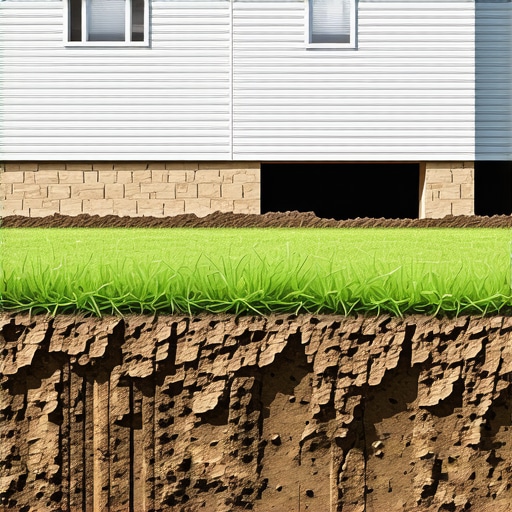
I recently stood in a damp basement in the suburbs where the north foundation wall looked like it was taking a deep, agonizing inhale toward the center of the room. The homeowner, a man who prided himself on a lush, green lawn, thought it was just a bit of ‘settling.’ I pointed my flashlight at a horizontal fracture running the length of the third course of blocks. ‘Your house isn’t settling,’ I told him. ‘Your yard is trying to move into your living room.’ When I put my digital level against the CMU (Concrete Masonry Unit), the wall was three inches out of plumb. The culprit wasn’t the concrete; it was the saturated clay soil outside, packed tight against the wall like a hydraulic ram. This is the reality of hydrostatic pressure, and it starts with your grass, not your stone.
The Physics of the ‘Belly’: Why Walls Bow
When we talk about bowing foundation walls, we are talking about lateral earth pressure. Most residential foundations are designed to handle vertical loads—the weight of the roof, the floors, and the framing. They are remarkably bad at acting as retaining walls. When your yard grading is flat or, worse, sloping toward the house, it acts as a funnel. Every rainstorm sends gallons of water into the backfill zone—that loosely packed soil right next to your foundation. In northern climates, this water sits in the soil and undergoes the freeze-thaw cycle. As water turns to ice, it expands by approximately 9%, exerting thousands of pounds of pressure against the masonry.
“Water penetration is the single greatest threat to masonry durability. The accumulation of moisture within masonry wall systems can lead to structural failure, efflorescence, and the deterioration of materials.” – BIA Technical Note 7
The Anatomy of the Crack: Reading the Masonry
As a forensic inspector, I look for the ‘story’ written in the mortar joints. A stair-step crack usually indicates settlement at the corners, often requiring brick quoin repair or helical piers. But a long, horizontal crack? That is the hallmark of structural bowing. The wall is snapping at its weakest point because the soil pressure outside exceeds the tensile strength of the masonry. This is where tuck pointing services become a cosmetic Band-Aid for a surgical problem. If you just ‘butter’ those cracks with new mud without addressing the grade, the wall will continue to move, eventually leading to a catastrophic collapse. In commercial masonry maintenance, we see this often when parking lot runoff isn’t managed; the sheer volume of water turns the soil into a heavy, viscous soup that no block wall can withstand.
The Micro-Chemistry of Soil Saturation
Let’s micro-zoom into the soil. Clay-heavy soils have high plasticity. They absorb water at a molecular level, causing the individual platelets of clay to slide over one another, increasing the weight of the earth against your foundation by 40-60 pounds per cubic foot. This is why masonry joint sand repair and proper porous stone sealers on the exterior are only secondary defenses. The primary defense is the ‘6-foot rule.’ Your grade should drop at least six inches in the first ten feet away from the foundation. If your soil is level, the water has nowhere to go but down the side of your wall, where it finds the capillary pores in your mortar. If you are dealing with an older home, a historic mortar analysis is required because modern Portland cement is too rigid; it won’t flex with the soil, causing the bricks themselves to snap rather than the joints.
The Ripple Effect: From Patios to Chimneys
Poor grading doesn’t just kill basements; it wreaks havoc on your entire exterior. I’ve seen patio stone realignment projects fail within a single season because the base material was washed out by the same poor drainage causing the foundation bow. When the ground shifts, it pulls on everything attached to it. This can lead to chimney heat shield installation issues as the stack leans away from the house, or the need for brick veneer installation repairs where the facade has delaminated from the structural backup. Even aesthetic choices like metallic brick colors application won’t hide the fact that your structure is shifting. You have to treat the house as a holistic system. If the feet are wet, the head—the chimney—will eventually ache.
The Forensic Fix: Beyond the Epoxy Injection
Many ‘handyman specials’ involve injecting epoxy into the cracks and calling it a day. That is a crime against craftsmanship. To truly fix a bowing wall, you have to relieve the pressure. This often means excavating the exterior, installing a proper drainage plane (like a dimpled membrane), and replacing the heavy clay with washed gravel to allow water to drop straight to a footing drain. Inside, we might use carbon fiber straps or steel I-beams, but without fixing the yard grade, you are just fighting physics.
“The design of masonry walls must account for all loads, including lateral earth pressure and hydrostatic forces, to ensure long-term stability.” – ASTM C270 Standards
This is the difference between ‘licking and sticking’ a solution and performing a true forensic restoration. Whether it is commercial masonry maintenance or a residential basement, the earth always wins if you don’t give it a path of least resistance.