The Forensic Reality of the Flaking Face
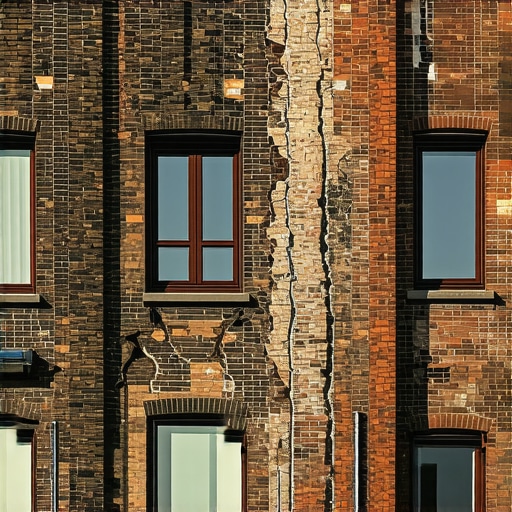
I remember walking a site where the homeowner was convinced he just needed a quick lick of paint to hide some ‘cosmetic’ scaling. I took my hammer and tapped a single brick in the soldier course. The sound wasn’t a sharp ping; it was a hollow, wet thud—the sound of a tomb. When I pulled the unit out, the back half of the brick stayed in the wall, transformed into a red paste. What looked like a minor surface issue was actually a systemic failure of the entire masonry wythe. Spalling isn’t a blemish; it is the physical manifestation of a wall that is literally exploding from the inside out.
The Physics of the Nine Percent Expansion
To understand why your facade is shedding its skin, you have to look at the microscopic architecture of a clay brick. Bricks are porous, filled with billions of tiny capillaries. When water enters these pores, it stays there. If you live in a climate where the mercury drops, that trapped moisture undergoes a phase change. As water turns to ice, it expands by approximately nine percent. This creates internal ‘cryostructural’ pressure that exceeds the tensile strength of the clay. This isn’t just theory; it is the relentless law of thermodynamics.
“Masonry units that are saturated and then subjected to freezing and thawing cycles are susceptible to a phenomenon known as spalling, where the outer face of the unit physically separates from the body.” – BIA Technical Note 7A
When you see that first flake of red clay on your porch, the ‘case hardening’ of the brick—the tough, fire-fused outer skin—is gone. The soft, more absorbent interior is now exposed to the elements, accelerating the decay exponentially. This is where AI masonry assessment is becoming a godsend. We can now use thermal imaging and multi-spectral analysis to see the moisture plumes behind the face before the brick even begins to pop, allowing for re-pointing services that actually address the source rather than just slapping on more mud.
The Portland Cement Poison: Why Modern Repairs Fail
In the world of historic restoration, the greatest enemy isn’t the rain—it’s the well-meaning contractor with a bag of Type S Portland cement. If your home was built before the mid-20th century, your bricks are likely softer than modern ones. They were designed to breathe. When a ‘handyman’ uses high-strength, non-permeable mortar to butter the joints, he creates a moisture trap. The water can’t escape through the hard mortar, so it is forced out through the brick face. This is the primary cause of brick column repair failures. The mortar must be the ‘sacrificial’ element. If the mortar is harder than the brick, the brick will break. Period. We use re-pointing services with lime-based mortars (Type O or K) to ensure the wall can sweat without losing its face.
Structural Dominoes: From Spalling to Total Failure
Ignoring a spalled face is like ignoring a rotted sill plate. It starts with the aesthetic, but it ends with retaining wall reinforcement or worse. When the brick face disappears, the structural integrity of the wall is compromised. Water begins to pool on the remaining ledges, leading to chimney flashing repair needs as the masonry saturates the roofline. Eventually, the moisture reaches the stone coping installation on your parapets or the modular retaining walls in your yard, causing ‘hydrostatic heaving.’ At this stage, you aren’t just looking at a mason with a slicker; you’re looking at a structural engineer and a five-figure bill.
“The use of mortar with a higher compressive strength than the masonry units themselves can lead to accelerated deterioration of the brick faces and overall loss of structural bond.” – ASTM C270 Standard Specification
Modern Solutions: Robotics and Chemistry
We are entering a new era of forensic masonry. Robotic masonry repair is now being tested to precision-grind out failing joints in high-rise environments where human error is a liability. For residential owners, masonry staining has replaced the ‘death sentence’ of painting. Stains are breathable; they allow water vapor to escape while evening out the blotchy appearance left after a brick veneer installation or repair. Furthermore, stone coping installation has evolved with better drip edges that prevent water from ever ‘running’ down the face of the brick, stopping the spall before the first freeze-thaw cycle can even begin. If your walls are already showing signs of distress, retaining wall reinforcement with helical anchors or carbon fiber straps might be the only way to save a bulging wythe before the ‘tooth’ of the stone is lost forever.
The Forensic Checklist for Homeowners
Don’t wait for a collapse. Look for these red flags: 1. Efflorescence (that white, salty powder) which indicates heavy water movement. 2. Hairline cracks in the stone coping installation. 3. ‘Hollow’ sounds when you tap the brick with a wooden handle. 4. Discoloration at the base of modular retaining walls. If you see these, the time for re-pointing services was yesterday. A true craftsman doesn’t just fix the hole; he finds the water’s path and cuts it off at the pass. Don’t let a $500 maintenance job turn into a $50,000 forensic reconstruction.