
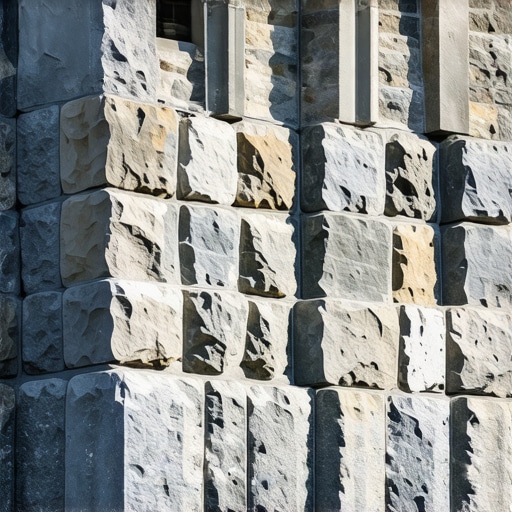
The Ghost in the Corner: A Forensic Look at Failing Quoins
I remember standing before a 19th-century brownstone in the heart of a district that should have been protected, but the ‘restoration’ job I was looking at was a crime scene. The homeowner thought it was just a hairline crack. But when I put my scope inside the void behind the corner block, I saw the structural steel was rusted to dust, and the structural brick ties replacement that should have happened twenty years ago was ignored in favor of a cheap coat of paint. The quoins—those proud, protruding cornerstones that give a building its skeletal strength—were weeping. Not from water, but from the pressure of modern Portland cement that had been stuffed into joints where it never belonged. This is the tragedy of modern masonry: treating a living, breathing stone organism like a static piece of plastic.
The Physics of the Quoin: More Than Just Decoration
In the trade, we call quoins the ‘teeth’ of the wall. They aren’t just there to look pretty; they are designed to lock the two planes of a corner together, distributing the load and resisting the lateral forces that want to peel a building apart. When we talk about restoring historic quoins, we are talking about structural integrity first and aesthetics second. To match century-old patterns, you have to understand the ‘tooth’ of the original stone. Is it tooled with a bolster? Is it vermiculated? If you don’t match the original tooling, you aren’t just ruining the look—you are changing how the stone sheds water. A rough-hewn stone surface creates micro-eddies in the wind, slowing down the water’s velocity. If you replace it with a smooth, slick surface, you’re inviting a deluge into the lower courses.
“Water penetration is the single greatest threat to masonry durability, and corner assemblies are the primary point of failure due to thermal stress concentrators.” – BIA Technical Note 7
The Chemistry of Death: Why Portland Cement Kills Old Stone
The biggest mistake I see in re-pointing services is the use of high-strength, modern cement on historic lime-based structures. If you are working on a building pre-1940, your mortar must be softer than the stone. This is the sacrificial principle. We want the mortar to fail, not the stone. When you use a hard, brittle mortar against a soft limestone quoin, the stone has nowhere to expand during the heat of the day. The stone tries to grow, hits the ‘wall’ of the hard cement, and the face of the stone pops off. We call this spalling. In my forty years of masonry rescue after disaster, 90% of the damage I see wasn’t caused by the storm—it was caused by the previous guy using the wrong ‘mud’.
The Micro-Zoom: The Carbonation of Lime
To match an old quoin pattern, you need to understand the hydration process. Historic lime mortar doesn’t ‘set’ like concrete; it carbonates. It pulls CO2 out of the air over decades, slowly turning back into stone. This creates a porous structure that allows water vapor to escape. Modern fiber-reinforced mortars have their place in new construction, but in a historic context, they are a death sentence. They trap moisture behind the ‘face’ of the stone, and when the temperature drops, that water expands by 9%. That’s when your beautiful quoin becomes a pile of rubble on the sidewalk. When we mix our mud on a hawk, we aren’t just looking for color; we are looking for the right suction. A dry, historic brick or stone will suck the moisture right out of your mortar. If you don’t pre-wet the substrate—what we call ‘controlling the suction’—the mortar will ‘flash set’ and crumble like a dry biscuit.
[image_placeholder]
The Restoration Process: Tools of the Master Mason
Matching a pattern requires more than a steady hand; it requires the right tuckpointing machine services for the initial grind-out, but the finish must always be hand-struck. You start by grinding out the failed joints to a depth of at least twice the width of the joint. We don’t use high-speed diamond blades that can nick the stone; we use small, pneumatic chisels that respect the edge of the quoin. Once the joint is clean, we ‘butter’ the edges of the stone, ensuring a solid bond. If the stone itself is damaged beyond repair, we might look into 3D printed masonry repairs to create a mold for a matching cast-stone replacement, but only if the original quarry is closed. For the interior, we often perform chimney interior parging if the quoins are part of a chimney breast, ensuring that the flue gases aren’t leaking into the wall cavity and accelerating the rot of the structural ties.
Addressing the ‘Wavy’ Wall: Realignment and Drainage
Sometimes the quoins aren’t just cracked; they are leaning. This is often a symptom of poor patio stone realignment or foundation settling nearby. If the base isn’t right, the corner will never stay true. I’ve seen chimney cap replacement jobs that failed because the mason didn’t realize the weight of the new cap was shifting the load onto a weakened quoin. You have to look at the whole system. You need tuckpointing weatherproofing that doesn’t seal the stone, but rather makes it ‘hydrophobic’ while remaining ‘vapor permeable’. It’s a delicate balance that most handymen specials completely ignore.
“The endurance of the work depends upon the choice of the materials and the skill with which they are laid together.” – Vitruvius, De Architectura
The Forensic Conclusion: Do It Once, or Do It Twice
If you see a ‘slicker’ being used to shove grey goo into a historic joint without a second thought for the sand grain size or the lime content, fire that contractor on the spot. Matching historic quoins is about respect for the physics of the past. It’s about ensuring the structural brick ties replacement is done with stainless steel that won’t rust and expand. It’s about knowing that the mortar on your hawk is the lifeblood of the building. When you do it right, the building stands for another hundred years. When you do it cheap, you’re just preparing the building for its next disaster. Don’t be the reason a piece of history ends up in a landfill because you wanted a ‘seamless’ look without the grit and the ‘mud’ that real masonry requires. Stick to the old ways, use the soft lime, and let the building breathe.