
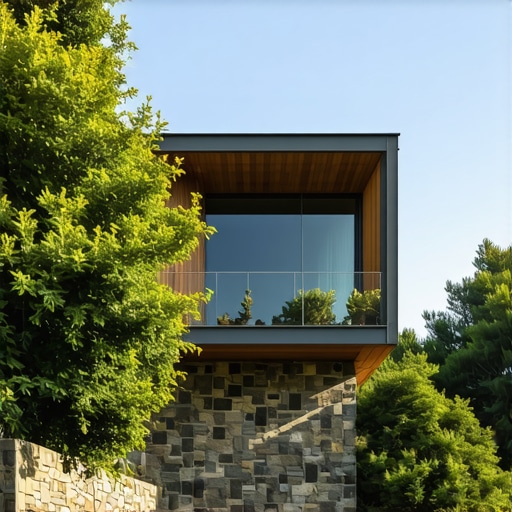
The Forensic Reality of Reclaimed Stone
The homeowner thought it was just a hairline crack. But when I put my scope inside that cavity wall, I saw the structural steel was rusted to dust, all because someone used a non-breathable sealer on a porous historic facade. That’s the tragedy I see weekly. We live in an era of ‘lick-and-stick’ stone veneer, where thin slices of rock are glued to plywood and called ‘luxury.’ It’s a sham. When we talk about reclaimed stone, we aren’t just talking about aesthetics; we are talking about the ultimate survivalist material. Reclaimed stone has already stood the test of time, weathered the acid rain of the industrial revolution, and proven its structural integrity before it ever reaches your job site.
The Physics of the Tooth: Why Old Stone Grabs Better
When I’m out in the field, I look for the ‘tooth’ of the material. New, machine-cut stone from a high-production quarry often has a surface so slick it struggles to form a mechanical bond with the mud. Reclaimed stone, especially granite or limestone salvaged from 19th-century foundations, has a microscopic profile—a texture carved by decades of thermal expansion and contraction. This creates a superior suction when you’re buttering the stone. When you press that stone into a bed of lime-rich mortar, the capillary action pulls the binder into the stone’s pores, creating a monolithic bond that modern materials simply cannot replicate.
“Water penetration is the single greatest threat to masonry durability. The selection of materials must prioritize the management of moisture through breathability rather than absolute blockage.” – BIA Technical Note 7
The Sacrificial Principle and Crumbling Mortar Joint Repair
One of the biggest mistakes I see in brick wall restoration is the use of modern Portland cement on reclaimed materials. It’s a death sentence. Old stone and brick are soft and porous. If you use a high-strength, Type S mortar for re-pointing services, you’ve created a wall where the mortar is harder than the building block. When the earth shifts or the temperature drops, the wall needs to move. If the mortar won’t give, the stone will. This leads to brick spalling prevention failures where the face of the material literally pops off because the moisture is trapped behind a wall of hard cement. In my practice, we advocate for the ‘sacrificial principle’: the mortar must always be softer than the stone. We use lime-based mixes that allow the building to breathe, ensuring that any salts or moisture migrate through the joints rather than through the stone itself. This is critical for crumbling mortar joint repair on historic structures.
Stone Balustrade Restoration: A Forensic Case Study
I recently inspected a stone balustrade restoration project where the handrails were leaning. The previous contractor had used tuckpointing machine services to quickly grind out the joints, but they didn’t understand the internal physics. By grinding too deep with a high-speed diamond blade, they nicked the internal copper dowels. Over three seasons, water followed those nicks, froze, and expanded with a force of 4,000 PSI. Reclaimed stone is the answer here because of its density. When we perform a stone coping installation using salvaged material, we are using stone that has already reached its equilibrium. It doesn’t ‘green’ or shrink like fresh-cut quarry stone. We match it with brickwork pointing styles like the ‘weathered joint’ to shed water away from the core of the wall.
The Sustainability Argument: Beyond the Carbon Footprint
Everyone talks about ‘green building,’ but they forget that the greenest brick is the one already made. The energy required to quarry, cut, and transport new stone is astronomical. Reclaimed stone is a carbon-negative asset in the long run. When we talk about fire-rated masonry installation, reclaimed stone and clay brick are king. They’ve already been fired or formed under intense geological pressure. They don’t off-gas. They don’t melt. They provide a thermal mass that keeps a building cool in the summer and warm in the winter, acting as a natural battery for heat. For those concerned with longevity, porous stone sealers are often marketed as a fix, but for reclaimed material, the best ‘sealer’ is a properly struck joint and a deep understanding of the material’s natural chemistry.
“Stone is the only material that grows more beautiful as it nears its end, whereas modern materials only look good the day they are installed.” – Vitruvius, De Architectura
The Process of Proper Re-Pointing
If you’re looking at a re-pointing services contract, look at the tools. If they bring out only grinders and no hand chisels, fire them. A master mason knows that tuckpointing machine services are for modern tilt-ups, not for a brick wall restoration of a landmark. We use a hawk and a slicker to tuck the mud into the joint in ‘lifts’—layers of no more than 1/4 inch at a time. This prevents shrinkage cracks and ensures the mortar is packed tight against the back of the joint. This is how you ensure brick spalling prevention for the next fifty years. Whether it’s a stone coping installation on a garden wall or a massive fire-rated masonry installation for a commercial fireplace, the physics remain the same: respect the stone, manage the water, and never use a material harder than the one you’re trying to save.