
The Forensic Scene: Beyond the Hairline Crack
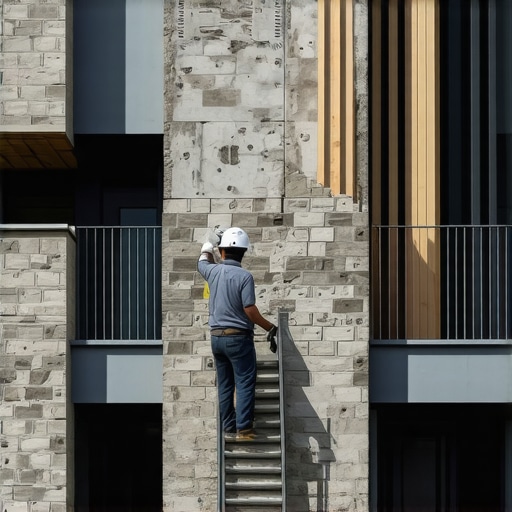
The homeowner called me out because she thought it was just a hairline crack running vertically through her stone veneer. ‘It’s probably just settling,’ she said, hoping for a cheap fix. But when I slid my fiber-optic scope into a weep hole and looked at the cavity, the truth was uglier. The structural brick ties replacement she actually needed was the result of decades of trapped moisture. The galvanized steel wasn’t just corroded; it was rusted to red dust, leaving the outer wythe of masonry essentially floating, unanchored to the framing. This is the reality of forensic masonry: what you see on the surface is rarely the whole story, especially when modern materials are used without understanding the physics of the wall assembly. We are currently in a pivot point where sustainable materials like hempcrete and fly ash bricks are entering the market, and if we don’t apply the hard-learned lessons of the past, we’re just building the disasters of tomorrow.
“Water penetration is the single greatest threat to masonry durability.” – BIA Technical Note 7
The Chemistry of Hempcrete: More Than Just ‘Green’ Mud
When I talk about hempcrete, people think I’m getting soft in my old age. They think it’s some hippie experiment. But from a structural masonry inspection perspective, hempcrete is a fascinating beast. It isn’t a load-bearing material like your standard 3000 PSI concrete; it’s an infill. It’s a mixture of hemp hurds (the woody core of the plant) and a lime-based binder. The micro-zooming of this material reveals a cellular structure that is ‘vapor open.’ Unlike the lick-and-stick stone veneer repair jobs I see failing every week because moisture is trapped behind a vapor-impermeable barrier, hempcrete allows the building to breathe. In a freeze-thaw climate, this is life or death for a wall. When water gets trapped in a wall and freezes, it expands by roughly 9%. In a rigid, Portland-heavy wall, that expansion has nowhere to go but out, causing spalled concrete steps or popping the faces off your brickwork. Hempcrete’s pore structure absorbs that pressure, acting as a thermal and moisture buffer.
The Pozzolanic Power of Fly Ash Bricks
Fly ash bricks are a different animal. These are made from the byproduct of coal combustion, and they are challenging the traditional clay unit. When you look at the hydration process of fly ash, it’s a pozzolanic reaction. In plain English, it means the silica in the ash reacts with calcium hydroxide to create a denser, less permeable matrix than traditional clay. If you’re doing a brick quoin repair or a soldier course where structural integrity is paramount, fly ash units offer a higher compressive strength and lower water absorption. But here’s the rub: they are stiff. In the heat of the South, a long run of fly ash bricks will experience significant thermal expansion. Without proper control joints, that wall will buckle. You have to treat them with the respect you’d give a high-fired clinker brick. I’ve seen guys butter the ends of these bricks with a mortar that’s too rich in Portland cement, creating a bond that’s actually stronger than the brick itself. When the wall moves—and all walls move—the brick cracks instead of the mortar. That’s a cardinal sin in my book. The mortar must always be the sacrificial lamb.
The Art of the Cut: Birdsmouths and Structural Ties
Whether you’re working with hempcrete blocks or fly ash, the masonry birdsmouth cuts at the corners and rooflines dictate the longevity of the install. A birdsmouth isn’t just a notch; it’s a water-management feature. If the cut is sloppy, you’re creating a shelf for water to sit on. This is where I see chimney crown repair becoming necessary within just five years of a new build. Water sits on the shelf, migrates into the core, and then the freeze-thaw cycle begins its slow demolition. When we perform a structural masonry inspection, we’re looking at these junctions. We’re looking to see if the brick ties were installed with a drip loop or if they’re funneling water directly into the sheathing. In many of the stone veneer repair calls I get, the installer didn’t even use ties; they just relied on the suction of the scratch coat. That’s not masonry; that’s hope, and hope doesn’t hold up a thousand pounds of rock.
Failing Retaining Walls and the Physics of Soil
You can use the most advanced fly ash blocks in the world, but if your retaining wall installation ignores hydrostatic pressure, it’s going to fail. I’ve walked onto forensic scenes where a $100,000 failing retaining wall repair was needed because the contractor thought ‘drainage’ was just a suggestion. Soil is heavy, but wet soil is a monster. As water builds up behind a wall, the pressure increases exponentially. If you don’t have a clear drainage path—clean 3/4 inch stone and a perforated pipe—the wall will eventually ‘blow out’ at the base or lean until it hits the point of no return. We use a slicker to finish the joints, making them concave to shed water, but that’s just the skin. The skeleton of the wall—the compaction and the base—is where the war is won. If I see honeycombing in the concrete base or a cold joint where the pour was interrupted, I know that wall is on a countdown. Any pro worth his mud knows that the base must be at least twice the width of the wall itself and buried below the frost line to prevent heaving.
“The use of lime-based mortars ensures that the masonry assembly remains flexible enough to accommodate minor structural movements without catastrophic fracturing.” – Vitruvius, De Architectura
The Restoration Reality: Tuck Pointing and Beyond
When we get into tuck pointing services for older buildings or even modern builds using fly ash, the ‘mud’ is everything. I see ‘handymen’ trying to fix spalled concrete steps repair jobs with a bag of premixed high-strength grout. It’s too hard. It’s too brittle. You need a mix that matches the modulus of elasticity of the existing material. On a restoration job, we’re often mixing Type O or Type N mortar, sometimes even straight lime putty for those pre-1940s beauties. We grind out the old, failing joints to a depth of at least twice the width of the joint, wash out the dust to ensure proper suction, and then hawk the new mud in. It’s tactile work. You have to feel the suction of the brick. If the brick is too dry, it sucks the water out of the mortar before it can hydrate, leaving you with a ‘burned’ joint that you can scratch out with your fingernail. If it’s too wet, the mortar won’t stick, and you’ll be chasing your tail all day. It’s about that perfect balance—the ‘ring’ of the material when you tap it.
Final Forensic Thoughts
The transition to hempcrete and fly ash isn’t just a trend; it’s a necessity as we look for more durable and sustainable ways to build. But these materials don’t change the laws of physics. Gravity still pulls, water still freezes, and thermal expansion still cracks. Whether you’re dealing with a chimney crown repair or a complex structural brick ties replacement, the fundamentals of the craft remain. You must manage the water, respect the expansion, and never, ever trust a lick-and-stick job that doesn’t have a drainage plane. If you do it once, do it right, or you’ll be calling someone like me to come out with a scope and tell you why your ‘modern’ wall is falling into the yard.