
The Ghost of the Spalled Soldier Course
I remember a job site in a historic district where a homeowner had spent a small fortune on a 1910 federal-style restoration. They hired a guy with a pressure washer and a bucket of hardware-store ‘waterproofer’ to seal the exterior. Two years later, I was called in because the brick faces were popping off like scabs on a scraped knee. I stood there, picking up pieces of 110-year-old historic brick salvage from the flower beds, feeling the weight of a century of craftsmanship destroyed by a single coat of acrylic. This wasn’t just a maintenance error; it was a fundamental misunderstanding of the physics of clay and lime. My old mentor, a man who could tell the moisture content of a pile of sand just by rubbing it between his thumb and forefinger, always told me: ‘A building that can’t breathe is a coffin for the family inside.’ He was right. When you seal an old brick, you aren’t keeping the water out; you are trapping the death inside.
“Water penetration is the single greatest threat to masonry durability, but the inability for that water to escape as vapor is what causes the structural failure of the unit itself.” – BIA Technical Note 7
The Molecular Micro-Zoom: Why Historic Brick is Alive
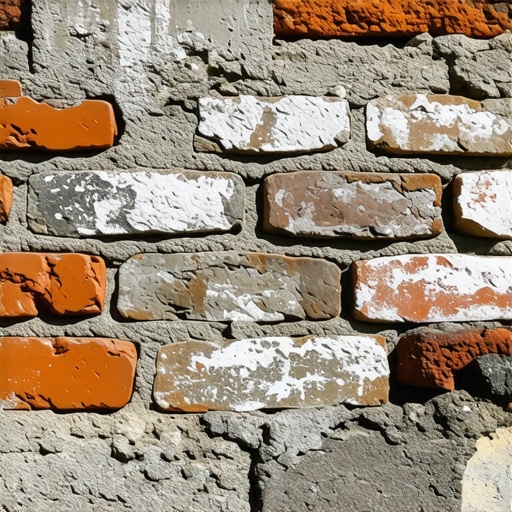
To understand why breathable sealants are the only option, you have to look at the chemistry of a brick fired before the mid-1940s. These aren’t the dense, vitrified units we see in modern commercial construction. These are ‘soft’ bricks, fired at lower temperatures in wood or coal kilns. Their internal structure is a labyrinth of interconnected pores. Think of it as a rigid sponge. This porosity is a design feature. In an old-world wall, the brick and the mortar work as a hydrothermal system. When it rains, the wall absorbs water. When the sun comes out, the moisture migrates back to the surface and evaporates. This is called vapor drive. If you coat that wall with a non-breathable film-forming sealer, you create a microscopic dam. The liquid water still finds its way in through hairline cracks or the roofline, but it can never get out. Under the summer sun, that trapped water turns to vapor, expanding in volume and creating internal pressure that the delicate clay structure cannot withstand. This is when the face of the brick shears off, a process we call spalling.
[image_placeholder_1]
The Portland Poison and the Sacrificial Principle
When I conduct a structural masonry inspection, the first thing I look for is ‘buttering’ with Portland cement. In the world of full repointing services, there is a golden rule: the mortar must always be softer than the brick. This is the sacrificial principle. In the old days, we used lime and sand. That’s it. Lime mortar is flexible; it moves with the building. It’s also incredibly breathable. If there is salt in the wall (efflorescence), it migrates to the lime mortar joints and crystallizes there, rather than inside the brick. It’s easier to replace a crumbling mortar joint repair than it is to replace the bricks themselves. But modern masons love Portland cement because it sets fast. It’s hard as a rock. When you put Type S or Type M mortar against a soft historic brick, the brick becomes the weakest link. The brick expands, the mortar stays rigid, and the brick is crushed. When you add a non-breathable sealant on top of this mismatch, you are essentially mummifying a structural failure.
The Geotechnical Reality of the Freeze-Thaw Cycle
In northern climates, the physics gets even more violent. Water expands by approximately 9% when it freezes. In a healthy, breathable wall, the pore structure has enough ‘give’ and the vapor can escape before the hard freeze sets in. However, when a wall is sealed with a cheap acrylic, the liquid water is trapped just behind the surface of the brick. When the temperature drops below 32 degrees, that water freezes and the 9% expansion happens inside the clay pores. This hydraulic pressure is what leads to the catastrophic failure of entire sections of masonry. I’ve seen outdoor kitchen masonry build projects in high-end backyards fall apart in three seasons because the contractor used a ‘wet look’ sealer on the pavers and the brickwork. They didn’t account for the sub-grade moisture being pulled up through capillary action, a process known as rising damp. The sealer trapped that ground moisture, and the first hard frost shattered the base courses.
“The use of impervious coatings on masonry is generally discouraged as they trap moisture and accelerate the deterioration of the units and the mortar.” – ASTM C270 Standard Specification for Mortar for Unit Masonry
Choosing the Right Weapon: Silanes and Siloxanes
If you must seal a wall—perhaps a commercial smokestack repair or a wall facing extreme wind-driven rain—you don’t use a film-forming product. You use a penetrating, breathable water repellent. We’re talking about silanes and siloxanes. These molecules are small enough to penetrate deep into the substrate, where they chemically bond to the silica in the brick. They don’t form a ‘skin.’ Instead, they change the surface tension of the pores, making them hydrophobic. Imagine a bird’s feathers; water beads off, but air can still pass through. This allows for vapor transmission while preventing liquid water ingress. This is the only way to protect a failing retaining wall repair where hydrostatic pressure is a constant threat. But even then, I tell my clients: the best sealant is a well-struck joint and a functioning gutter system.
The Forensic Toolkit: Mortar Matching and DIY Traps
For those looking for tuckpointing tools for DIY, be warned. The most dangerous tool in the hands of an amateur is the 4-inch angle grinder. I’ve seen more historic facades ruined by ‘cowboys’ grinding out joints and slicing into the brick than I have by a century of weather. True restoration requires a hawk, a slicker, and a deep understanding of mortar matching services. We have to analyze the sand grain size and the lime-to-sand ratio to ensure the new ‘mud’ behaves exactly like the old stuff. When we do a crumbling mortar joint repair, we aren’t just filling a hole; we are restoring a lung. We use Type O or even pure lime putty for the most sensitive jobs. We butter the joints carefully, ensuring no ‘cold joints’ are formed where the new material meets the old. It’s a slow, tactile process. You have to feel the ‘suction’ of the brick. If the brick is too dry, it will suck the water out of the mortar too fast, causing it to ‘burn’ and crumble. If it’s too wet, the mortar will sag and smear.
Conclusion: Respect the Masonry
In the end, the masonry tells the truth. You can hide a crack with caulk or a bad brick with a thick coat of sealant, but the physics of the building will eventually win. Whether you are managing an outdoor kitchen masonry build or overseeing a massive commercial smokestack repair, the principles remain the same. Respect the material. Allow for movement. Prioritize breathability. If you treat a building like a living thing, it will stand for another hundred years. If you treat it like a plastic toy and coat it in chemicals, you’ll be calling someone like me for a structural masonry inspection much sooner than you think. Do it once, do it right, and for the love of the craft, put down the hardware-store sealer.